

In an age where our lives are increasingly mediated by high-resolution screens and instant notifications, there is a growing movement toward the tangible. From the tactile scratch of a fountain pen on paper to the rhythmic clicking of knitting needles, picking up an analog hobby is making a significant comeback. While these activities are often seen as a nostalgic escape, they offer far more than simple recreation. Engaging in physical, non-digital pursuits serves as a powerful recalibration for the human brain, offering unique cognitive benefits that digital interfaces simply cannot replicate.
Understanding the Analog Hobby in a Modern Context
Before exploring the specific benefits, it is helpful to define what we mean by these offline pursuits. An analog hobby refers to leisure activities that prioritize physical interaction, manual dexterity, and tangible outputs without the primary use of digital technology or internet connectivity.
Common examples include:
-
Woodworking and carpentry
-
Film photography and darkroom developing
-
Gardening and land cultivation
-
Physical reading and bookbinding
-
Manual crafting or textile arts
In a world optimized for speed and automation, these hobbies demand a deliberate “slowing down,” forcing our brains to engage with the physical world in a way that is increasingly rare in our daily professional lives.
Reclaiming Sustained Concentration Skills
The digital world is designed for the “scroll,” a behavior that often leads to fragmented attention spans and a habit of scanning rather than deep-diving. An analog hobby acts as a natural antidote to this digital distraction. When you sit down to restore a vintage watch or piece together a complex puzzle, there is no “back” button or notification to pull you away. This environment encourages the brain to rebuild its capacity for sustained concentration. Over time, practicing these focused tasks trains the mind to remain present—a skill that translates directly into better focus during work and more meaningful engagement in personal relationships.
Boosting Memory Through Tactile Engagement
There is a profound connection between our hands and our memory centers. Scientific research often points to the “encoding” benefit of physical touch. When we engage in an analog hobby, we aren’t just processing abstract data; we are feeling textures, managing weight, and navigating three-dimensional space. For instance, those who write by hand or keep a physical journal often find they remember details more vividly than those who type. This tactile engagement creates a richer sensory “map” in the brain, making information more durable and easier to retrieve later.
Reducing Digital Eye Strain Symptoms
One of the most immediate benefits of stepping away from the screen is the relief it provides to our visual system. Extended periods of looking at blue-light-emitting devices can lead to digital eye strain, characterized by dryness, blurred vision, and headaches. Most analog hobby options naturally incorporate the “20-20-20” rule by encouraging us to look at objects at varying distances and in natural light. Whether you are tending to a garden or painting a landscape, your eyes are allowed to relax and focus in a way that feels inherently more comfortable and less fatiguing.
Promoting Mindfulness Through Slow Processes
These hobbies are a masterclass in the art of being present. Unlike digital tools that prioritize the end result with maximum efficiency, analog pursuits celebrate the process itself. The act of kneading bread or hand-stitching leather requires a level of rhythmic repetition that can be deeply meditative. This “slow process” naturally lowers the heart rate and quiets the mental chatter that often accompanies a busy, tech-heavy lifestyle. By focusing on the movement of the hands and the immediate sensory feedback, we enter a state of natural mindfulness that refreshes the spirit.
Strengthening Fine Motor Skill Development
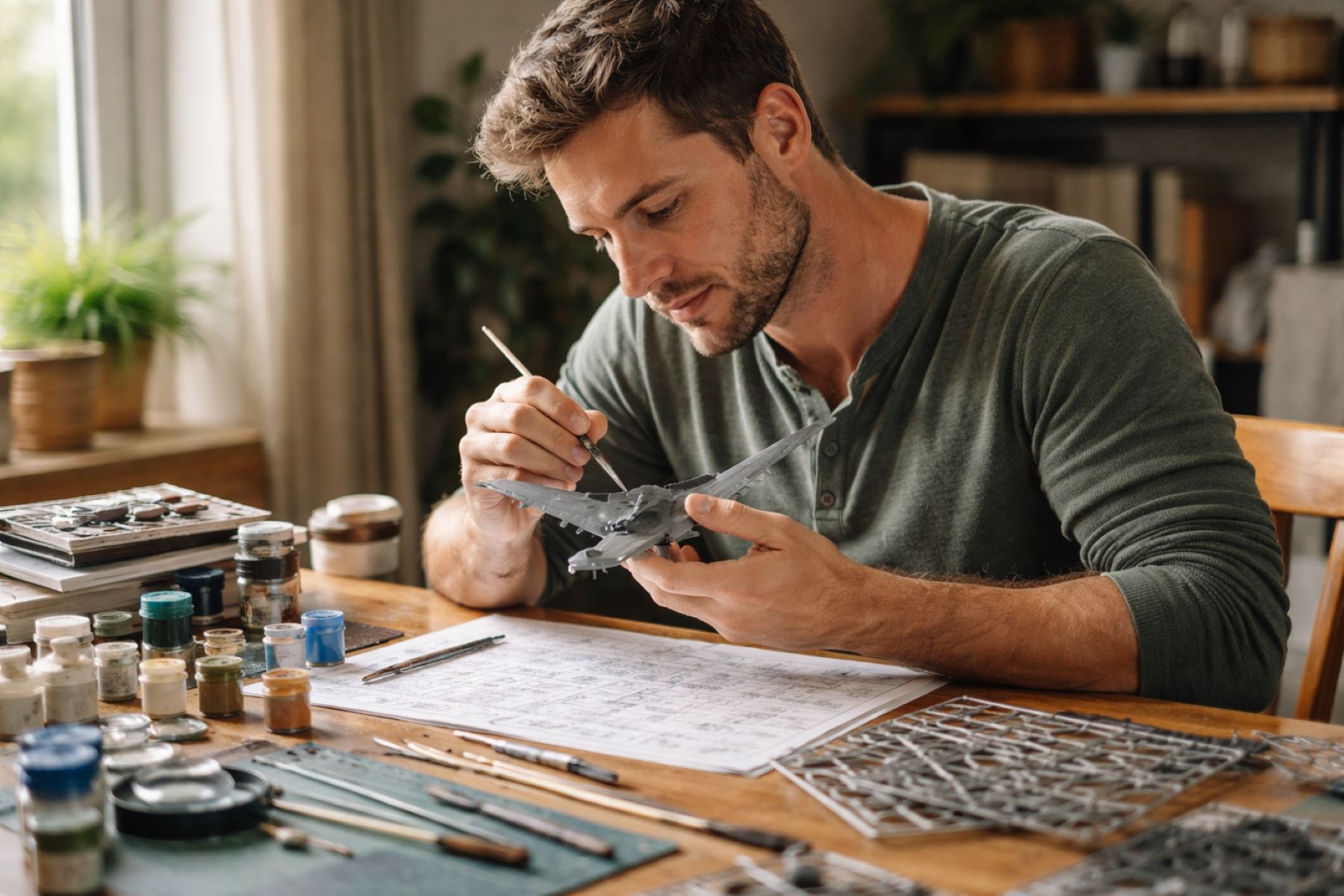
While we might spend hours typing or swiping, these movements are relatively limited in scope. In contrast, many analog hobby choices require highly nuanced and diverse hand-eye coordination. Playing a physical instrument, sketching, or building scale models demands precision and control over small muscle groups. Regularly engaging in these activities keeps the neural pathways responsible for motor skills sharp and responsive. This physical agility reflects a healthy, active connection between the brain’s motor cortex and the physical body.
Activating Diverse Neural Pathways Daily
The brain thrives on variety, and digital life can sometimes become repetitive. An analog hobby often forces us to use parts of our brain that might lay dormant during a typical day of spreadsheet management. When you engage in a craft like pottery, you are simultaneously using spatial reasoning, creative visualization, and physical coordination. This multi-sensory activation keeps the brain plastic and adaptable. By stepping outside of the digital routine, you are essentially giving your brain a “full-body workout” that keeps it resilient against cognitive decline.
Facilitating Deep State Creative Flow
Many of us have experienced “losing track of time” while immersed in a project. This is often referred to as a “flow state,” and it is significantly easier to achieve in the physical world. Without the constant threat of digital interruptions, the mind can enter a state of deep immersion. Whether you are developing photos or carving wood, the immediate feedback loop of the physical material allows for a seamless transition from thought to action. This deep creative flow is where our most innovative ideas often surface, unburdened by the pressures of the online world.
Improving Information Retention Levels Naturally
In the digital realm, information is often fleeting. We bookmark pages we never revisit and save videos we never watch. An analog hobby encourages a more intentional relationship with information. If you are learning a new knitting pattern or a complex woodworking joint from a physical book, the effort required to interpret and apply that knowledge ensures it sticks. The “friction” of analog learning—the fact that it takes a bit more effort—is actually a feature, not a bug. It signals to the brain that the information is important enough to store in long-term memory.
Managing Stress via Sensory Experiences
The sensory-rich nature of these activities provides a powerful grounding effect. Stress often lives in our thoughts about the future or regrets about the past. Engaging with the smell of fresh soil, the sound of a wood plane, or the cool feel of clay pulls us back into the “now.” These sensory experiences send signals to the nervous system that we are safe and engaged in a productive, non-threatening task. This physiological shift is one of the most effective ways to lower cortisol levels and manage the daily pressures of a fast-paced environment.
Building Patience Through Physical Crafts
In a world of “instant everything,” patience is becoming a rare virtue. An analog hobby does not offer instant gratification. A garden takes months to bloom, and a hand-knit sweater takes weeks of steady work. This inherent delay teaches us the value of the “long game.” By working on a physical craft, we learn to accept mistakes, troubleshoot problems calmly, and appreciate incremental progress. This cultivated patience makes us more resilient in other areas of life, helping us handle delays and setbacks with a more balanced perspective.
Encouraging Intentional Problem Solving Techniques
When a digital tool glitches, we often feel helpless because the software is hidden from us. In the physical world, problems are visible. If a piece of wood splits or a stitch is dropped, you can see exactly why it happened. This encourages a very different type of problem-solving—one that is analytical, hands-on, and deeply satisfying. It fosters a “maker” mindset where you see yourself as an active agent capable of fixing and creating things, rather than just a passive consumer of technology.
Restoring Healthy Sleep Pattern Cycles
Finally, replacing late-night scrolling with an analog hobby can transform your sleep quality. The blue light from screens is notorious for suppressing melatonin, the hormone responsible for sleep. By engaging in a tactile pursuit like reading a physical book or sketching by a warm lamp in the hour before bed, you allow your brain to wind down naturally. This transition period signals to your body that the day is ending, leading to faster sleep onset and a more restorative night’s rest, ensuring you wake up with the cognitive clarity needed for the day ahead.