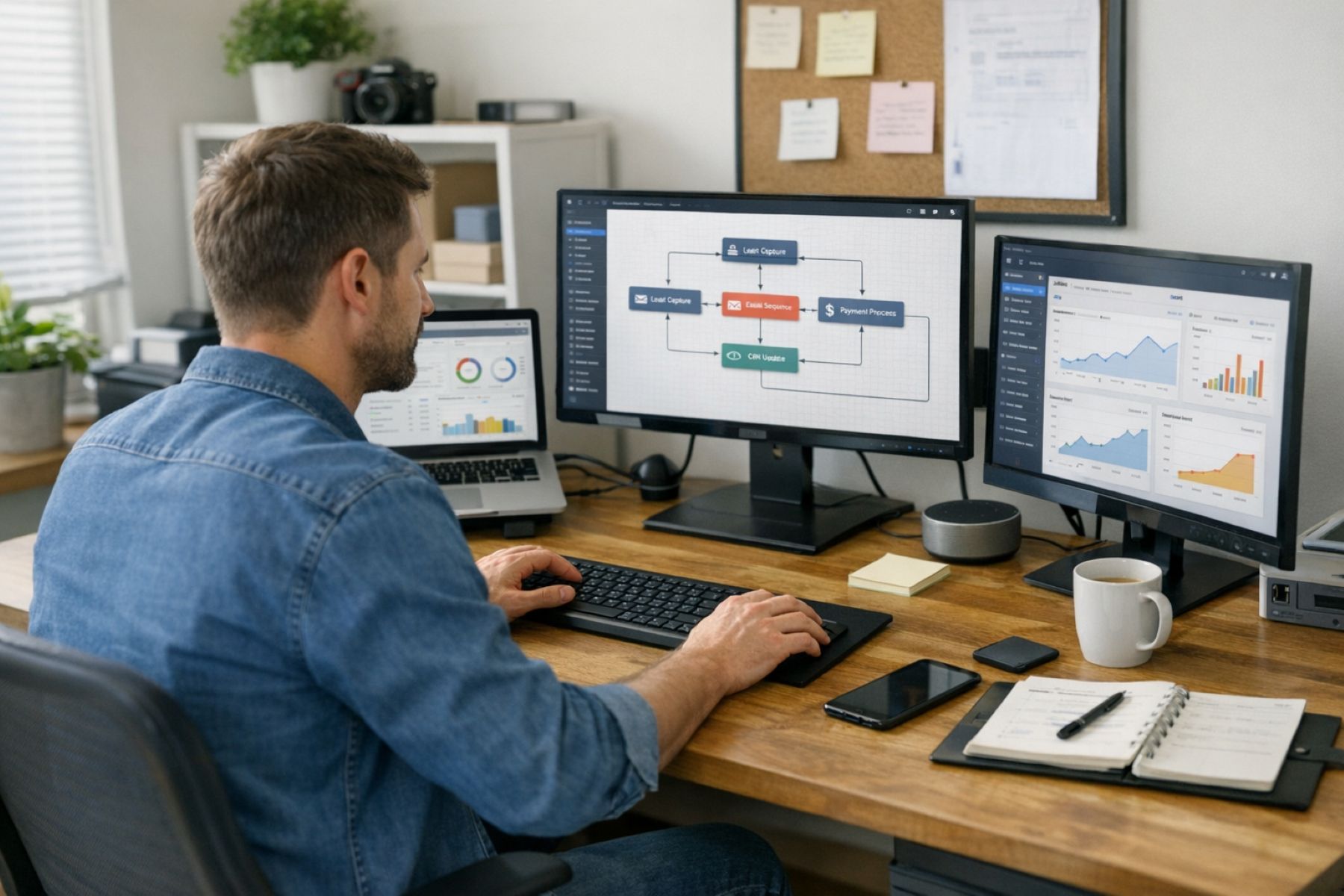
Side hustle automation is no longer a luxury reserved for Silicon Valley elites or venture-backed startups; it has become the definitive bridge between having a “second job” and owning a self-sustaining digital asset. For the modern creator, the dream has always been to decouple time from money. We’ve all seen the flashy headlines about passive income, but the reality for most is often a grueling cycle of manual data entry, endless DM management, and the constant pressure to hit “publish.” But what if the infrastructure of your business could breathe, think, and respond without you?
The landscape of work is shifting toward the “Company of One.” This isn’t just a trendy buzzword for freelancers; it’s a structural philosophy where a single individual uses a sophisticated web of software to punch at the weight of a ten-person agency. By shifting your focus from “doing the work” to “architecting the system,” you move from a state of constant hustle to a state of strategic oversight. This guide is your roadmap to building that architecture using the power of low-code and no-code ecosystems.
The Shift from Hustler to Architect
When we first start a side project, we are the CEO, the intern, and the customer support rep all rolled into one. It’s exhilarating at first, but it’s also the fastest route to burnout. To scale, you have to stop thinking like a laborer and start thinking like an architect. An architect doesn’t lay every brick; they design the blueprint that ensures the bricks stay in place.
Low-code tools are the digital mortar for this blueprint. They allow you to connect disparate apps—like your email, your database, and your payment processor—into a singular, fluid organism. This “digital nervous system” allows your business to react to triggers in real-time. Whether it’s a new lead signing up at 3:00 AM or a customer requesting a refund while you’re on vacation, the system handles it. The goal is to reach a point where your primary job is simply monitoring the dashboard and tweaking the logic.
Building Your “Solo-Operator” Tech Stack for Side Hustle Automation
Before you can automate, you need the right materials. Think of your tech stack as your digital workforce. You don’t need to know how to write Python or Javascript to build a world-class system anymore. You just need to understand how data flows from one point to another.
The heart of your operation is the Automation Hub. This is the “glue” that holds everything together. For those just starting out, Zapier is the gold standard for its user-friendly interface and vast library of integrations. However, as your side hustle grows in complexity, you might find yourself gravitating toward Make (formerly Integromat). Make offers a visual canvas that allows for multi-branching logic—essentially allowing you to create “if-this-then-that” scenarios that are far more nuanced and cost-effective for high-volume tasks.
Behind every great automation is a reliable Database. Forget messy spreadsheets that require manual updates. Tools like Airtable or Notion act as the brain of your business. They don’t just store information; they categorize it, link it, and serve it up to your other tools whenever needed. Imagine a CRM that updates itself every time someone interacts with your brand—that is the power of a connected database.
Then, there is the AI Engine. Integrating ChatGPT or Claude into your workflow is like hiring an ultra-fast assistant who never sleeps. You can use these engines to summarize emails, draft social media captions, or even perform sentiment analysis on customer feedback. Finally, you need a Frontend Builder to give your business a face. Tools like Softr or Bubble allow you to build sleek, professional portals or web apps that sit on top of your data, giving your customers a seamless experience without you ever touching a line of CSS.
High-ROI Workflows: Implementing Side Hustle Automation
Automation for the sake of automation is a trap. You want to focus on high-leverage areas where the return on investment (ROI) in terms of time saved is astronomical. The first area is Content Marketing. We all know that “content is king,” but creating it is a full-time job. You can build a workflow where you input a single seed idea into a Notion gallery, which then triggers an AI to draft a blog post, generate three LinkedIn updates, and schedule them across your platforms. You go from being a content creator to a content editor, which is a much more scalable position.
Next, consider Digital Product Sales. If you are selling an e-book, a course, or a template, there is no reason for you to be involved in the transaction after the product is created. By linking a payment processor like Stripe or Gumroad to your automation hub, you can ensure that the moment a purchase is made, the customer receives their files, is added to your email list in ConvertKit, and receives a personalized “thank you” video—all while you are doing something else entirely.
For those looking to get more technical, Micro-SaaS is a burgeoning frontier. You can use a tool like Bubble to create a niche application—perhaps a specialized calculator for real estate investors or a custom reporting tool for local gyms. By powering the core logic with AI, you provide immense value with very little manual overhead. The system becomes a utility that people pay for monthly, creating a truly passive revenue stream.
Navigating the “Revenue Autopilot” Roadmap
Implementation is where most people stumble. They try to automate everything at once and end up with a broken system that’s harder to fix than doing the work manually. The key is to start by identifying your biggest “time-sinks.” Look at your calendar: what are the repetitive tasks that make you sigh? Is it responding to FAQs? Is it moving data from a lead form to a spreadsheet? Start there.
Once you’ve identified a pain point, build a Minimum Viable Process (MVP). Don’t worry about making it perfect. Use a simple landing page builder like Carrd to test your idea. If people are willing to click a button or sign up for a waitlist, you have a business. Only then should you invest the time into building out complex side hustle automation routines.
As you build, focus on creating “AI Agents.” Instead of just a simple trigger-action sequence, you can create loops where the AI evaluates information. For example, if a customer sends a support email, the AI can check your database for their purchase history, draft a response based on your previous “best” answers, and present it to you for a one-click approval. This is what it means to have your revenue on autopilot.
The Philosophy of Shipping Fast and Learning Faster
In the world of side hustles, perfectionism is the enemy of progress. The most successful solo-operators are those who “ship fast and learn faster.” In the time it takes someone to perfectly code a custom website, an automated entrepreneur has launched three different landing pages, tested three different offers, and found the one that actually converts.
This agile approach extends to your cost management as well. While it’s tempting to sign up for every shiny new tool, keep a close eye on your API costs. As your automation volume increases, the “per-task” cost can add up. This is why transitioning to platforms like n8n, which can be self-hosted, is a smart move for the long term. It allows you to maintain high-volume workflows without the “success tax” that often comes with per-task pricing models.
Furthermore, you must embrace the shift from freelancer to operator. A freelancer sells their hours; an operator sells the output of their systems. If you find yourself doing a task for the third time, it’s a sign that side hustle automation should be doing it instead. Your goal is to fire yourself from the day-to-day operations so you can focus on the “big picture” growth strategies that a bot can’t handle—like networking, high-level creative direction, and identifying new market gaps.
The Future is Automated (And It’s Already Here)
We are living in an era where the barriers to entry for building a massive business have never been lower. The tools are there, the AI is ready, and the market is hungry for niche, personalized solutions. The only thing standing between you and a fully automated side hustle is the willingness to stop “hustling” and start “building.”
By leveraging low-code tools for side hustle automation, you aren’t just saving time; you are buying back your freedom. You are creating a life where your income isn’t tied to your physical presence. Whether you want to travel the world, spend more time with family, or simply dive into your next big creative project, automation is the engine that makes it possible.
The transition won’t happen overnight, and there will be bugs to squash and logic to refine. But once you see that first notification of a sale that happened while you were asleep—processed, delivered, and accounted for by a system you built—everything changes. You realize that the goal isn’t just to make money; it’s to build a machine that makes money for you.