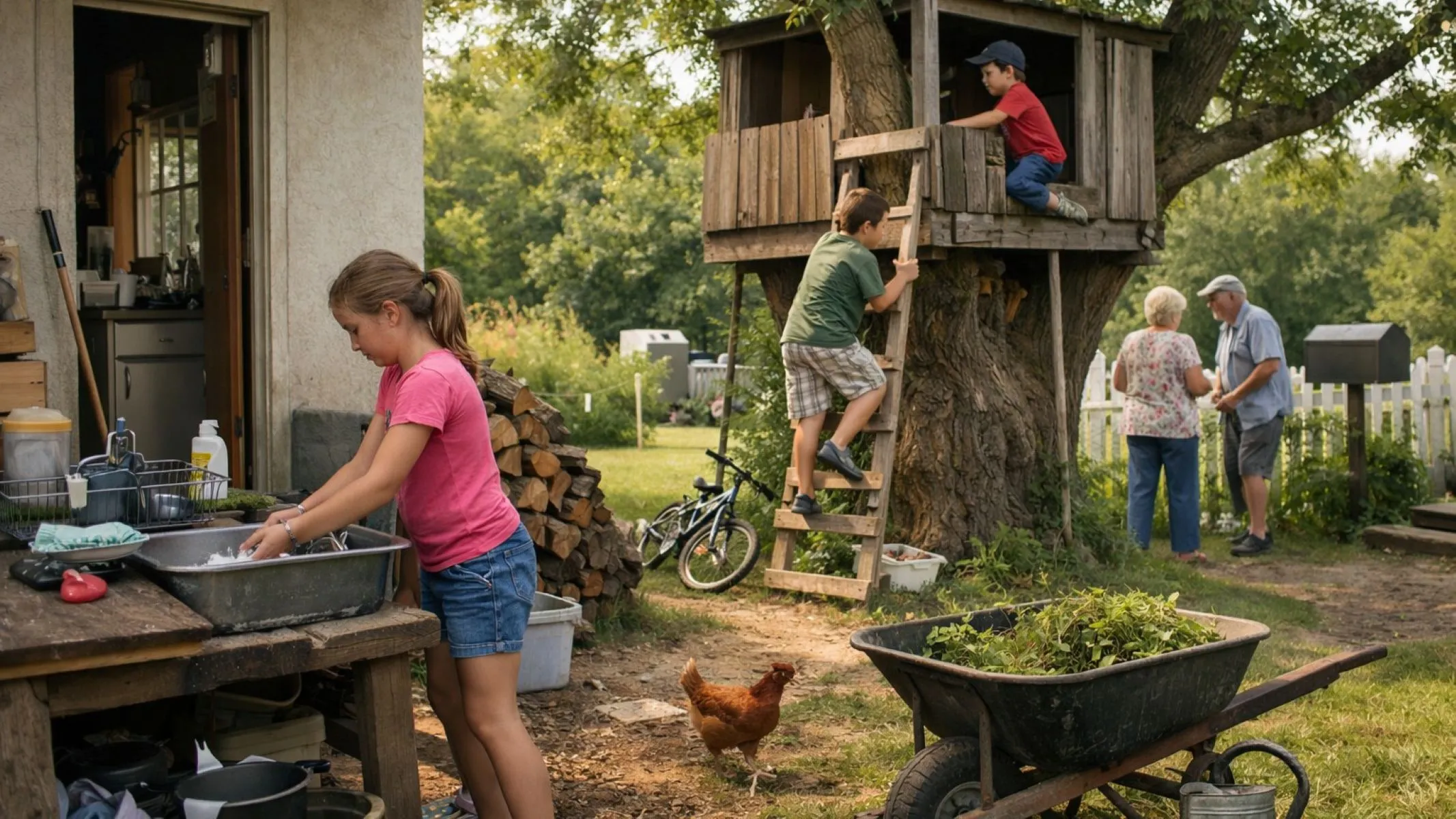
If you look back at the childhood landscapes of the late 20th century, the imagery is often defined by a sense of vastness and autonomy. Children left their homes after breakfast, navigated neighborhoods on bicycles, and returned only when the streetlights flickered to life. While we often view these memories through a lens of nostalgia, there is a deeper sociological conversation to be had about the specific childhood independence factors that shaped those generations. These weren’t just “simpler times”; they were environments specifically structured in a way that demanded—and fostered—an early sense of self-reliance.
Understanding these factors isn’t about criticizing modern parenting, which is more informed and attentive than ever. Instead, it is about identifying the missing ingredients that once naturally taught children how to navigate the world without a safety net. By examining the environmental and social shifts that have occurred over the last few decades, we can better understand how to reintegrate healthy autonomy into the lives of children today.
Understanding Childhood Independence Factors in a Modern Context
Before we dive into the specific shifts, it is helpful to define what we mean by childhood independence factors. These are the environmental conditions, parenting styles, and societal expectations that encourage a child to make decisions, solve problems, and manage risks on their own.
In the past, these developmental drivers were often “built-in” to the culture. Today, as our world becomes more digital and risk-averse, independence is often something parents have to consciously cultivate rather than something that happens by default. To bridge this gap, we must look at the pillars of self-sufficiency that once stood firm.
1. The Influence of Limited Digital Entertainment
One of the most profound shifts in the daily life of a child is the transition from a physical world to a digital one. In previous generations, entertainment was not something that was constantly available at the touch of a button. This lack of immediate, passive stimulation forced children to become the architects of their own fun—a major contributor to early maturity.
When a child is bored and lacks a screen to turn to, they are pushed into a state of creative problem-solving. They might build a fort, invent a game with complex rules, or deep-dive into a hobby. This process builds cognitive flexibility and the confidence that they can provide for their own emotional and intellectual needs, which are essential childhood independence factors.
2. The Value of Unsupervised Outdoor Play
There was once a time when “playing outside” was a primary occupation for children. This wasn’t just about physical exercise; it was about the absence of adult intervention. When children play away from the watchful eyes of parents or coaches, they are forced to negotiate social hierarchies and resolve conflicts on their own.
These hours of unsupervised time acted as a laboratory for life. If a group of children wanted to play a game of baseball, they had to organize teams and manage their own interpersonal dynamics. Without an adult to act as a constant referee, children developed a robust internal compass for social and physical safety that served them well into adulthood.
3. The Necessity of Household Contributions
In many households of the past, chores were not viewed as an optional way to earn an allowance, but as a necessary contribution to the family’s survival. Whether it was helping with a harvest or being responsible for the evening meal, children were given tasks with real-world stakes.
When a child knows their family is counting on them, it instills a sense of “earned significance.” They begin to see themselves as competent members of a team rather than passive recipients of care. This early exposure to responsibility is one of the key childhood independence factors that bridges the gap between youth and the self-sufficiency required in the professional world.
4. Moving Away from Parental Overprotection
The rise of “intensive parenting” is a relatively recent phenomenon driven by a desire to protect children from any possible discomfort. While well-intentioned, constant hovering can inadvertently signal to a child that they are incapable of handling life’s challenges. In previous generations, parents were often more “hands-off,” believing that children needed space to grow through trial and error.
This lack of overprotection allowed children to experience the world in its raw form. They learned how to talk to shopkeepers, navigate public transportation, and manage their own schedules. By allowing children to figure things out for themselves, older generations allowed their children to build a “muscle memory” for resilience.
5. Embracing Natural Consequences for Mistakes
One of the most effective teachers of self-reliance is the experience of a natural consequence. If a child in the 1970s forgot their lunch, they went hungry for the afternoon. If they failed to study, they received a poor grade without a parent demanding a retake.
Natural consequences teach a child that their actions have a direct impact on their reality. It removes the parent as the “villain” and replaces them with the logic of the world. When a child is allowed to feel the weight of their mistakes in a controlled environment, they learn to plan ahead and take ownership—cornerstone childhood independence factors for a successful adult life.
6. Early Integration into Community Responsibilities
Finally, children of previous generations were often more integrated into the broader community. They might have had paper routes, helped neighbors with yard work, or participated in local civic organizations. These interactions required them to meet the expectations of other adults and adhere to community standards of behavior.
This early exposure taught children they were part of something larger than themselves. It required professional conduct—being on time and communicating clearly—that built social maturity. By their late teens, they already had years of experience navigating the adult world, giving them a head start on independence.
Reflecting on these childhood independence factors isn’t an argument for returning to the past, but rather an invitation to find a healthy balance in the present. We can value the safety and emotional support of modern parenting while still carving out spaces for our children to be bored, to take risks, and to contribute meaningfully to their communities.
Ultimately, the goal of raising a child is to work oneself out of a job. By slowly stepping back and allowing the world to be their teacher, we give them the greatest gift possible: the quiet, steady confidence that they can handle whatever comes their way.