

Have you ever looked at the shimmering dove on your credit card and wondered how a flat surface manages to hold a three-dimensional image? It feels like a small piece of the future tucked into your wallet. For decades, holograms have captured our collective imagination, fueled largely by science fiction films where flickering blue figures deliver urgent messages across the galaxy. However, the reality of holography is even more fascinating than the movies suggest. It is a sophisticated blend of physics and artistry that changes how we perceive light and space, turning a static surface into a window to another dimension.
Understanding the Essence of a Hologram
At its core, a hologram is a physical recording of an interference pattern of light. While a traditional photograph captures the intensity of light—essentially just the colors and shadows—a hologram captures the “light field” itself. This includes the phase of the light waves, which is the secret ingredient that provides depth. When you look at a hologram, you aren’t just seeing a picture; you are seeing a reconstruction of the light waves as they originally bounced off an object. This allows for parallax, the phenomenon where the image appears to shift and change perspective as you move your head, just like a real, physical object would.
The Precision of Light: How Holograms Are Created
Creating a true hologram is a delicate process that requires incredible stability and a specific type of light. It begins with a single laser beam, chosen because laser light is coherent, meaning all the light waves are perfectly in sync. This beam is split into two distinct paths. The first is the object beam, which is directed toward the item being recorded. As this light hits the object, it scatters based on the object’s unique shape and texture.
The second path is the reference beam, which stays “pure” and travels directly to the recording medium, usually a high-resolution photographic plate or film. When these two beams meet on the plate, they create a complex microscopic pattern of light and dark areas known as an interference pattern. This pattern doesn’t look like the object at all to the naked eye; it looks more like a chaotic series of ripples or swirls. Yet, contained within those ripples is every bit of spatial data needed to rebuild the image in three dimensions.
From Patterns to Presence: How Holograms Work
The magic happens during the reconstruction phase. Once the interference pattern is recorded and developed, it acts as a very sophisticated gatekeeper for light. When you shine a light source—often another laser or a specific type of white light—through or onto the hologram, the recorded pattern diffracts the light.
This diffraction process bends the incoming light waves in such a way that they emerge on the other side exactly as they were when they first reflected off the original object. Your eyes and brain interpret these reconstructed waves as a solid, three-dimensional form. Because the light field is being physically recreated, your eyes can focus at different depths within the image, which is why holograms feel so much more “real” and tangible than a standard 2D screen.
The Two Faces of Holography: Transmission and Reflection
In the world of professional holography, there are two primary ways we encounter these images. The first is the transmission hologram. These are typically the most detailed and “deep” images, but they require a laser light source shining through the back of the film to be seen. Because they need a specific setup to view, they are most commonly found in laboratory settings or high-end art galleries where the lighting can be precisely controlled to maintain the clarity of the 3D effect.
The second, and perhaps more familiar type, is the reflection hologram. These are designed so that the image is reconstructed by light reflecting off the front surface. The brilliance of reflection holograms is that they can often be viewed under ordinary white light, such as a halogen bulb or even direct sunlight. This portability and ease of viewing are why they have become the gold standard for security features. You’ll find them on everything from passports and driver’s licenses to banknotes, providing a complex, hard-to-duplicate layer of protection against counterfeiting.
Clearing the Air: Common Misconceptions in Pop Culture
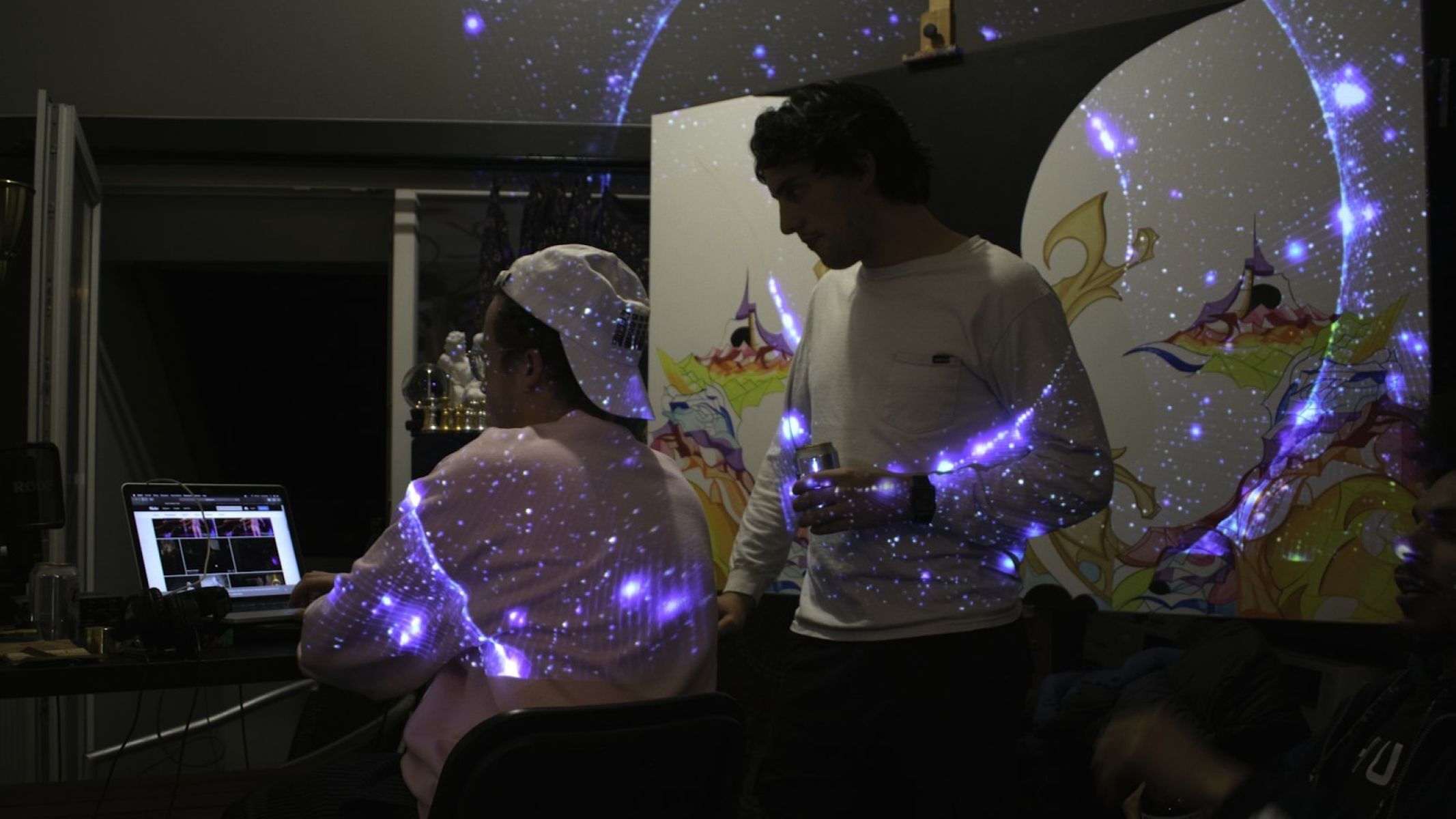
It is important to address a common “optical illusion” that often gets mislabeled in our digital age. Many of the most famous “holograms” in recent memory, such as the digital resurrection of musicians on stage or various high-tech museum displays, aren’t actually holograms at all. Most of these spectacles utilize a 19th-century theater trick known as “Pepper’s Ghost.”
In these instances, a high-definition 2D image is projected onto a floor and then reflected off a tilted, transparent screen (often made of glass or specialized foil). While the effect is stunning and creates the illusion of a person standing on stage, it lacks the true light-field data of a hologram. If you were to walk to the side of a Pepper’s Ghost display, the image would disappear or look flat, whereas a true hologram would allow you to see the “side” of the subject. While these projections are wonders of modern engineering, they are more accurately described as 2D reflections rather than 3D light-field reconstructions.
Practical Magic: Real-World Applications
Beyond the aesthetic appeal, holography serves vital roles in various industries. In the realm of data storage, holographic memory systems have the potential to store massive amounts of information within the volume of a crystal rather than just on the surface of a disc. This could revolutionize how we preserve historical archives or manage the vast data needs of artificial intelligence.
In the medical field, holography is proving to be a game-changer for surgical planning and education. Doctors can use holographic imaging to view 3D models of a patient’s internal organs or skeletal structure, allowing them to rotate the “object” and understand spatial relationships in a way that a flat X-ray or CT scan simply cannot provide. Furthermore, in the world of art and history, holography allows us to create perfect digital twins of fragile artifacts, ensuring that even if the physical object decays, its three-dimensional form is preserved for future generations to study and admire.
A Future in Full Color
As we look forward, the technology behind holography continues to shrink in size and grow in sophistication. We are moving toward a world where holographic displays might integrated into our daily communication, making long-distance conversations feel more personal and present. By understanding the difference between simple projections and the true science of light fields, we can better appreciate the incredible feat of physics that allows us to capture a moment not just in color, but in its full, three-dimensional glory.