







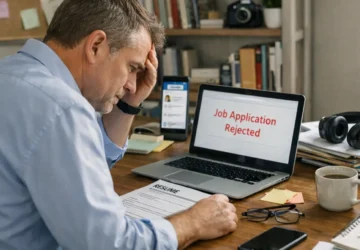
The rapid evolution of artificial intelligence and automation has sparked a global conversation that feels like it’s pulled straight from a sci-fi novel. As we watch algorithms write poetry, diagnose illnesses, and drive cars, it’s natural to feel a sense of professional vertigo. Many professionals are now looking for future-proof careers to ensure their livelihood remains secure. The “problem” isn’t just that technology is getting smarter; it’s the nagging worry that our hard-earned skills might one day be rendered obsolete by a line of code. However, while the digital tide is rising, it isn’t meant to drown us.
Understanding the landscape of future-proof careers is about recognizing the fundamental difference between processing power and human essence. This article explores the professions that remain firmly in human hands, not because technology can’t help, but because the core of the work requires a soul, an ethical compass, and a level of nuance that a machine simply cannot replicate. By reading on, you’ll discover how to position yourself in a market where being “irreplaceable” isn’t about working harder than a robot, but about being more human.
The Human-Centric Profession Dynamics
We are currently witnessing a shift from the Information Age to the Intuition Age. In the past, having the most information made you the expert. Today, Google and AI have democratized information, meaning the new value is found in how we apply that data with empathy, ethics, and social context. Technology is excellent at “narrow” tasks—calculating risks, sorting data, or following a script—but it falters when faced with the messy, unpredictable nature of human life.
The rise of automation often targets the “middle” of the labor market: routine tasks that are predictable and repetitive. What it leaves behind are two poles: the highly technical and the deeply interpersonal. The value of emotional intelligence (EQ) has skyrocketed because, while an AI can simulate sympathy, it cannot experience empathy. This distinction is vital in high-stakes decision-making where the “right” answer isn’t always the one a mathematical model suggests.
7 High-Demand Careers That Technology Cannot Replace
1. Healthcare and Medical Professionals
While AI is becoming a brilliant assistant in radiology and diagnostics, the practice of medicine remains one of the most stable future-proof careers. Surgeons, nurses, and specialized doctors do more than just “fix” a biological machine. They provide comfort during a terminal diagnosis, navigate the complex ethics of end-of-life care, and use physical intuition during a complicated procedure. A robot might have a steady hand, but it lacks the bedside manner and the holistic understanding of a patient’s life that influences recovery.
2. Mental Health Counselors and Psychologists
The human mind is not a computer that can be “rebooted” with a software patch. Mental health professionals deal in the realm of the intangible—trauma, grief, nuance, and cultural identity. Counseling requires a deep interpersonal empathy that reads between the lines of what a patient is saying. An AI might offer a breathing exercise, but it cannot sit in silence with a grieving person or provide the authentic validation that heals a broken spirit.
3. Complex Strategic Managers and Executives
Leading a multi-national corporation or a local non-profit involves more than just looking at a balance sheet. Senior executive leadership is about vision, culture-building, and crisis management. When a company faces a PR scandal or a sudden market shift, the solution isn’t found in a database. It requires human-led decision-making that weighs social responsibility, employee morale, and long-term brand legacy—factors that are often too nuanced for a binary system to compute.
4. Specialized Education Providers and Mentors
Why can’t teachers be replaced by AI? Because education is not just the delivery of facts; it’s the building of character. Great teachers provide personalized student motivation and adaptive emotional support. They notice when a child is distracted because of a hard time at home and adjust their approach accordingly. Mentorship is about inspiration and social skill modeling, helping students navigate the complexities of life, not just the complexities of a textbook.
5. Creative Industry Specialists and Fine Artists
While AI can generate an image based on a prompt, it doesn’t “create” in the traditional sense; it remixes. High-level abstract creativity involves a “spark” of human experience—pain, joy, rebellion, and love. Fine arts performers, novelists, and creative directors bring a unique perspective that resonates with other humans. True art often breaks the rules, whereas AI is bound by the patterns of the data it was trained on.
6. Skilled Trade Technicians
We often overlook the “physical” side of future-proof careers. Plumbers, electricians, and specialized HVAC technicians require complex physical dexterity and real-world problem-solving in unpredictable environments. Every house is different, every pipe layout is a puzzle, and every electrical fault requires a level of sensory interpretation that a bulky robot cannot yet navigate. These “blue-collar” roles are remarkably safe from the digital takeover.
7. Legal and Ethical Advisors
The law is rarely black and white; it’s a vast sea of grey. Legal professionals and ethical advisors do more than cite statutes. They interpret the “spirit” of the law, negotiate with opposing counsel using social cues, and provide moral reasoning in unprecedented cases. Whether it’s a high-stakes courtroom trial or an ethical board meeting for a tech company, the final word requires a human sense of justice.
Skills That Robots Simply Can’t Master
To understand why these jobs are safe, we have to look at the “moat” around them—the specific human skills that act as a barrier to automation. The most significant is deep interpersonal empathy. A machine can recognize a frown via facial recognition, but it doesn’t “know” how that frown feels. In roles like social work or emergency response, that shared human experience is the primary tool for de-escalating tension and building trust.
Another critical skill is critical nuance interpretation. Humans are masters of sarcasm, subtext, and cultural context. We can read a room and realize that even though the data says “keep going,” the “vibe” says “stop.” Coupled with crisis management leadership, where decisions must be made in seconds with incomplete information, these skills create a level of professional agility that software simply cannot match.
The Risk Zone: Careers Most Impacted by AI
It would be dishonest to say all jobs are safe. The roles most at risk are those that rely on “routine” and “standardization.” Data entry clerks, basic telemarketing roles, and routine assembly line workers are already seeing a massive shift toward automation. Even in the white-collar world, simple bookkeeping and standardized administrative support are being streamlined by algorithms. If your daily work can be described by a “if this, then that” flowchart, it is time to start looking toward upskilling into more future-proof careers.
Strategies to Remain Relevant in an AI World
The goal isn’t to fight technology, but to dance with it. Mastering AI collaboration tools is perhaps the most important strategy. The most successful professionals of the future won’t be “Human vs. AI,” but “Human + AI.” Using technology to handle the grunt work allows you to focus on the high-value, human-centric parts of your job.
Continuous upskilling is no longer optional; it’s a survival mechanism. This doesn’t necessarily mean learning to code. It might mean a nurse taking a course in advanced patient advocacy, or a manager focusing on conflict resolution workshops. Strengthening your soft skill sets—communication, leadership, and adaptability—is the best investment you can make. Finally, never underestimate the power of networking and human connection. In a world full of digital noise, who you know and how you treat them remains the ultimate professional currency.
Future-Proofing Your Path
The narrative of “robots taking our jobs” is often framed as a tragedy, but it can also be seen as an invitation. It’s an invitation to let go of the mundane, repetitive, and soul-crushing tasks that have occupied our workdays for decades. By offloading the “robotic” parts of our jobs to actual robots, we are free to lean into what makes us uniquely human: our creativity, our empathy, and our ability to lead with heart.
The most future-proof careers aren’t defined by a specific job title; they are defined by a mindset of constant evolution and a commitment to the “human” touch. As you look at your own career path, ask yourself: What can I do that a machine never will? Focus on that, and you won’t just survive the technological revolution—you’ll lead it.





No Response