
The traditional office environment often feels like a stage where the loudest voice wins, leaving many introverts feeling drained before the first coffee break is even over. If the thought of back-to-back Zoom meetings and “open-office” collaborations makes you want to retreat into your shell, you aren’t alone. Many people are now seeking a professional life that prioritizes deep focus over constant social friction. The rise of the digital economy has opened a door to entry-level remote introvert jobs—roles that allow you to contribute meaningfully from the comfort of your own space, without needing a decade of experience or a personality overhaul.
In this guide, we’re going to explore how you can transition into a career that respects your boundaries. We’ll look at roles that favor autonomy, precision, and solitary productivity, ensuring you can earn a living without sacrificing your mental energy. By the end of this article, you’ll have a clear roadmap for finding work that fits your temperament and rewards your natural inclination for quiet, focused effort.
Identifying Low-Interaction Remote Roles
Finding the right career path starts with a shift in perspective. Instead of looking for titles that sound impressive, look for “interaction density.” For an introvert, the ideal entry-level job isn’t just about working from home; it’s about working independently. Low-interaction roles are those where your output is more important than your “presence” in a digital chat room.
Many of these positions are task-oriented rather than service-oriented. This means your day is defined by a queue of work—like a stack of documents to be edited or a series of data points to be organized—rather than a ringing phone or a constant stream of Slack notifications. The beauty of the current job market is that many companies are moving toward asynchronous communication, which is a dream come true for those who prefer to think before they speak.
Evaluating Data Entry and Accuracy Requirements
One of the most accessible gateways into the remote world is data entry. It is often dismissed as mundane, but for the focused introvert, it offers a rhythmic, meditative quality that is hard to find elsewhere. You are essentially the gatekeeper of information, ensuring that databases remain clean, accurate, and functional.
While the barrier to entry is low, the requirement for precision is high. Employers in this space value individuals who can maintain a high level of accuracy over long periods. It’s a role that rewards the “quiet perfectionist.” Because these jobs are often structured around specific quotas or deadlines, you can frequently set your own pace, plugging in your headphones and disappearing into a flow state for hours at a time.
Mastering Freelance Proofreading Fundamentals
If you have a keen eye for a misplaced comma or a spelling error that everyone else missed, proofreading is a natural fit. Unlike high-level editing, which might require extensive back-and-forth with an author, entry-level proofreading is often the final “polish” on a piece of content. It’s a solitary endeavor that requires immense concentration but very little social output.
To get started, you don’t necessarily need a degree in English, but you do need a mastery of grammar and style guides. Many introverts find success here by starting on freelance platforms, taking on small blog posts or business documents. As you build a reputation for being reliable and invisible—meaning you fix the errors without causing a fuss—you’ll find that clients return to you specifically because you make their lives easier without requiring a meeting.
Exploring Asynchronous Transcription Opportunities
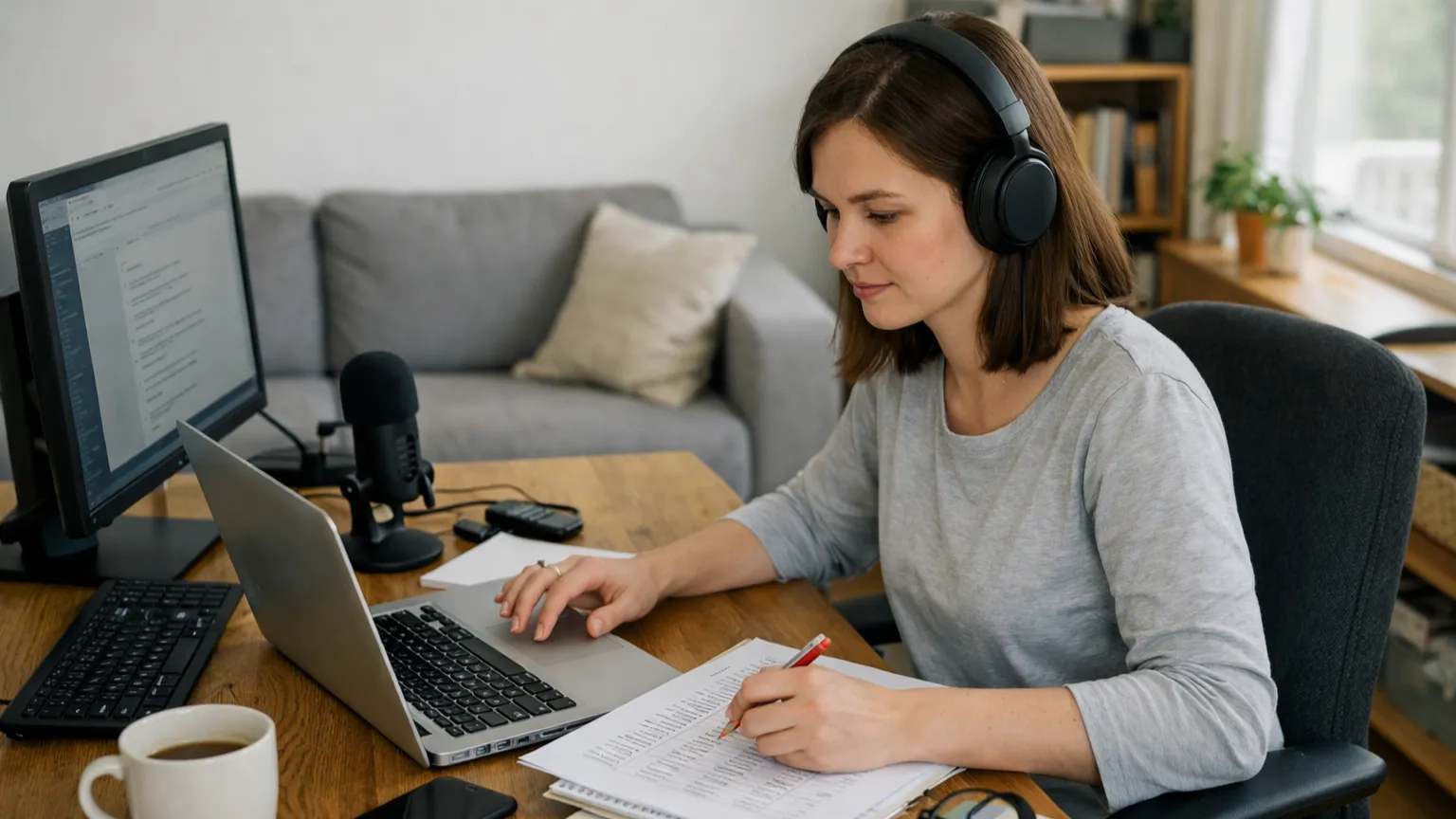
Transcription is the art of turning audio into text, and it remains one of the most stable entry-level remote introvert jobs available. The “asynchronous” nature of this work is its biggest selling point: you are given a file, you listen, you type, and you submit. There is no real-time interaction required.
This field has evolved significantly. While AI handles the rough drafts, human transcribers are needed to ensure nuance, technical terminology, and context are preserved. Whether you are working on legal depositions, medical notes, or interviews for researchers, the work demands a quiet environment and a sharp mind—two things most introverts already have in spades.
Navigating Entry-Level Virtual Assistance
You might think “Virtual Assistant” (VA) sounds like a high-interaction role, but it’s all about the niche you choose. While some VAs act as “gatekeepers” (answering phones), others focus on “back-end” administration. This includes tasks like scheduling social media posts, managing email filters, or performing market research.
The trick for introverts is to position yourself as a Technical or Administrative VA rather than a Creative or Social VA. By focusing on the “behind-the-scenes” logistics of a business, you become the engine that keeps things running while the business owner remains the face of the operation. It’s a partnership based on clear, written instructions rather than constant face-time.
Utilizing Niche Stock Photography and Micro-tasking
For those who prefer visual or highly granular tasks, there are unconventional paths that require zero prior experience. If you have a decent camera (even a modern smartphone) and an eye for detail, contributing to niche stock photography platforms can create a passive income stream. You aren’t shooting weddings or portraits; you’re shooting “objects on white backgrounds” or “textures,” tasks that are entirely solitary.
Alternatively, micro-tasking platforms allow you to perform small, discrete actions—like labeling images for AI training or verifying address data. These roles offer “immediate income” in small bursts. While they may not replace a full-time salary initially, they are perfect for building the “work-from-home muscle” without the pressure of a traditional boss or a noisy team.
Implementing Focused Content Writing Strategies
Writing is perhaps the ultimate introvert career. Content writing, specifically, allows you to become an expert on a dozen different topics from the silence of your desk. Entry-level content writing doesn’t require you to be a famous novelist; it requires you to be able to explain things clearly and follow SEO guidelines.
The key to succeeding here without burning out is to find your “focus.” Instead of trying to write about everything, find a niche that interests you. When you write, you are communicating, yes—but you are doing so on your own terms, through a keyboard, with the ability to edit and refine your thoughts before anyone ever sees them. It is communication without the vulnerability of an immediate response.
Optimizing Specialized Closed-Captioning Workflows
Closed-captioning is a cousin to transcription but with a more technical edge. It involves syncing text with video and ensuring that the timing is perfect for viewers who are deaf or hard of hearing. This role is increasingly in demand as video content continues to dominate the internet.
As one of the most technical entry-level remote introvert jobs, it’s a highly satisfying path for those who enjoy “fiddling” with software and timing. It’s a puzzle to be solved. You aren’t just transcribing words; you’re creating an accessible experience. Like most roles on this list, it’s a solo mission. Your success is measured by the quality of the file you upload, not by how well you “network” at the company holiday party.
Sustaining Long-Term Solitary Productivity
Working remotely as an introvert is a gift, but it also comes with the challenge of self-regulation. Without the external structure of an office, it’s easy for work and life to blur together. To sustain this lifestyle, you must create a “sanctuary” for your work. This doesn’t just mean a physical desk, but a mental boundary where work starts and stops.
Productivity for the remote introvert isn’t about “hustle culture”; it’s about rhythm. Use your natural ability to focus deeply by employing techniques like the Pomodoro method or time-blocking. Because you aren’t being interrupted by colleagues, you might find you can finish eight hours of “office work” in five hours of “home work.” Use that extra time to recharge your social battery, so you’re ready for the world when you choose to engage with it.
Conclusion: Your Quiet Path to Professional Success
The world is slowly realizing that you don’t need to be an extrovert to be an asset. High-autonomy remote careers aren’t just a “placeholder” for introverts; they are a way to leverage your natural strengths—attention to detail, deep focus, and independent problem-solving. Whether you start with data entry or find your niche in closed-captioning, the goal is to build a life where your work supports your well-being, rather than draining it.
The transition to entry-level remote introvert jobs takes patience, especially when you’re starting without prior experience. However, by focusing on low-interaction roles and refining your technical skills, you can create a professional environment that feels like home. Remember, your need for solitude isn’t a weakness; in the digital economy, it’s often your greatest competitive advantage.