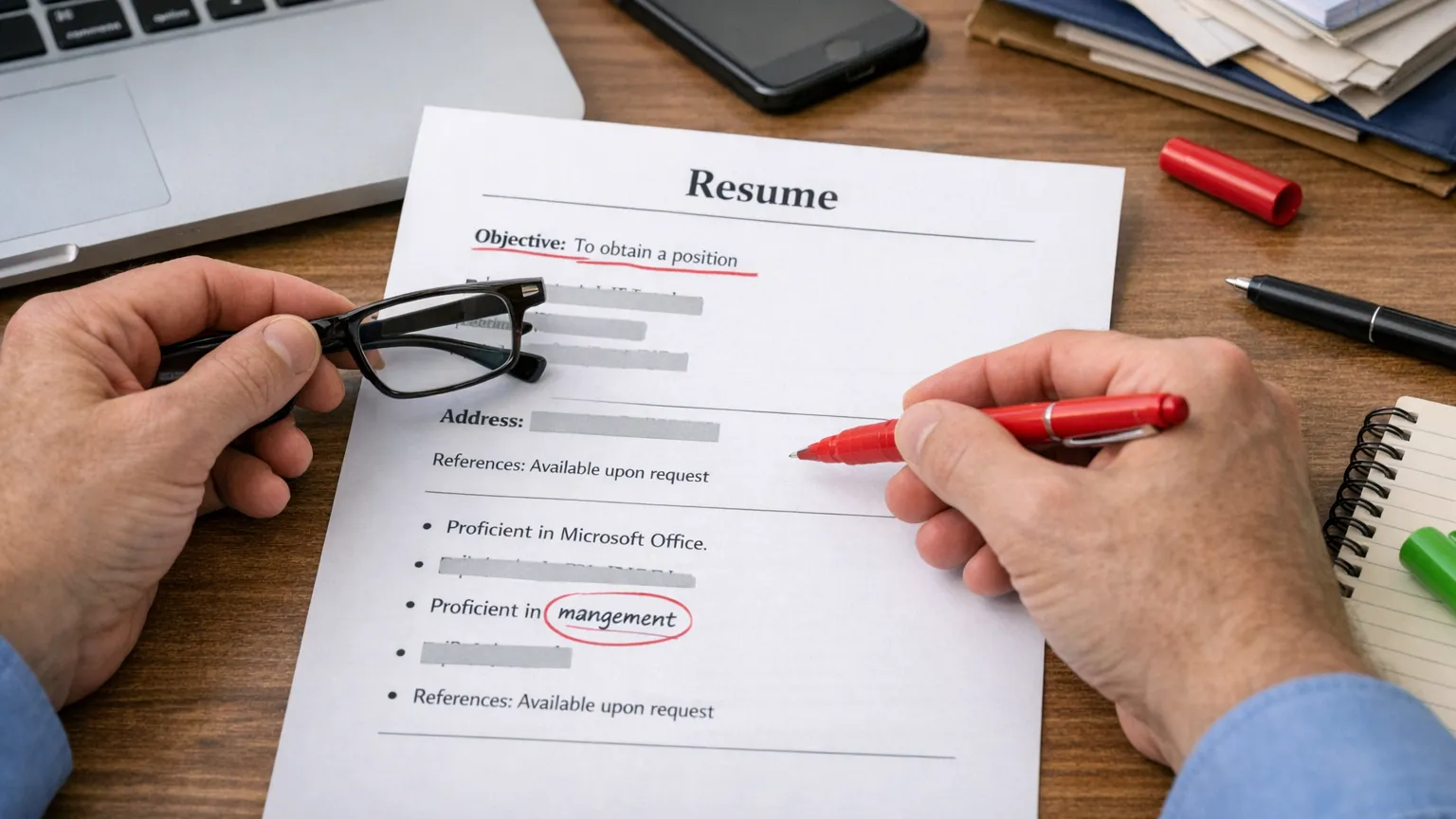
The job market is a living, breathing entity that evolves almost as fast as the technology we use to navigate it. Just a decade ago, a “solid” resume looked vastly different than the high-performance documents required to catch the eye of a modern recruiter. Many talented professionals find themselves frustrated by a lack of callbacks, unaware that they are making common resume mistakes that signal their presentation is obsolete. It’s not that their experience isn’t valuable; it’s that they are essentially showing up to a digital-first battlefield wearing the professional equivalent of chainmail armor.
A resume is no longer just a list of where you’ve been; it is a marketing pitch for where you are going. Understanding the shift from old-school documentation to modern personal branding is the first step in reclaiming your career narrative. In this guide, we will break down the “then vs. now” of resume writing, identify the subtle errors that signal to a recruiter that your skills might be stuck in the past, and provide actionable fixes to ensure your application survives the initial six-second scan.
The Evolution of the Professional Narrative
To understand where we are going, we have to look at where we started. The “Old Resume” was a physical artifact designed to be printed on heavy cream-colored cardstock. Because it was a physical document, it often included things like a full mailing address and a formal “Objective Statement” that essentially told the employer what you wanted from them, rather than what you could do for the company.
One of the most hallmark traits of the legacy resume was the phrase “References available upon request.” Today, this is viewed as “white space filler.” Recruiters already know they can ask for references; stating it just takes up valuable real estate that could be used for a hard-hitting skill or a measurable achievement. We’ve moved away from generic descriptions toward a highly tailored, surgical approach to job hunting.
Characteristics of a Format Frozen in Time
How do you know if your resume is screaming “I haven’t updated my style since 2005”? It usually starts with the aesthetics. While Times New Roman was once the gold standard, it now feels dated—the default setting of a bygone era. Modern resumes favor clean, sans-serif fonts like Calibri or Arial, which are easier to read on high-resolution screens and through Applicant Tracking Systems (ATS).
Beyond the font, content choices often betray an outdated mindset. Including high school information once you’ve been in the workforce for years is a major red flag; it suggests a lack of recent accomplishments. Similarly, listing “Basic Computer Literacy” is no longer a selling point—it’s an assumption. In the 2020s, that’s like listing “the ability to use a telephone” as a skill.
Identifying Five Critical Resume Mistakes Holding You Back
Even with a modern look, certain fundamental errors can land your application in the digital trash bin. These aren’t just stylistic choices; they are “deal-breakers” that signal a lack of professional awareness.
-
The Typos and Grammar Trap: This remains the number one reason resumes are rejected. A single typo in your contact information suggests you aren’t thorough.
-
Passive Language: Using phrases like “assisted with” minimizes your impact. Modern resumes require “Action Verbs”—words like spearheaded, negotiated, or implemented.
-
The Unprofessional Email Address: If you are still using an old handle like surferguy92@email.com, you are hurting your brand. Stick to a clean
Firstname.Lastnameformat. -
The “Wall of Text” Length: There is a myth that a resume must be exactly one page. While brevity is key, the sweet spot is usually 1–2 pages of high-impact, scannable content.
-
Lack of Digital Presence: Failing to include a customized LinkedIn URL is a missed opportunity. Today’s recruiters want to see your social proof immediately.
Strategies for Fixing Common Resume Mistakes
Fixing these errors doesn’t require a professional degree, but it does require a shift in strategy. The goal is to transform your resume from a historical record into a forward-looking marketing tool.
-
Audit Your Achievements with Data: Go through every bullet point and ask, “So what?” If you “managed a budget,” tell us how much. Numbers provide the “proof of work” that recruiters crave.
-
Adopt a Hybrid Template: Ensure the design is “ATS-friendly.” This means avoiding complex tables, headers, or graphics that might confuse the software used to scan your resume.
-
The Power of Peer Review: We often become “word blind” to our own errors. After using a digital tool for a technical sweep, give your resume to a mentor. Ask them: “If you had 10 seconds, what would you say my biggest strength is?”
-
Standardize and Secure: Always save your final document as a PDF unless explicitly asked for a Word file. This ensures your formatting stays exactly where you put it.
Closing the Gap Between You and Your Next Role
Updating a resume is more than just a chore; it is an exercise in self-reflection. By identifying and fixing these resume mistakes, you aren’t just “cleaning up a document”—you are sharpening your professional identity. The modern job market favors those who are adaptable and results-oriented. When your resume reflects these qualities, you stop being just another applicant and start being a solution to an employer’s problem.
Take an hour this weekend to look at your current resume through the lens of a skeptical recruiter. Is it a relic of the past, or a bridge to your future? If you find those old objective statements or “References upon request” lurking in the corners, hit delete. Your future self will thank you for the extra white space and the renewed focus.