






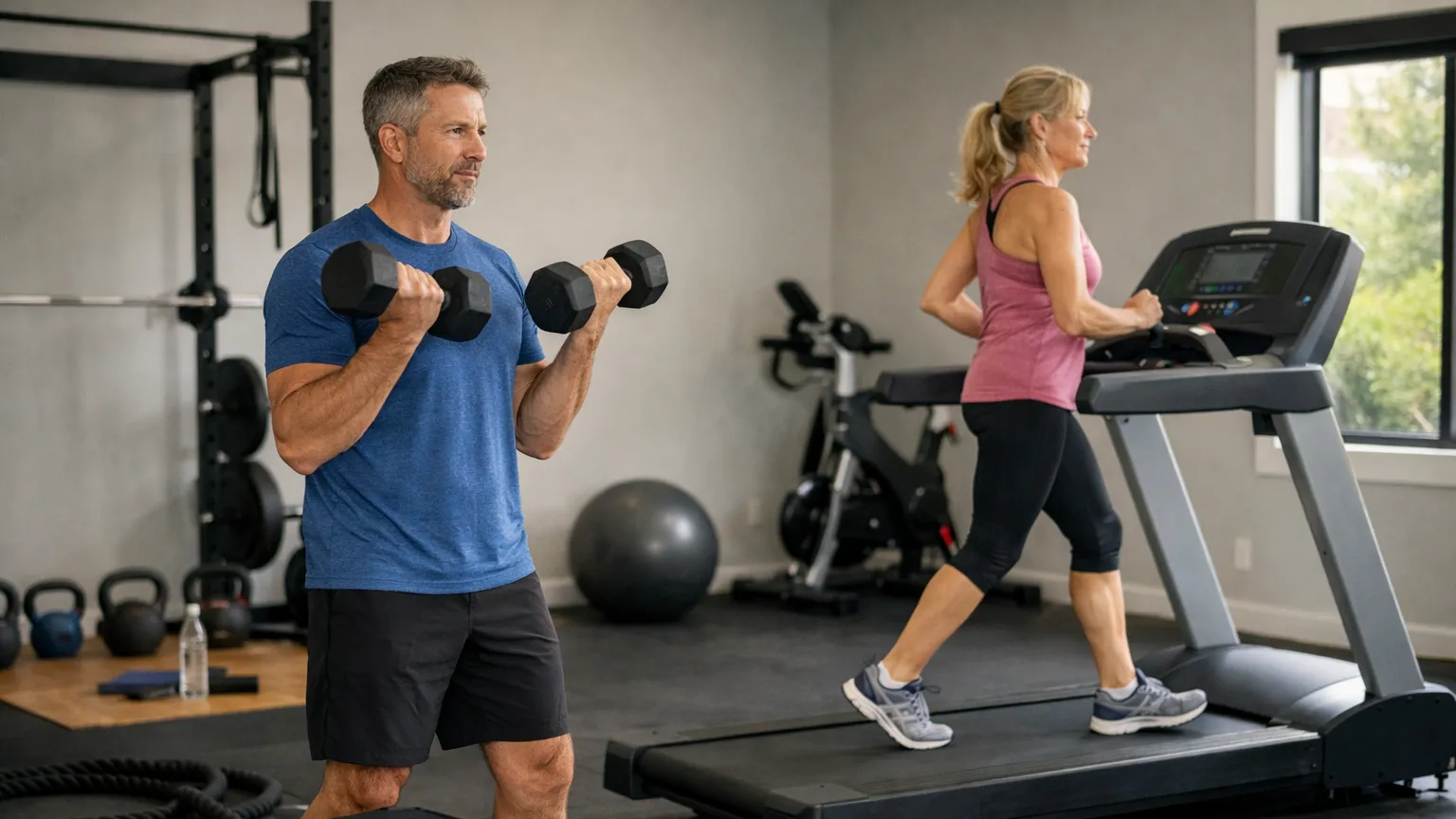
The quest for a long, vibrant life often feels like a puzzle with too many pieces. We’re told to run for our hearts, lift for our bones, and stretch for our joints, but rarely are we shown how these pieces fit together into a cohesive strategy for longevity. At its core, the goal isn’t just to add years to our life, but to add life to our years—a concept known as healthspan. Implementing a routine of Hybrid Training for Longevity is the most effective way to bridge these gaps, ensuring every physiological system is primed for the long haul.
We’ve all seen the archetypes: the marathon runner who struggles to lift a heavy suitcase, or the bodybuilder who gets winded climbing a flight of stairs. While both are “fit” in their own right, the secret to truly outrunning Father Time lies in the middle ground. By blending the heart-pumping benefits of aerobic exercise with the structural integrity provided by resistance training, we create a physiological suit of armor.
The problem most of us face isn’t a lack of will, but a lack of balance. We tend to gravitate toward what we’re good at, leaving massive gaps in our physical defenses. This article explores why the synergy of cardio and strength is the most powerful “poly-pill” available today, and how you can build a sustainable routine that ensures you’re not just living longer, but moving better well into your sunset years.
The Impact of Combined Exercise on Mortality
Science is increasingly confirming what many athletes have suspected for years: you don’t have to choose between a strong heart and strong muscles. In fact, choosing both might be the single best decision you ever make for your future self. Recent longitudinal studies have highlighted a staggering reality—individuals who regularly engage in both aerobic and muscle-strengthening activities face a 41% to 47% lower risk of all-cause mortality compared to those who do neither.
When we compare this to a sedentary lifestyle, the contrast is night and day. Inactivity is a slow-burning metabolic fire, whereas combined exercise acts as a powerful suppressant. While doing either cardio or strength training alone is infinitely better than doing nothing, it is the synergistic effect of the two that unlocks peak health. Cardio cleans the pipes and strengthens the pump, while strength training builds the frame and manages the fuel (blood sugar).
This combination doesn’t just prevent disease; it extends both your lifespan and your healthspan. Lifespan is simply the number of years you are alive, but healthspan is the period of life spent in good health, free from the chronic diseases and disabilities of aging. By adopting a hybrid training approach, you aren’t just surviving; you’re maintaining the vitality required to enjoy your extra years.
Essential Components of a Hybrid Training for Longevity Workout
Building a body that lasts requires a diversified portfolio, much like a retirement fund. You wouldn’t put all your savings into a single stock, so why put all your physical effort into a single modality? The foundation of a longevity-focused routine starts with the heart. For most adults, the “sweet spot” involves 150 to 300 minutes of moderate-intensity cardio per week—think brisk walking or cycling where you can still hold a conversation.
If you’re short on time, you can swap some of that for 75 to 150 minutes of vigorous cardio, such as running or swimming laps, which challenges your cardiovascular system to adapt more quickly. However, the heart is only half the story. To prevent the frailty that often accompanies aging, bi-weekly full-body resistance training is non-negotiable. This doesn’t mean you need to become a powerlifter; it means challenging your muscles with weights, bands, or bodyweight to maintain their size and function.
Beyond the “big two,” we must consider the nuances of movement. As we age, balance and coordination become critical for preventing falls, which are a leading cause of injury in older populations. Incorporating functional movements—like lunges, carries, and rotational exercises—builds the stability needed for daily life. Finally, a few sessions of flexibility and mobility work each week ensure that your joints remain “greased,” allowing you to move through a full range of motion without pain.
Physiological Benefits of Resistance and Aerobic Training
To understand why Hybrid Training for Longevity works, we have to look under the hood at our cellular machinery. One of the most profound benefits of aerobic exercise is the enhancement of mitochondrial efficiency. Mitochondria are the power plants of your cells; as they become more efficient, your body becomes better at burning fat and producing energy. When you pair this with resistance training, you create a metabolic powerhouse.
Strength training specifically counteracts age-related muscle loss, or sarcopenia. Starting in our 30s, we naturally begin to lose muscle mass at an alarming rate if we don’t actively work to keep it. Lifting weights sends a signal to the body to preserve that tissue, which in turn helps maintain bone density and independence. It’s the difference between being able to get out of a chair on your own at age 85 or needing assistance.
On the cardiovascular side, the goal is to increase VO2 max levels. VO2 max is a measure of the maximum amount of oxygen your body can use during exercise, and it is one of the strongest predictors of longevity. A higher VO2 max reflects improved heart and lung capacity, meaning your cardiovascular system doesn’t have to work as hard to perform daily tasks. Together, these adaptations ensure that your “engine” is powerful and your “chassis” is sturdy.
Effective Hybrid Training Schedules
The most common hurdle to hybrid training is the schedule. How do you fit it all in without burning out? The key is flexibility. One of the most popular methods is alternating strength and cardio days. For example, you might lift weights on Monday, Wednesday, and Friday, while going for a run or a swim on Tuesday and Thursday. This allows specific muscle groups to recover while you still work on your aerobic base.
If your schedule is tighter, mixed sessions with conditioning intervals can be incredibly effective. This involves a strength workout followed by 10 to 15 minutes of high-intensity cardio. For those who prefer a more “lifestyle-integrated” approach, you can’t underestimate the power of daily post-meal metabolic walks. A 10-minute walk after dinner can do wonders for blood sugar regulation and cardiovascular health with almost zero recovery cost.
For a more holistic vibe, consider yoga fused with light weights (often called “sculpt”) or short HIIT bursts for maximum efficiency. The “best” schedule is the one you can actually stick to. Whether it’s a dedicated hour at the gym or a series of small movements spread throughout the day, the cumulative effect of Hybrid Training for Longevity is what matters for long-term health.
Actionable Strategies for Long-Term Consistency
The biggest mistake people make when starting a longevity journey is doing too much, too soon. Longevity is a marathon, not a sprint. If you’re currently inactive, start with five-minute sessions. It sounds trivial, but the goal is to build the habit of showing up. Once the habit is locked in, the duration will naturally grow.
Prioritize daily intentional movement. This means looking for opportunities to move that aren’t necessarily “workouts”—take the stairs, park further away, or stand during a meeting. When you do get to the gym, target all major muscle groups at least twice a week. You don’t need a complex “body part split”; a simple routine of pushes, pulls, squats, and hinges will cover your bases.
To avoid overuse injuries and boredom, vary your activities. If your knees are feeling cranky from running, switch to the elliptical or the pool for a week. The focus should always be on consistency over intensity. A moderate workout you do four times a week for twenty years is infinitely more valuable than a grueling workout you do for three weeks and then quit.
Building Your Future, One Move at a Time
At the end of the day, Hybrid Training for Longevity is about more than just numbers on a scale or a heart rate monitor. It is about the freedom to live your life on your own terms. By combining the endurance of a runner with the strength of a lifter, you are essentially investing in a “functional insurance policy” that pays dividends every single day.
We often think of aging as a slow decline, but much of that decline is optional. While we can’t stop the clock, we can certainly slow it down. The synergy of cardio and strength training creates a resilient body capable of weathering the stresses of life, both physical and mental. You don’t need to be an elite athlete to reap these rewards; you just need to be willing to move in more ways than one.






No Response