






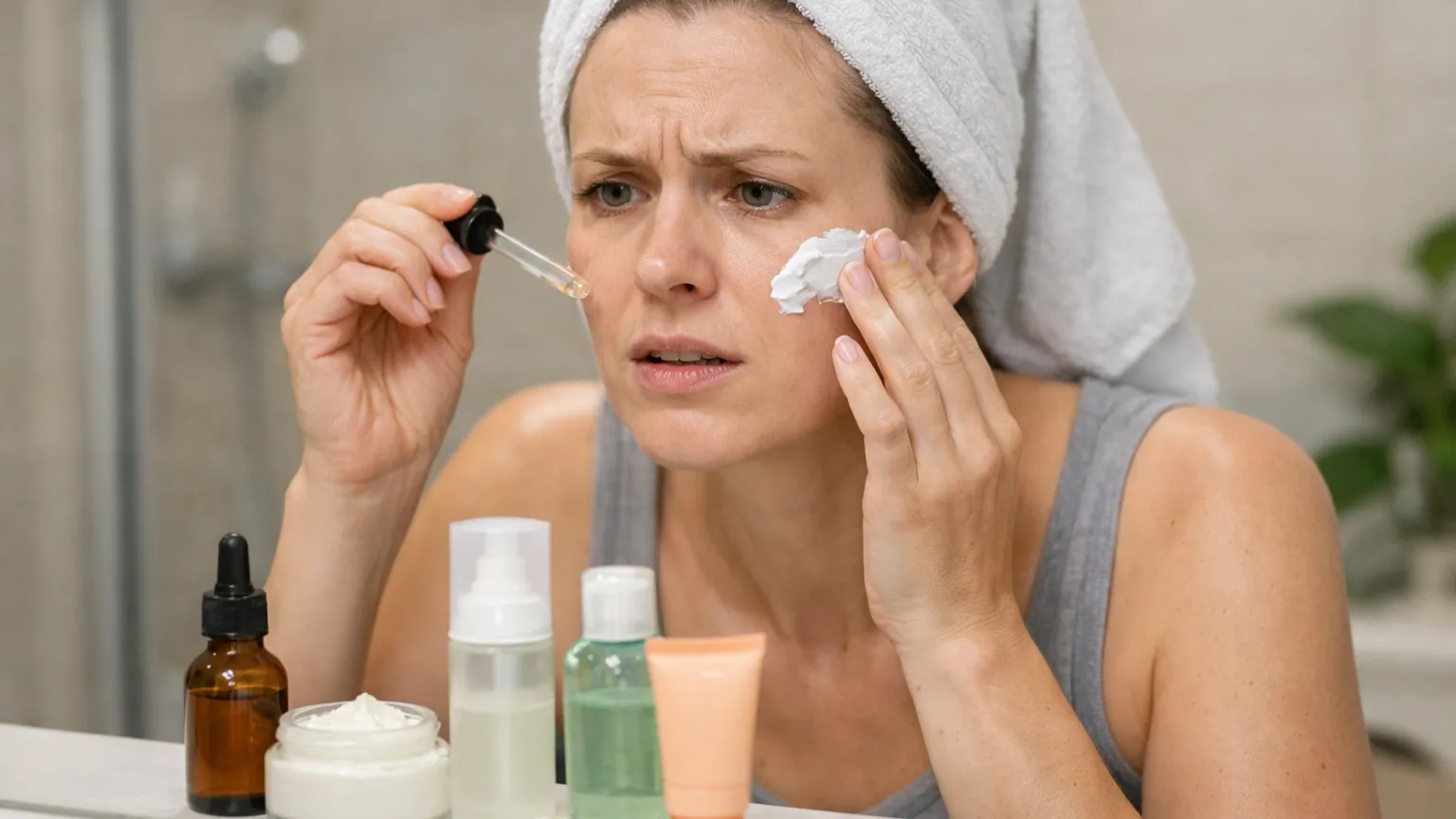
We’ve all been there—standing in front of the bathroom mirror, surrounded by sleek bottles and promising serums that cost more than a weekend getaway, yet wondering why our skin looks exactly the same as it did a month ago. It is a frustrating cycle of hope followed by disappointment. We often assume the product itself is the “dud,” but in reality, even the most expensive cream can’t perform miracles if it’s being sabotaged by common skincare routine mistakes. Skincare isn’t just about what you use; it’s an intricate dance of chemistry, timing, and biology.
Understanding skincare efficacy is about bridging the gap between a product’s potential and its actual performance on your face. We often fall into the trap of “more is better” or “expensive equals effective,” forgetting that our skin is a living, breathing barrier that requires a specific environment to absorb nutrients. If you’ve ever felt like your routine has hit a plateau, or if you’re seeing redness instead of radiance, you are likely falling victim to common application errors. By identifying these missteps, you can finally stop wasting your hard-earned money and start seeing the glow you were promised.
Why Your Premium Skincare Might Be Failing You
The chemistry of skincare is delicate. When a lab formulates a serum, they do so under strictly controlled conditions, but once that bottle enters your bathroom, the environment changes. One of the most common reasons products become ineffective is improper storage. Leaving your Vitamin C serum on a sunny windowsill or keeping your expensive creams in a humid, steam-filled bathroom can cause formulas to oxidize or break down long before their expiration date.
Furthermore, the pH level of your skin plays a massive role in how products behave. If you use a harsh, high-pH cleanser and immediately follow it with an acidic active like Glycolic acid, the product has to work twice as hard just to neutralize your skin’s surface before it can even begin to exfoliate. This “pH tug-of-war” often results in the active ingredient becoming completely neutralized, essentially leaving you with a very expensive, inactive liquid on your face.
Beyond the bottle, the health of your skin barrier is the ultimate gatekeeper. When your barrier is compromised—characterized by that tight, “squeaky clean” feeling—it develops microscopic cracks. While you might think this helps products get in deeper, it actually triggers an inflammatory response. Instead of absorbing the beneficial ingredients, your skin goes into defense mode, leading to irritation, stinging, and a total lack of visible results.
Identifying Subtle Skincare Routine Mistakes in Application
One of the most frequent errors occurs before the first drop of serum even touches your skin: applying products to a bone-dry face. Aside from specific oil-based treatments or Retinoids (which sometimes require dry skin to slow down absorption), most humectants like Hyaluronic acid need moisture to work. Applying them to dry skin in a dry environment can actually pull moisture out of your deeper skin layers, leaving you more dehydrated than before.
Then there is the issue of “poly-pharmacy” in skincare—mixing incompatible active ingredients. In our eagerness to solve every skin woe at once, we often layer Retinol with Benzoyl Peroxide or Vitamin C with AHAs. These combinations can cancel each other out or, worse, create a chemical reaction that causes significant peeling and sensitivity. It’s like trying to listen to five different songs at once; your skin gets overwhelmed and hears nothing but noise.
We also tend to be quite heavy-handed. Using excessive amounts of product doesn’t lead to faster results; it leads to “pilling.” If you’ve ever noticed small, grey flakes rolling off your skin when you apply moisturizer, you’ve hit the saturation point. Your skin can only absorb so much at a time. The rest just sits on the surface, clogging pores and creating a barrier that prevents the next step of your routine from even reaching your skin.
The Real Impact of Improper Layering
When you layer products in the wrong order, you are essentially building a wall and then trying to throw nutrients through it. The general rule of “thinnest to thickest” exists for a reason. If you apply a heavy, occlusive oil or a thick moisturizer before a water-based serum, the serum’s molecules are too large to penetrate that lipid barrier. You are effectively trapping the most expensive parts of your routine on top of a layer of oil, where they will eventually just evaporate or be wiped off on your pillowcase.
This incorrect sequencing leads to a massive waste of financial investment. Beyond the wallet, the physical toll includes an increased risk of irritation and the “sudden” appearance of acne. This isn’t always because the product is “breaking you out” in the traditional sense, but because the layered buildup is suffocating the skin and trapping bacteria and sebum. When products counteract each other, you lose the synergy that makes a routine powerful, turning a five-step system into five individual chores with zero collective benefit.
Essential Steps to Avoid Skincare Routine Mistakes
To turn things around, we need to focus on preparation and patience. The first non-negotiable step is the double cleanse. Using a balm or oil followed by a water-based cleanser ensures that the “canvas” is truly clean. If you have leftover sunscreen or silicone-heavy makeup on your face, your serums are just sitting on a film of debris. Think of it as stripping old wax off a floor before applying a new coat of polish.
Once the skin is clean, leave it slightly damp. This increases permeability and allows water-binding ingredients to lock in hydration immediately. From there, move from your most liquid products (toners and essences) to your most viscous (creams and oils). One of the hardest but most important habits to develop is the “wait time.” Giving a Vitamin C serum or a prescription treatment a minute or two to settle before moving to the next step prevents the ingredients from mixing on the surface and diluting their potency.
Finally, always finish with an occlusive layer. This doesn’t have to be a heavy grease, but it should be a moisturizer designed to “seal” the deal. This prevents Trans-Epidermal Water Loss (TEWL), ensuring that the hydration you just applied stays inside your skin throughout the day or night. And, of course, no routine is complete without sunscreen. Skipping SPF is the ultimate mistake; UV damage can undo months of brightening and anti-aging progress in a single afternoon.
Signs Your Routine Needs a Course Correction
How do you know if you’re doing it wrong? Your skin is usually quite vocal if you know how to listen. Persistent redness, a stinging sensation when you apply even basic moisturizer, or a “shiny but dry” texture are all red flags that your barrier is struggling. If you notice product “pilling” or if you’ve been using a consistent routine for three months with absolutely no change in your skin’s appearance, you are likely repeating these skincare routine mistakes.
The goal of skincare is to support your skin’s natural functions, not to overwhelm them. By correcting these application errors and respecting the science of absorption, you ensure that every drop of product is an investment in your future complexion rather than a wasted expense. Skincare is a marathon, not a sprint, and the winner is always the one who prioritizes technique over trend.






No Response