






When we think about living a long life, our minds often drift to images of colorful salads, peaceful meditation retreats, or perhaps a rigorous cardio routine. While these are all vital pieces of the puzzle, there is a silent powerhouse often overlooked in the quest for the “fountain of youth”: our skeletal muscle. Science is increasingly showing us that building muscle strength for longevity is about more than just aesthetics; muscle is a sophisticated endocrine organ that acts as the literal armor protecting our future health.
The concept of “healthspan” is becoming just as important as “lifespan.” It’s one thing to reach the age of 90; it’s another thing entirely to reach it with the strength to carry your own groceries and move without pain. By focusing on building and maintaining lean tissue, we are investing in a biological insurance policy that wards off disease and keeps us independent as the years roll by.
Understanding the Longevity-Muscle Link
To understand why muscle matters, we have to look past the surface. Every time you contract a muscle against resistance, you trigger a cascade of beneficial chemical reactions. Muscle tissue is metabolically expensive, meaning it requires more energy to maintain than fat. By increasing your muscle mass, you naturally elevate your basal metabolic rate, making it easier for your body to manage weight and energy levels.
Beyond burning calories, muscle plays a critical role in stabilizing blood glucose levels. Think of your muscles as a “metabolic sponge” for sugar; after you eat, they are the primary site for glucose disposal. When you have functional muscle mass, you significantly lower your risk of developing Type 2 diabetes. This “sponging” effect keeps your insulin sensitivity sharp, which is a hallmark of people who age successfully.
Why Developing Muscle Strength for Longevity is Essential as We Age
As we move through the decades, our bodies face a natural decline known as sarcopenia—the age-related loss of muscle mass. Starting as early as our thirties, we can lose between 3% to 8% of our muscle mass per decade. This isn’t just about losing “tone”; it’s about losing the ability to interact with the world. Sarcopenia is often the beginning of a downward spiral that leads to frailty and a higher risk of mortality.
Maintaining physical independence is perhaps the most emotional benefit of strength training. Strong muscles act as stabilizers for our joints, protecting the knees, hips, and back from wear and tear. When your muscles are robust, they take the brunt of the physical load, sparing your joints from unnecessary friction. This structural integrity is what allows us to stay active and mobile well into our golden years.
How to Effectively Improve Muscle Strength for Longevity
Building a resilient body doesn’t require living in the gym, but it does require a strategic approach. The most important principle is progressive resistance training. This means you must continually challenge your muscles by increasing the weight, repetitions, or intensity over time. Your body is incredibly adaptive; you have to give your tissues a “reason” to get stronger and stay dense.
While the lifting happens in the gym, the growth happens while you sleep. To support this process, you must optimize your daily protein intake. Protein provides the amino acids necessary to repair the micro-tears created during exercise. Coupled with this is the necessity of recovery sleep. During deep sleep, the body releases growth hormone, which is essential for tissue repair and muscle protein synthesis.
The Best Exercises for Lifelong Vitality
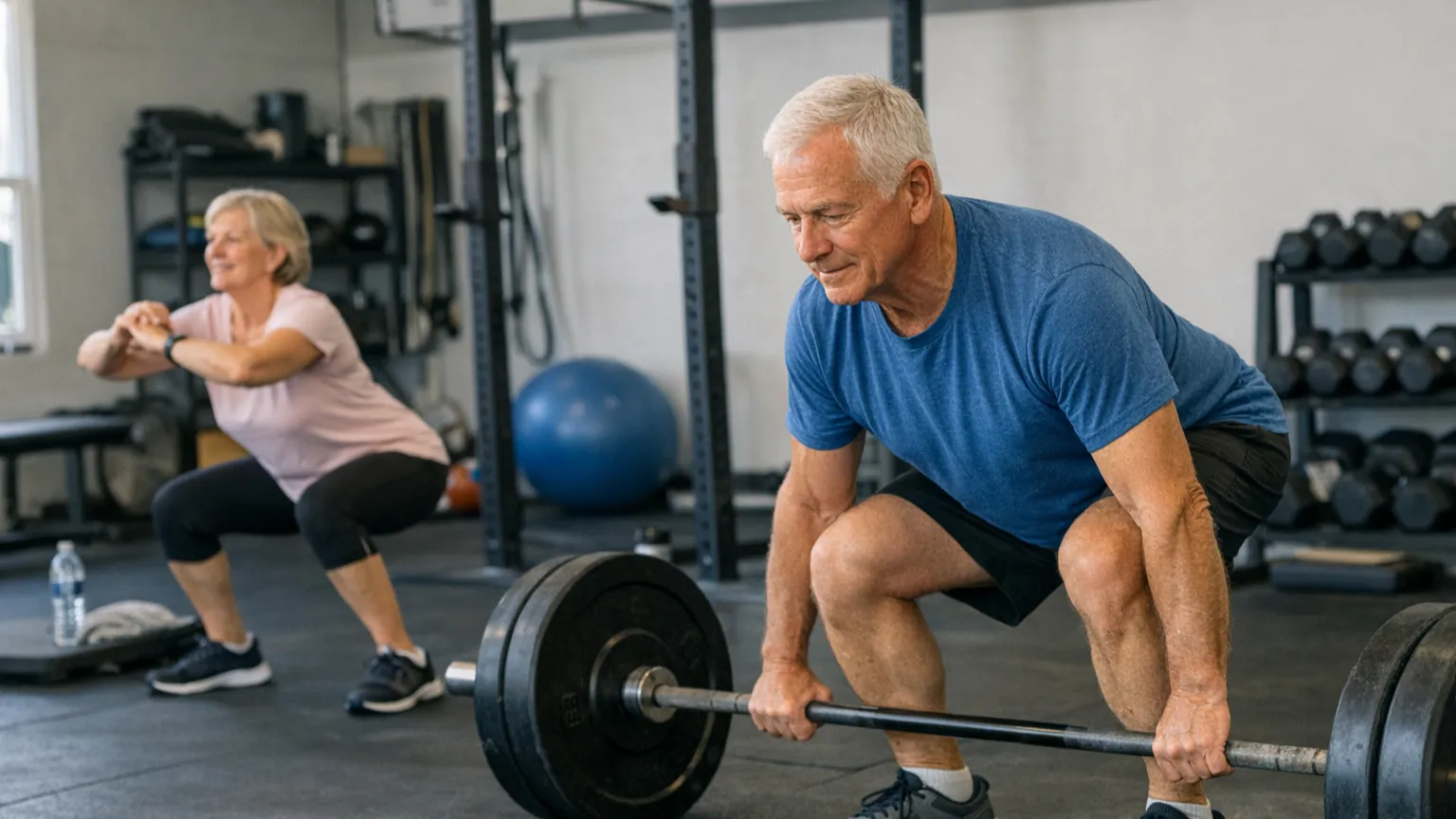
If you were to pick a “Mount Rushmore” of movements, squats would be at the center. They are the ultimate functional exercise, mimicking the act of sitting down and standing up. Squats build the quadriceps, glutes, and core, providing the foundation for all human movement. Similarly, deadlifts—when performed with proper form—strengthen the posterior chain, including the hamstrings and lower back, building the “back armor” necessary for safety.
For the upper body, the humble push-up remains one of the most effective tools for building chest and shoulder stability. To complement this, planks are essential for core stability, creating a stable cylinder around your spine. Finally, walking lunges challenge your balance and coordination while targeting the smaller stabilizing muscles around the hips and ankles, which are vital for preventing falls.
Nourishing Your Muscles for the Long Haul
Dietary choices are the fuel for your longevity engine. Beyond hitting a protein target, the quality of those calories matters. Incorporating anti-inflammatory fats, such as omega-3s found in salmon or walnuts, helps manage training-related soreness. Since the body becomes less efficient at processing protein as we age (anabolic resistance), some may benefit from essential amino acid supplementation.
Hydration is another often-overlooked factor. Our muscles are roughly 75% water, and even slight dehydration can lead to a decrease in performance. While a slight caloric surplus is often needed to build tissue, for those prioritizing muscle strength for longevity, the goal is often “maintenance-plus”—eating enough to support repair without gaining excess body fat that could strain the cardiovascular system.
Building Your Foundation
Muscle strength is not a vanity project; it is a fundamental requirement for a long, autonomous life. By prioritizing resistance training and nourishing your body correctly, you are essentially “age-proofing” your future self. The more you invest in your physical strength today, the more freedom you will have to enjoy your life for years to come.





No Response