






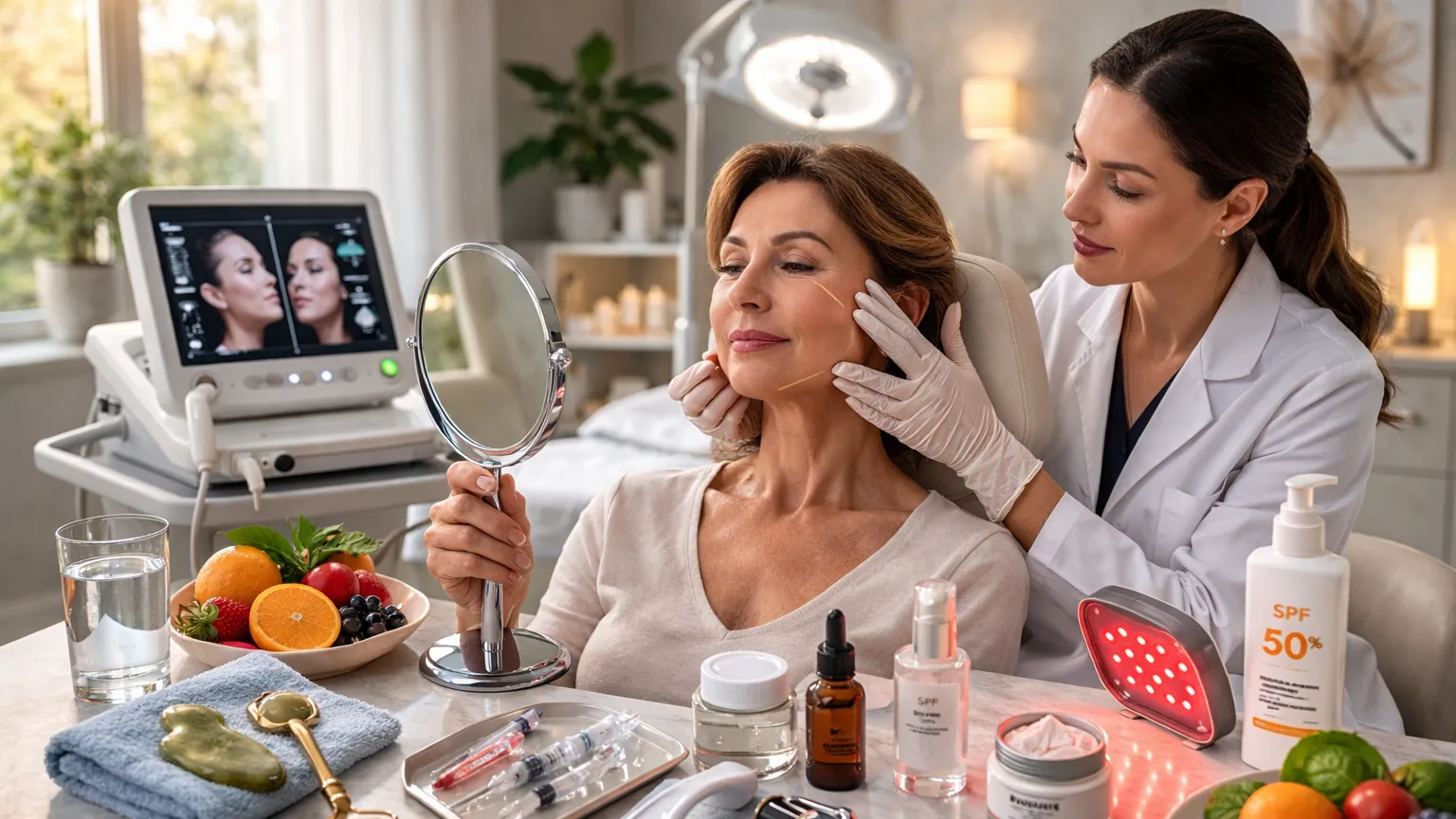
The passage of time brings a wealth of experience and wisdom, but it also introduces subtle changes to our physical appearance that can impact how we feel when we look in the mirror. One of the most common concerns as we mature is the development of sagging jowls, a natural progression where the skin along the lower jawline begins to lose its crisp definition. Finding an effective sagging jowls treatment doesn’t have to be an overwhelming journey through clinical jargon. Instead, it is an opportunity to understand the sophisticated biology of our skin and the modern innovations available to help us feel more like our best selves.
Defining Sagging Jowls and the Aging Process
Before diving into the various solutions, it is helpful to define what we mean by “sagging jowls.” This term refers to the excess or drooping skin that forms below the jawline or chin area. This happens because the structural integrity of the lower face shifts over time. While often associated with aging, the prominence of jowls is influenced by a combination of genetics, environmental factors, and internal biological shifts. Understanding this context helps us move away from seeing it as a “flaw” and instead viewing it as a physical change that can be managed with the right approach and expectations.
Understanding the Causes of Facial Sagging
The primary reason our jawline loses its sharpness is the natural depletion of collagen and elastin. These two proteins act as the scaffolding and springs of our skin; collagen provides the strength, while elastin allows the skin to “snap back” into place. As we move through our thirties and forties, our body’s production of these essential elements slows down, leading to a thinner and less resilient dermal layer.
Beyond the skin itself, significant subcutaneous fat loss plays a major role. The youthful “fat pads” in our cheeks eventually begin to shrink and descend due to gravity, which creates a hollow look in the mid-face and adds weight to the lower face. This process is often exacerbated by weakened facial ligaments that can no longer hold these tissues in their original, higher positions. Furthermore, external factors like chronic UV radiation damage from the sun and repetitive facial expressions contribute to the breakdown of fibers, making the skin more susceptible to the downward pull of gravity.
Non-Invasive Clinical Sagging Jowls Treatment
For those looking for a sagging jowls treatment that requires no downtime, non-invasive clinical options have become incredibly sophisticated. High-Intensity Focused Ultrasound (HIFU) is a popular choice, as it uses targeted energy to heat the deep layers of the tissue, triggering a natural healing response that tightens the skin from within. Similarly, radiofrequency skin tightening sessions use heat to stimulate collagen fibers, providing a gradual lifting effect that looks entirely natural.
Other surface-level treatments focus on the texture and health of the skin to complement the lifting process. Medical-grade chemical peels and laser skin resurfacing can address the damage caused by the sun, while micro-needling creates tiny “micro-injuries” that prompt the skin to produce fresh collagen. While these treatments are generally helpful for mild to moderate sagging, they offer a subtle refinement rather than a dramatic structural shift.
Minimally Invasive Injectables and Procedures
When the loss of volume is the main culprit, minimally invasive injectables provide a more targeted solution. Dermal fillers are often used to restore volume in the mid-face or along the jawline, effectively “lifting” the skin by replacing the lost fat pads. Additionally, Botox can be strategically applied to relax the muscles that pull the face downward, allowing the upward-pulling muscles to work more effectively.
For a more structural intervention without surgery, polylactic acid biostimulators can be injected to encourage the body to grow its own collagen over several months. Absorbable PDO thread lifting is another innovative option, where specialized threads are inserted under the skin to physically lift the tissue and stimulate a localized healing response. In some cases, targeted fat grafting—where a patient’s own fat is repositioned—can offer a long-lasting and natural-looking restoration of facial harmony.
Surgical Options as a Sagging Jowls Treatment
In cases where there is a significant amount of excess skin or deep tissue displacement, surgical intervention remains the gold standard for long-term results. A traditional full face-lift surgery addresses the mid-face, jawline, and neck, while a specific lower face and neck lift focuses exclusively on the area where jowls are most prominent. These procedures involve repositioning the underlying muscles and removing excess skin to create a smoother profile.
Modern techniques have evolved to be much less “tight” and more “lifted.” Deep plane facelift techniques, for example, move the entire layer of muscle and fat as one unit, avoiding the pulled look of older surgical methods. Other specialized options include buccal fat pad repositioning or endoscopic mid-face lifting, which uses small incisions and a camera to lift the cheeks. While surgery involves more recovery time, the results are typically the most transformative and durable.
Effectiveness of Facial Exercises and Yoga
In the age of social media, many people wonder if “face yoga” or specific exercises can serve as a primary sagging jowls treatment. While these movements can provide temporary muscle toning benefits and improve local circulation, their impact on skin elasticity is unfortunately minimal. Skin sagging is largely a dermal and ligament issue, rather than a purely muscular one.
In fact, some experts caution that repetitive, exaggerated facial movements might actually contribute to the worsening of expression lines or “crow’s feet.” There is currently a lack of robust clinical evidence to suggest that facial exercises can lift sagging skin in a way that compares to medical treatments. They are best viewed as a relaxing ritual or a secondary supplement to professional care, rather than a standalone cure for jowls.
Skincare Ingredients with Proven Results
A consistent at-home regimen is essential for maintaining the health of your skin and protecting the results of any clinical treatments. Topical retinoids (Vitamin A derivatives) remain the gold standard for over-the-counter care, as they are scientifically proven to speed up cell turnover and boost collagen production. Pairing these with high-concentration Vitamin C serums in the morning provides a potent antioxidant shield against environmental damage.
To support the skin’s structure, look for peptides that aid in barrier repair and growth factors that can help with cellular communication. However, the most critical step in any prevention plan is the daily application of broad-spectrum SPF 50+. Since UV rays are the primary external cause of elastin breakdown, protecting your skin from the sun is the most effective way to prevent future sagging.
Essential Lifestyle Habits for Prevention
Healthy skin starts from the inside out, and our daily habits play a quiet but powerful role in how we age. Maintaining a stable body weight is particularly important; frequent fluctuations in weight can stretch the skin and weaken its ability to bounce back. A diet rich in high-quality proteins and antioxidants provides the building blocks your body needs to repair and maintain its tissues.
Hydration is equally vital, as dehydrated skin appears thinner and more prone to fine lines. Furthermore, smoking cessation is one of the best things you can do for your complexion, as smoking restricts oxygen flow and destroys collagen fibers. Finally, prioritizing seven to nine hours of quality sleep allows the body’s natural repair mechanisms to function at their peak, ensuring you wake up looking refreshed and resilient.
At-Home Device Realities
The market is currently flooded with at-home beauty tools, from microcurrent devices to red light therapy masks. Microcurrent tools can provide a temporary lifting effect by stimulating the facial muscles, making them excellent for a “pre-event” glow. Red light therapy is also generally helpful for reducing inflammation and supporting overall skin health over time.
However, it is important to manage expectations. These devices have significant limitations compared to the “clinical power” of professional-grade machinery. While they can be a great addition to your routine, they require a high level of consistency—often daily use—to see even subtle results. They are best used as a maintenance tool to prolong the effects of professional sagging jowls treatment.
A Reflective Conclusion
Addressing the changes in our face is a personal journey that should be rooted in self-care and confidence. Whether you choose a high-tech clinical procedure, a surgical lift, or a dedicated skincare routine, the goal is to feel comfortable and vibrant in your own skin. By combining professional treatments with healthy lifestyle choices, you can effectively manage sagging jowls and maintain a jawline that reflects your inner vitality. Remember, the best approach is often a holistic one, focusing on both the science of the skin and the wellness of the whole person.





No Response