

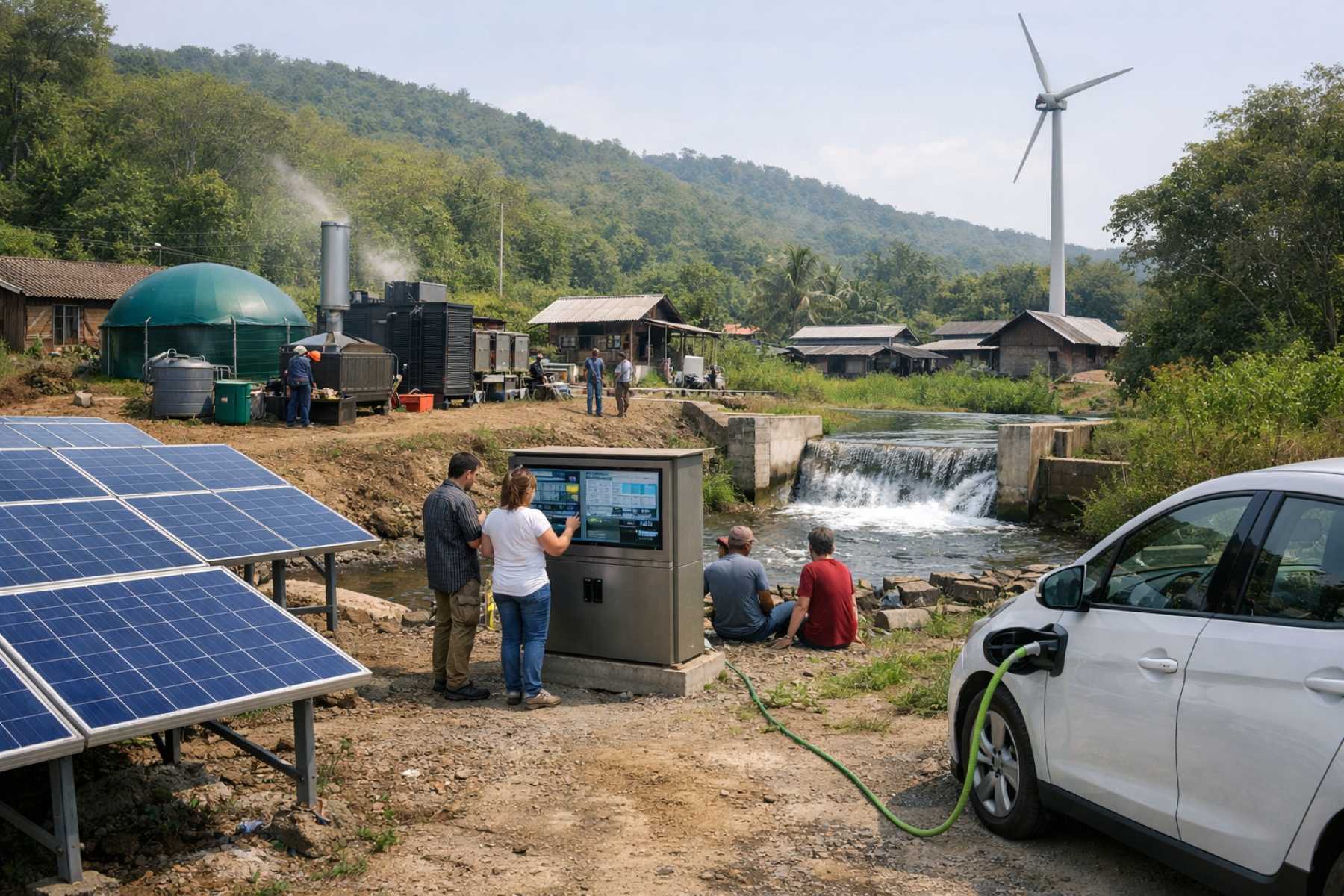
The global shift toward sustainability is often discussed in the context of glass-walled skyscrapers and sprawling urban transit systems. However, a much more quiet and profound revolution is taking place in the heart of rural landscapes. The concept of village energy is no longer just about bringing basic light to remote areas; it has evolved into a sophisticated movement toward total community self-sufficiency. By leveraging localized resources, rural areas are proving that they can lead the charge in the green energy transition while simultaneously boosting their local economies through decentralized power.
Understanding the Essence of Village Energy
Before exploring the specific technologies driving this change, it is helpful to understand what village energy truly represents. In its simplest form, it refers to the localized generation, distribution, and management of power within a rural or semi-remote community. Unlike the traditional model where power is funneled from a massive, centralized coal or gas plant hundreds of miles away, these systems are decentralized.
By keeping the production close to the point of consumption, communities reduce energy loss during transmission and gain independence from the fluctuating prices of the national grid. This autonomy fosters a sense of collective ownership and ensures that the unique needs of the village dictate how power is used.
1. Decentralized Solar Microgrid Systems
The most visible symbol of the rural energy boom is the solar microgrid. For many villages, waiting for a national grid extension is an expensive and often futile process. Solar microgrids solve this by creating a localized network of panels and battery storage that serves a cluster of homes and businesses.
These systems are particularly transformative because they allow for “productive use” of energy. Instead of just powering a single lightbulb, these grids provide enough steady current to run grain mills, refrigerators for vaccines, and water pumps for irrigation. The result is a community that doesn’t just survive after sunset but thrives economically around the clock.
2. Community-Scale Biomass Energy Conversion
In many agricultural regions, “waste” is a misunderstood resource. Every harvest leaves behind husks, stalks, and shells that are traditionally burned in open fields, contributing to air pollution. Community-scale biomass conversion turns this cycle on its head by using that organic matter as a clean fuel source.
Modern biomass plants in rural areas utilize gasification or pelletization to create heat and electricity. This creates a circular economy where the farmer provides the fuel and, in return, receives affordable energy and bio-ash, which can be reused as a nutrient-rich fertilizer. It turns a disposal problem into a cornerstone of local village energy security.
3. Small-Scale Run-of-River Hydroelectric Power
For villages located near moving water, the run-of-river hydroelectric model offers a consistent and low-impact energy solution. Unlike traditional large-scale dams that require massive flooding and environmental displacement, small-scale hydro diverts only a portion of the river’s flow through a turbine before returning it downstream.
This method preserves the local ecosystem while providing a steady “baseload” of power that isn’t dependent on the sun or wind. It is an incredibly reliable form of village energy that has allowed mountainous and riverside communities to power local schools and clinics with minimal maintenance and high longevity.
4. Integrated Wind Turbine Infrastructure
Wind energy is often associated with massive offshore farms, but smaller, integrated turbines are increasingly common in the rural toolkit. When placed strategically on ridges or open plains near a village, these turbines complement solar energy perfectly, as wind speeds often pick up at night or during cloudy weather when solar production dips.
Modern small-wind technology is designed to be quieter and safer for local wildlife, making it easier to integrate near residential areas. By combining wind with other sources, villages can achieve a balanced energy portfolio that ensures the lights stay on regardless of the season.
5. Local Organic Waste Biogas Digesters
Perhaps the most intimate form of village energy is the biogas digester. These systems are particularly effective in communities with high livestock density. By collecting animal manure and food scraps in an airtight “digester” tank, the natural process of anaerobic digestion produces methane gas.
This gas is then piped directly into kitchen stoves, replacing the need for firewood or expensive LPG tanks. For many families, this means a significant reduction in indoor air pollution and less time spent gathering fuel. The byproduct of this process is a high-quality liquid fertilizer, further supporting the village’s agricultural health.
6. Shared Electric Vehicle Charging Stations
As the world pivots toward electric mobility, rural areas are finding creative ways to ensure they aren’t left behind. Shared electric vehicle (EV) charging stations are becoming vital hubs in the village energy ecosystem. These stations often serve electric two-wheelers, three-wheelers, or small tractors that are essential for local transport and farming.
By integrating these charging points with the local microgrid, the village can ensure that transportation costs remain low and predictable. It also opens up new opportunities for “e-mobility as a service,” where residents can rent electric transport, reducing the barrier to entry for modern, clean transportation.
7. Smart Grid Energy Monitoring Technology
The final piece of the puzzle is the “brain” that manages these various energy sources. Smart grid technology, once reserved for major cities, is now being scaled down for village use. Through simple mobile apps or community dashboards, residents can monitor how much energy is being produced and consumed in real-time.
This transparency allows for “demand-side management,” where the community can decide to run heavy machinery during peak production hours (like midday when the sun is brightest). It fosters a culture of conservation and ensures that the village’s energy assets are used as efficiently as possible, extending the life of the infrastructure and lowering costs for everyone.
The transition to localized village energy is more than just a technical upgrade; it is a path toward dignity and resilience. When a community controls its own power source, it gains the ability to chart its own economic destiny. From the reliable flow of a small river to the solar panels on a school roof, these innovations are proving that rural areas can be the most forward-thinking players in the global energy transition.
By embracing these seven innovations, villages around the world are transforming from passive energy consumers into active, self-sufficient power hubs, setting an example for the rest of the world to follow.