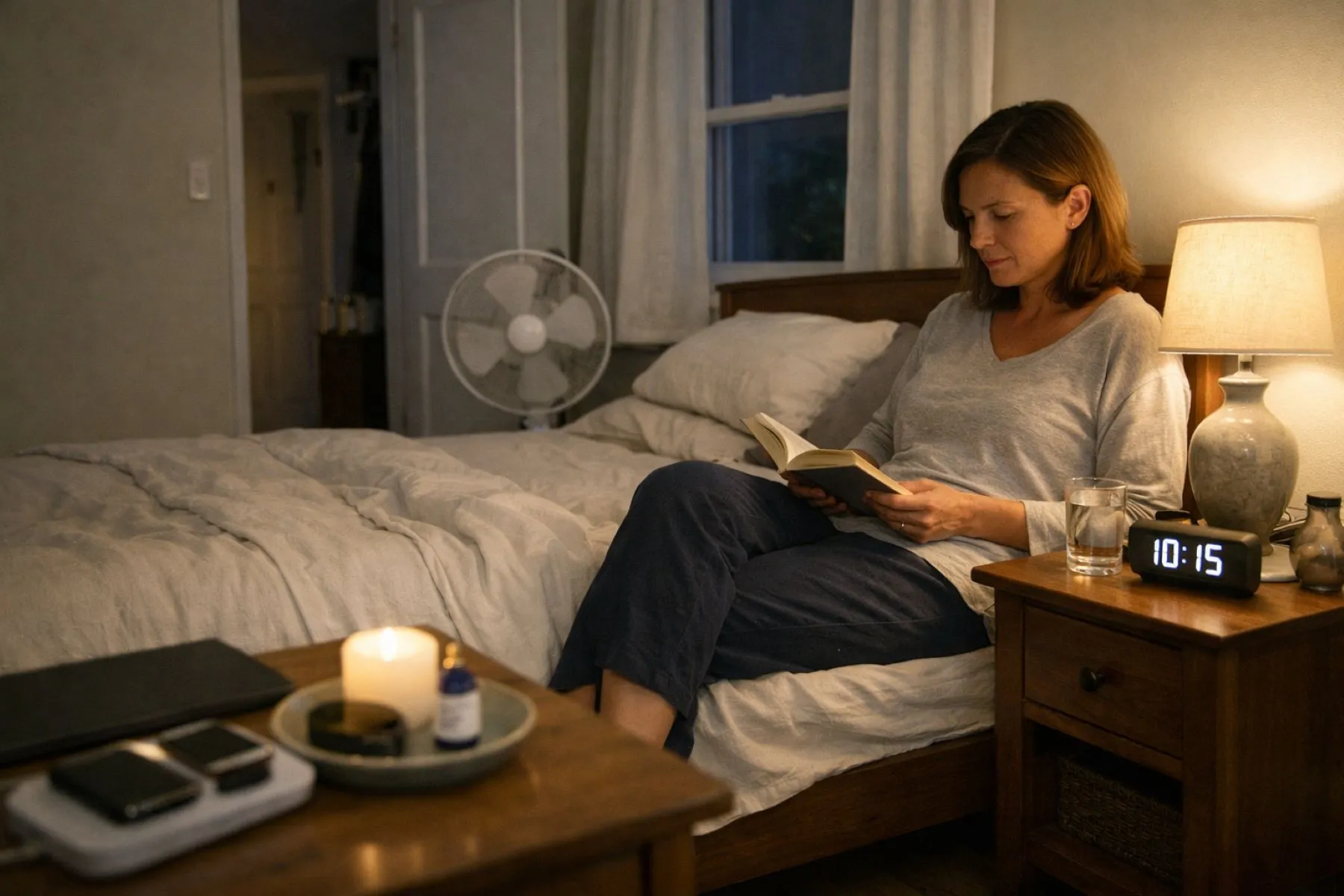
We’ve all been there: lying in bed at 2:00 AM, staring at the ceiling, and mentally calculating how many hours of sleep we’ll get if we fall asleep right this second. Usually, the answer is “not enough.” Sleep is the foundation of our physical health and mental clarity, yet it’s often the first thing we sacrifice when life gets busy. While we know we should be resting more, the term sleep hygiene often sounds like another chore—a rigid set of rules that requires us to overhaul our entire existence just to get some decent shut-eye.
The reality is that sleep hygiene isn’t about becoming a monk or living in a cave; it’s about fine-tuning the environment and habits that govern our internal clock. Many people struggle with daytime fatigue, brain fog, and irritability simply because their evening routines are working against their biology. The good news is that you don’t need to quit your job or spend thousands on a smart mattress to see a difference. By making subtle, strategic adjustments to your daily flow, you can signal to your brain that it’s time to transition from high-alert mode to deep restoration.
In this guide, we’re going to explore how to master the core principles of sleep hygiene through small, manageable shifts. If you’ve been feeling like a zombie lately or just want to wake up feeling actually refreshed for once, these seven practical steps will help you reclaim your nights without turning your lifestyle upside down.
Understanding the Rhythm of Rest
Before we dive into the “how,” it’s helpful to understand the “why.” Our bodies operate on a circadian rhythm—a 24-hour internal clock that responds primarily to light and darkness. Modern life, with its late-night emails and high-octane espresso, essentially throws a wrench into this clock. Proper sleep hygiene is simply the practice of removing those “wrenches” so your body can do what it’s naturally designed to do.
It is less about forcing sleep and more about creating the conditions where sleep becomes inevitable. When we talk about “hygiene” in this context, we mean cleanliness for the mind and the senses. By clearing away the clutter of stimulation and physical discomfort, we pave a smoother road to REM sleep and deep physical recovery.
Establish Consistent Daily Wake Times
Most people focus on their bedtime when they want to fix their sleep, but the secret actually starts in the morning. Your body’s internal clock resets the moment you open your eyes. If you wake up at 7:00 AM on weekdays but sleep in until 11:00 AM on Saturday, you’re essentially giving yourself “social jetlag.” This makes Sunday night a struggle and Monday morning a nightmare.
Try to pick a wake-up time that works for your schedule and stick to it, even on weekends. Consistency is the language of the nervous system. When your brain knows exactly when the day begins, it becomes much more efficient at knowing when the day should end. You don’t have to be an extreme early bird; you just have to be a consistent one. Over time, you’ll find yourself waking up naturally before your alarm, which is the ultimate sign of a well-tuned internal clock.
Maximize Natural Morning Sunlight Exposure
Light is the most powerful signal for our circadian rhythm. When natural sunlight hits your retinas early in the morning, it triggers a rush of cortisol to wake you up and, more importantly, sets a timer for the release of melatonin (the sleep hormone) about 12 to 14 hours later.
You don’t need to go on a five-mile hike at dawn. Simply drinking your coffee by a sunny window, stepping onto your balcony for five minutes, or taking a short walk around the block can do the trick. Even on cloudy days, the natural light outdoors is significantly more powerful than the artificial lights in your office. This simple habit “anchors” your day, making it significantly easier to feel sleepy when the sun goes down.
Limit Caffeine Intake After Midday for Better Sleep Hygiene
We all love our midday pick-me-up, but caffeine is a bit of a double agent. It works by blocking adenosine, a chemical in your brain that builds up throughout the day to create “sleep pressure.” While that 3:00 PM latte makes you feel alert, the caffeine is still circulating in your system hours later.
Caffeine has a half-life of about five to six hours. This means if you have a cup of coffee at 4:00 PM, half of that caffeine is still buzzing around your brain at 10:00 PM. To keep your sleep hygiene intact without giving up your morning ritual, try setting a “caffeine cutoff” at noon or 2:00 PM. Switching to herbal tea or decaf in the afternoon allows your body to naturally build up that necessary sleep pressure by the time your head hits the pillow.
Optimize Bedroom Temperature and Airflow
Your body temperature needs to drop by about two to three degrees Fahrenheit to initiate sleep and stay asleep. A room that is too hot is one of the most common, yet overlooked, disruptors of deep sleep. If you’ve ever tossed and turned on a humid summer night, you know exactly how frustrating this can be.
The ideal sleep environment is generally cool—somewhere around 65°F (18°C). If you don’t want to crank up the AC, you can achieve a similar effect by using breathable cotton sheets, opening a window for cross-ventilation, or using a ceiling fan. Better airflow doesn’t just keep you cool; it prevents the air from feeling “stale,” which can help you breathe more easily and reduce those annoying middle-of-the-night wake-ups.
Minimize Evening Blue Light Exposure
In the natural world, the only light after sunset is the warm, dim glow of fire or the moon. In the modern world, we have high-intensity blue light beaming directly into our eyes from smartphones, tablets, and TVs. This blue light mimics the sun, tricking your brain into thinking it’s still midday and suppressing melatonin production.
You don’t have to live in total darkness, but dimming the overhead lights an hour before bed can make a massive difference. Most devices now have a “Night Shift” or “Blue Light Filter” mode—use them! Even better, try swapping the doom-scrolling for a physical book or a podcast. By reducing the intensity of the light your eyes take in, you allow your brain to start the natural “power down” sequence, a core pillar of effective sleep hygiene.
Create a Brief Wind-Down Ritual
Our brains aren’t light switches; they are more like jumbo jets that need a long runway to land safely. If you go straight from a high-stress work email or an intense action movie to trying to sleep, your brain will still be racing at 100 mph. A wind-down ritual doesn’t need to be an hour-long meditation session; it just needs to be a predictable sequence of relaxing events.
This could be as simple as washing your face, stretching for five minutes, or writing down a “to-do” list for the next day to get those nagging thoughts out of your head. The goal is to create a Pavlovian response: when you do these things, your body recognizes the signal that sleep is coming. It’s about transition—moving from the “doing” mode of the day to the “being” mode of the night.
Keep Digital Devices Outside the Bedroom
This is perhaps the most challenging tip for the modern human, but it is also the most effective way to protect your sleep hygiene. The bedroom should be a sanctuary for two things only: sleep and intimacy. When we bring our phones into bed, we bring the entire world with us—work stress, social media comparisons, and the endless news cycle.
Furthermore, the temptation to check “just one more thing” when you can’t sleep is too high if the phone is within arm’s reach. Try charging your phone in the kitchen or the bathroom. If you use your phone as an alarm, buy a cheap analog alarm clock. By removing the digital tether, you give your mind the permission it needs to truly disconnect and drift off without distraction.
Small Changes, Better Mornings
Improving your sleep hygiene doesn’t require a radical life makeover. It’s about understanding that your habits during the day directly dictate the quality of your rest at night. By stabilizing your wake times, managing your light exposure, and creating a cool, tech-free sanctuary, you are essentially giving your body the “green light” to recover.
Remember, you don’t have to implement all seven of these changes tonight. Start with one or two—perhaps the caffeine cutoff or moving your phone out of the bedroom—and notice how you feel after a week. Sleep is not a luxury; it is a biological necessity that fuels your creativity, your mood, and your longevity. You deserve to wake up feeling like the best version of yourself.