

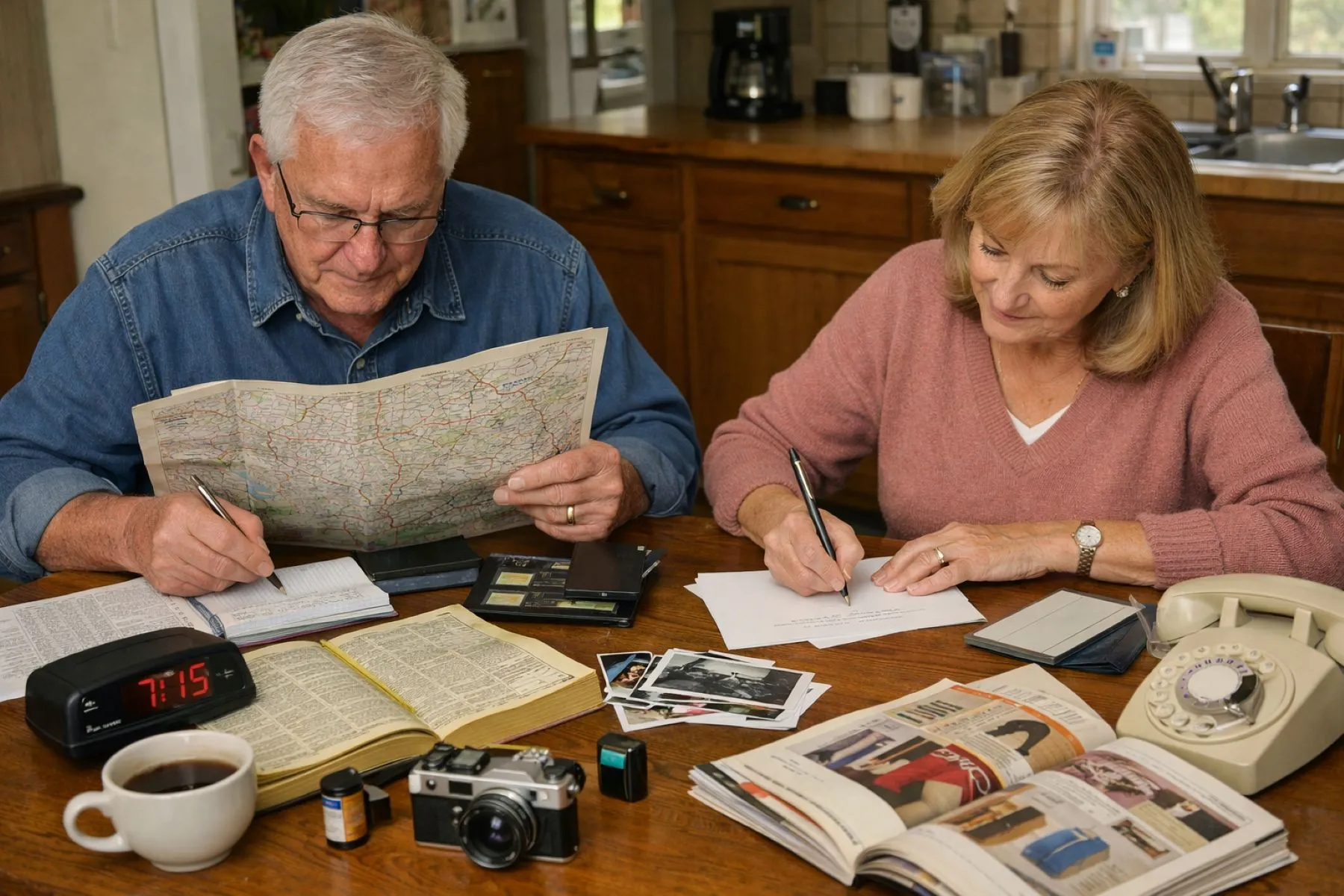
Change has a funny way of creeping up on us until, one day, we wake up and realize the world looks nothing like it did twenty years ago. For the Baby Boomer generation, those born between 1946 and 1964, the shift hasn’t just been about upgrading gadgets; it’s been a total overhaul of the daily rituals that once defined “normal” life. Many Baby Boomer habits and technology shifts that were once considered essential life skills—things taught in schools and passed down through families—have effectively been erased by the silent efficiency of the smartphone.
Understanding this shift is more than just a trip down memory lane. It’s a look at how our brains have rewired themselves to favor speed over patience and convenience over tactile experience. While younger generations may view these old habits as “quaint,” they actually formed the backbone of social interaction and personal organization for decades. By exploring what has been lost and what has been gained, we can better understand the current digital landscape and how these legacy behaviors continue to influence our modern values.
The Quiet Death of the Morning Ritual
For a Baby Boomer, the day didn’t start with a thumb-scroll through a social media feed. It started with the rhythmic “thwack” of a rolled-up newspaper hitting the driveway. This physical ritual—brewing a pot of coffee and unfolding the broadsheet—was a slow-burn entry into the world’s problems. Today, the 24-hour news cycle has replaced the morning paper, turning a once-focused habit into a constant stream of notifications. The loss of the physical newspaper didn’t just hurt the print industry; it changed how we process information, moving us from deep, linear reading to the fragmented scanning of headlines.
The Arithmetic of the Kitchen Table
There was a time when the “family books” were a literal thing. Balancing a checkbook by hand was a monthly rite of passage. It required a seat at the kitchen table, a stack of receipts, and a pencil with a good eraser. You had to account for “floating” checks and wait for the bank statement to arrive in the mail to know exactly where you stood. Modern banking apps have eradicated this habit by providing real-time balances. While this has certainly reduced math-induced headaches, it has also removed the forced period of reflection where families had to sit down and physically confront their spending habits.
Finding Our Way Without a Guide
If you wanted to go on a road trip in 1985, you didn’t just “go.” You sat down with a giant, folding paper map or a spiral-bound Thomas Guide. Navigating required a high level of spatial awareness and the ability to plan for mistakes. Today, GPS has made it nearly impossible to get lost, but it has also made us less aware of our surroundings. We follow a blue dot rather than landmarks, trading the skill of navigation for the convenience of voice-activated turn-by-turn instructions.
The Erasure of Mental Archives
Most Baby Boomers can still recite the phone numbers of their childhood best friends and their third cousins. Before contact lists lived in the cloud, your brain was your primary database. Memorizing telephone numbers was a necessity of social life. Now, we struggle to remember our own partner’s number if our phone dies. This shift represents a broader transition in human cognition: we no longer store information; we store the knowledge of where to find information.
The Lost Art of the Handwritten Letter
There is a specific weight and scent to a letter that has traveled through the postal system. For decades, writing, licking a stamp, and walking to a mailbox was how you maintained long-distance relationships. It was a slow, deliberate form of communication that required patience. The instant gratification of texting and email has effectively killed the “pen pal” culture. While we are more connected than ever, the depth and permanence of our written thoughts have often been sacrificed for brevity and speed.
Letting Go of the Heavy Lifting: 9 Habits Transformed by the Digital Age
The following shifts represent the most significant “cultural erasures” where traditional Baby Boomer habits and technology met the unstoppable force of digital innovation.
-
Browsing the Yellow Pages: There was once a massive, yellow tome sitting under every telephone. If you needed a plumber or a pizza, you flipped through thousands of thin pages. Today, the “Let your fingers do the walking” slogan has been replaced by “Google it.”
-
Using Dedicated Alarm Clocks: The bedside table used to be home to a ticking clock or a wood-paneled clock radio. Now, the smartphone is the last thing we see at night and the first thing we hear in the morning, effectively consolidating our sleep hygiene and our communication into one device.
-
Developing Rolls of Camera Film: The “delayed gratification” of photography was a staple of Boomer life. You took 24 photos, dropped the canister at a drugstore, and waited a week to see if any were actually in focus. Modern digital photography allows for 1,000 shots in a minute, but we’ve lost the preciousness of the single, physical print.
-
Shopping via Mail Catalogs: Before Amazon, there was the Sears Catalog. Circling items with a pen and mailing in an order form was the peak of convenience. Now, the “Buy Now” button has shortened the distance between desire and delivery to mere seconds.
-
The Ritual of the CD or Record Store: Searching through crates for a specific album was a social and physical experience. Streaming has made music a utility—always available, but often less “owned” in the emotional sense.
-
Calling a “Time and Weather” Number: Many Boomers remember dialing a specific local number just to hear an automated voice give the exact time and temperature. Now, that information is permanently etched into the corner of every screen we own.
-
Physical Filing Cabinets: The “home office” used to be defined by metal drawers full of manila folders. Paperless billing and cloud storage have turned those bulky furniture pieces into relics.
-
TV Guide Subscriptions: You used to have to plan your week around a physical magazine that told you when your favorite show was airing. The “appointment viewing” habit has been completely dismantled by the on-demand nature of streaming services.
-
Collecting Encyclopedias: A shelf full of leather-bound encyclopedias was once a symbol of a household’s commitment to knowledge. Wikipedia has not only replaced the books but has ensured the information is updated by the minute rather than once a decade.
Navigating the New Normal: Practical Advice
As we move further away from these traditional Baby Boomer habits and technology, it’s important to find a balance that keeps us grounded. We don’t need to go back to paper maps, but we can adopt a few “analog” mindsets to improve our digital lives.
-
Practice “Analog Intermissions”: Set aside time to read a physical book or write a card to a friend. The tactile experience can reduce digital eye strain and lower stress.
-
Audit Your Digital Memory: Don’t rely solely on the cloud. Print a few photos every year. Physical artifacts have a way of surviving history better than a forgotten Google Drive account.
-
Manual Check-ins: Even if you use an app for banking, sit down once a month to look at your “big picture” finances. The ritual of review is more important than the method of calculation.
The Lasting Legacy of the Boomer Era
The eradication of these habits isn’t necessarily a tragedy, but it is a profound cultural shift. Baby Boomers were the last generation to grow up in a world that moved at the speed of paper and human speech. As we look at the current generations, we see the benefits of their digital fluency—they are faster, more connected, and more efficient. However, the lasting impact of those traditional Baby Boomer habits and technology remains: they taught us patience, the value of physical objects, and the importance of focused attention.
By reflecting on these nine lost habits, we can choose to carry forward the best parts of both worlds. We can enjoy the convenience of the smartphone while still appreciating the depth of a handwritten note or the clarity of a dedicated hour of reading.