






Imagine the hum of your refrigerator suddenly cutting out. At first, it’s a minor inconvenience—a flickering light, a silent television. But as the hours stretch into days, the reality of a long-term power outage begins to set in. Your kitchen, once a hub of fresh ingredients and electric convenience, transforms into a challenge. Without a stove, a microwave, or a working freezer, the question of what to eat becomes more than just a matter of appetite; it becomes a matter of resilience. Preparing for these moments requires a stash of emergency survival foods to ensure your family remains nourished, hydrated, and calm until the grid returns to life.
What Makes a Food “Survival-Ready”?
When the lights go out for the long haul, your relationship with food changes. You are no longer looking for the perfect sear; you are looking for efficiency. The most critical characteristic of a disaster-ready pantry is that it requires no cooking. If the gas lines are off and the electric range is dead, a bag of raw pasta is just a bag of hard plastic. You need items that are “pop and eat.”
Beyond ease of use, high calorie density is your best friend. In high-stress situations, your body burns through energy faster than usual. Furthermore, because water can become a precious commodity if pumps fail, your stockpile should focus on items that require minimal water usage. Salty snacks might taste good, but if they force you to dip into your drinking water reserves, they might be more trouble than they’re worth.
Building Your Protein Foundation with Emergency Survival Foods
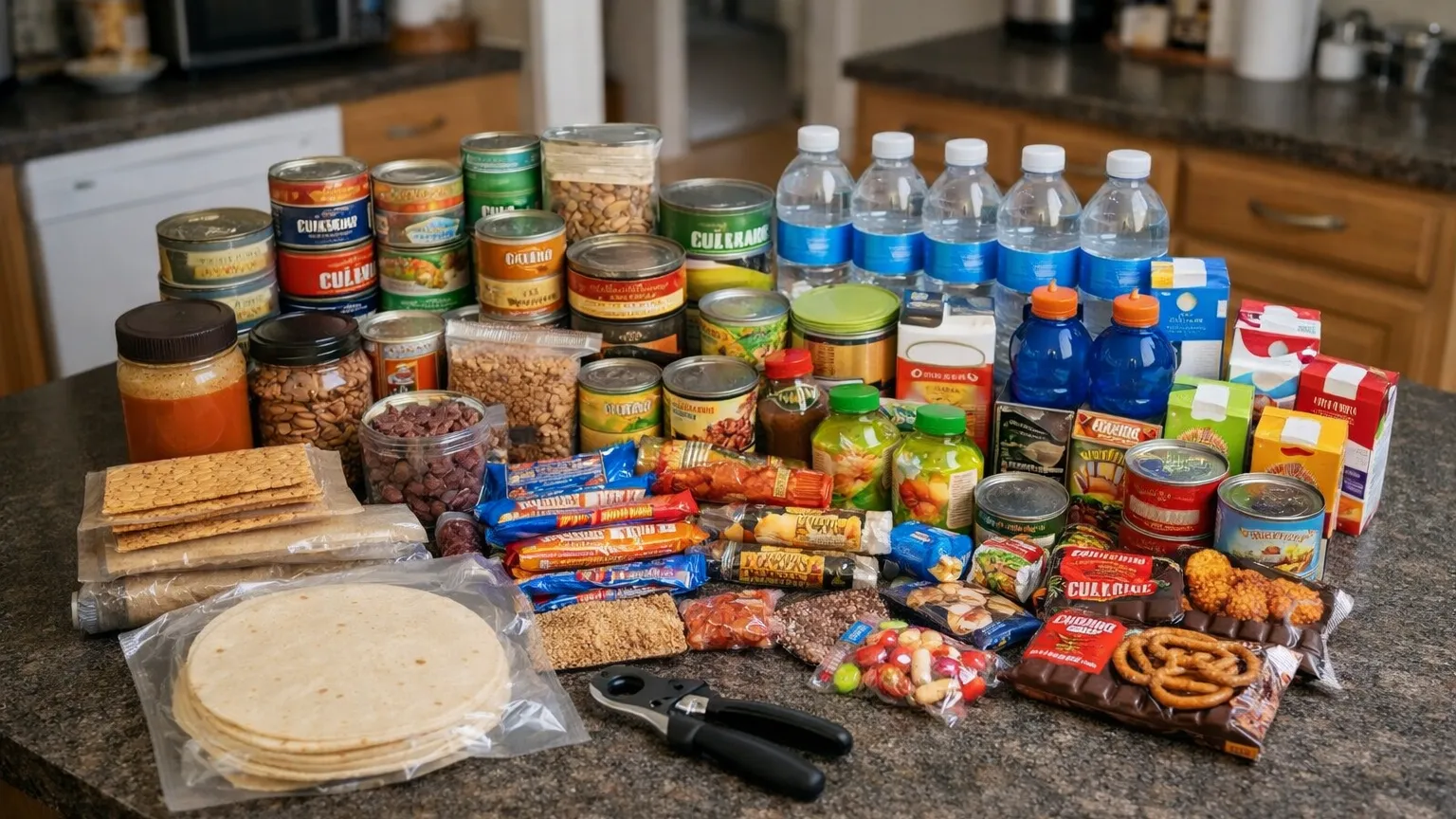
Protein is the building block of physical endurance, and during a power outage, it is what will keep you feeling full and focused. Canned meats are the undisputed champions here. Canned tuna, salmon, chicken, and turkey offer high-quality protein that is shelf-stable for years. Because they are often packed in water or oil, they also provide a bit of necessary moisture.
For those who prefer not to deal with “tinny” flavors, nut butters like peanut or almond butter are nutritional powerhouses. Similarly, beef jerky and biltong offer a lightweight, chewable protein source. Don’t overlook canned beans and legumes; they are incredibly filling and can be eaten straight from the can, making them essential emergency survival foods for any household.
Energy-Boosting Carbohydrates
While protein builds the body, carbohydrates fuel it. You need energy that is ready to go the moment you are. Whole grain crackers and flour tortillas are excellent bread substitutes because they have a much longer shelf life. Tortillas, in particular, are versatile—you can wrap almost anything in them, from peanut butter to canned chicken.
For quick snacks, energy and protein bars are designed for exactly this kind of scenario. Pre-packaged granola and dry breakfast cereals also provide a sense of normalcy, especially for children. If you want something more filling, keep an eye out for pre-cooked vacuum-sealed rice pouches. These are often found in the international aisle and are safe to eat cold in a pinch.
Staying Healthy with Fruits and Vegetables
It’s easy to focus so much on calories that we forget about vitamins. A week of eating nothing but crackers can leave you feeling sluggish. Canned fruits in juice provide a much-needed burst of vitamin C and hydration. Applesauce pouches and fruit leathers are also fantastic because they are mess-free and provide a natural hit of sweetness.
On the savory side, low-sodium canned vegetables and vegetable juice blends ensure you’re getting essential minerals. Since you won’t be cooking these, look for “crisper” canned veggies like corn or green beans. Dried fruit snacks like raisins, apricots, and cranberries are also excellent emergency survival foods; they take up very little space but offer concentrated nutrients to keep your digestion on track.
Hydration and Essential Liquids
Water is the one thing you cannot compromise on. Beyond the standard bottled mineral water, consider how you will replace electrolytes if you are physically exerting yourself. Electrolyte replacement drinks or powder packets are lightweight additions that can prevent fatigue.
For many, survival also means maintaining comfort. Shelf-stable milk (UHT) allows you to have a glass of milk or add it to cereal without needing a fridge. Small cartons of fruit juices and canned soups serve a dual purpose: they provide nutrition and contribute to your total fluid intake. A cold bowl of tomato soup might not be your first choice, but in a blackout, it’s a hydrating and comforting meal.
The Power of Comfort Foods
Never underestimate the psychological impact of a “treat” during a crisis. Morale is a resource just as much as food or water. Dark chocolate bars contain antioxidants and a bit of caffeine to help you stay alert. Instant coffee and tea are essential for those of us who rely on a morning ritual—as long as you have a way to heat a small amount of water, these are non-negotiable.
Hard candies can help keep your mouth moist if water is being rationed, and trail mixes offer a balance of fuel and reward. Even a bag of pretzels can provide a sense of normalcy. When choosing your emergency survival foods, including these small luxuries can be the difference between a terrifying experience and a “camping adventure” at home.
Strategic Storage and Maintenance
Even the best survival pantry is useless if the food has gone bad. The golden rule is FIFO: First In, First Out. When you buy new groceries, put the newer cans at the back of the shelf. This ensures you’re always rotating your stock. It’s a good habit to check your expiration dates bi-annually—perhaps during the daylight savings time changes.
Store your supplies in a cool, dry location. Heat and humidity are the enemies of shelf life. Using waterproof containers can protect your investment from pests or potential flooding. And finally, the most practical tip of all: keep a manual can opener taped to the side of your emergency bin. It’s the one tool that stands between you and your dinner.
Preparing for a long-term power outage isn’t about building a bunker; it’s about building a bridge to the other side of an emergency. By focusing on calorie-dense, no-cook proteins and essential emergency survival foods, you ensure that your physical and mental health remains intact.
Take a look at your pantry today. Does it have enough to sustain you for three days? What about ten? Start small by adding a few extra cans of tuna or a jar of peanut butter to your weekly shop. Over time, those small additions will become a robust safety net.





No Response