
Have you ever noticed how some people seem to carry an effortless sense of proportion, regardless of their height or body shape? It often feels like a natural gift, but in the world of professional styling, it is actually a result of mastering fashion illusion techniques. These subtle visual hacks are the secret tools stylists use to guide the eye, creating a sense of balance, height, and harmony. By understanding how lines, colors, and cuts interact with the human frame, you can transform your wardrobe into a strategic asset that boosts your confidence and refines your overall presence.
Understanding the Core of Fashion Illusion Techniques
Before diving into the specific methods, it is helpful to understand what we mean by fashion illusion techniques. At its core, this concept relies on the principles of design—line, shape, and color—to alter the viewer’s perception of a silhouette. Rather than trying to change the body itself, these techniques use clothing as a medium to highlight certain features while downplaying others. The goal is rarely about “hiding” but rather about creating a cohesive visual flow that feels balanced and intentional to the observer.
The Power of Monochrome and Verticality
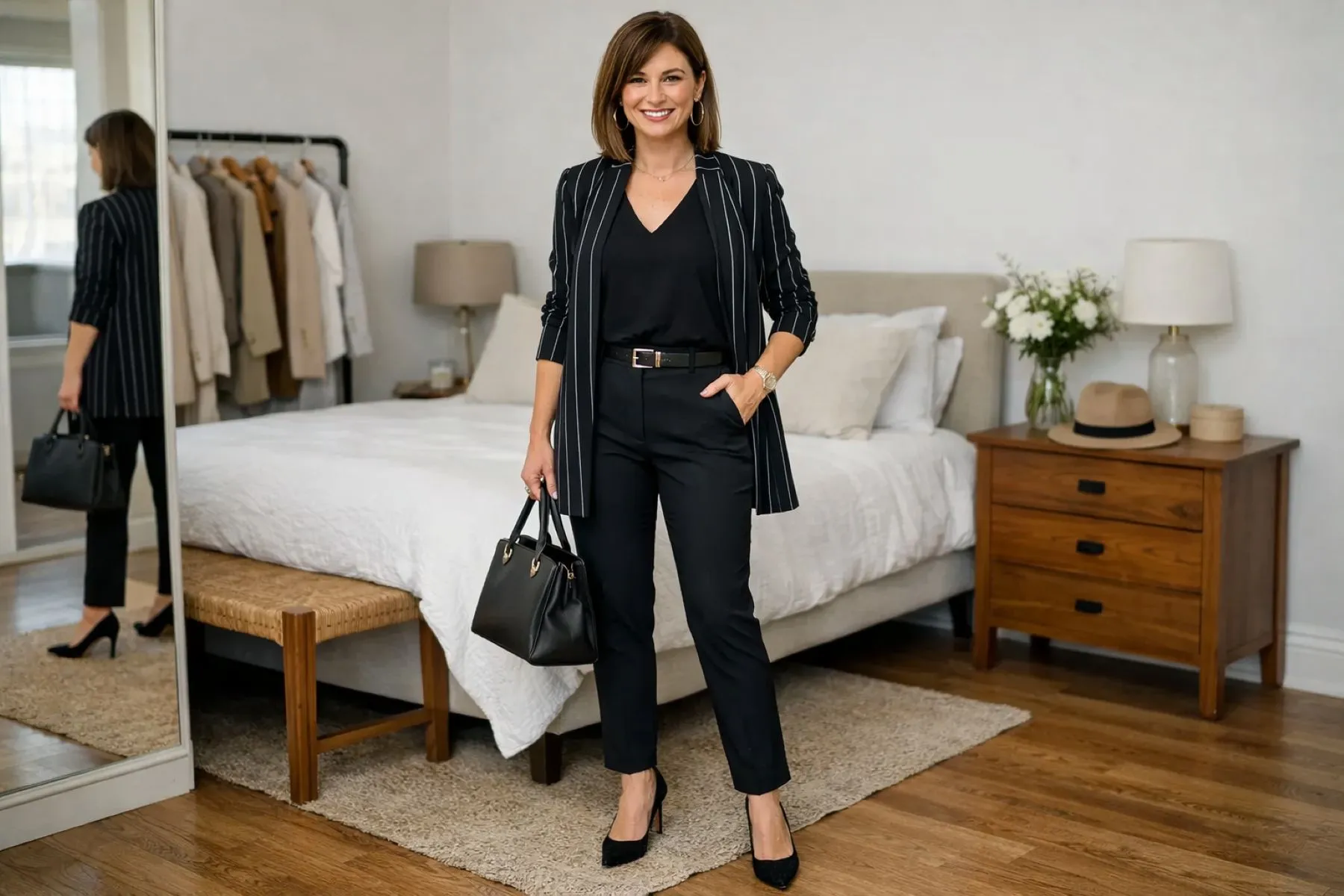
One of the most effective ways to create an elongated and streamlined appearance is through the use of monochrome outfits. When you wear a single color or similar shades from head to toe, you remove the horizontal “breaks” that occur when contrasting colors meet at the waist or hips. This creates a continuous vertical line, allowing the eye to move upward and downward without interruption. It is a sophisticated approach that works for almost any occasion, lending an air of quiet luxury to your aesthetic.
Building on this principle, vertical stripes remain a timeless staple for anyone looking to elongate their frame. Unlike horizontal patterns, which tend to draw the eye outward, vertical lines encourage a top-to-bottom visual journey. Whether it is a pinstriped blazer or a pair of tailored trousers, these lines act as a subtle guide that adds a sense of height. When combined with a monochrome palette, the effect of these fashion illusion techniques is even more pronounced, resulting in a silhouette that feels both taller and more refined.
Mastering Proportions with Waistlines and Footwear
The placement of your waistline is a critical factor in how your proportions are perceived. Choosing high-waisted bottoms is a classic technique to create the illusion of longer legs. By raising the starting point of the lower half of your outfit, you effectively “shorten” the torso and “lengthen” the limbs. To maximize this effect, many stylists suggest tucking in your shirts or blouses. This simple act defines the narrowest part of your frame and prevents the fabric from overwhelming your natural shape, ensuring your waistline remains the focal point of the ensemble.
Footwear also plays a surprisingly large role in the science of style. Selecting pointed-toe shoes is a brilliant way to extend the line of the leg, as the tapered end adds a few extra inches of visual length compared to rounded or square-toe styles. To take this a step further, you can match your shoe color with your pants. This eliminates the visual “cut-off” at the ankle, making the shoe appear as a natural extension of the leg. It is a small detail that makes a significant difference in achieving a seamless, elongated look.
Necklines, Patterns, and the Importance of Fit
When selecting tops, opting for V-neckline shaped designs is an excellent strategy for opening up the chest area and drawing the eye toward the face. The downward-pointing “V” creates a vertical focal point that can make the neck appear longer and the upper body more balanced. Conversely, it is generally wise to avoid wide horizontal pattern designs if your goal is to appear leaner. Horizontal lines tend to emphasize width, which can sometimes disrupt the sleek, vertical flow we are trying to achieve through other fashion illusion techniques.
Perhaps the most fundamental rule of professional styling is the emphasis on well-fitted tailored clothing items. Clothing that is too baggy can add unnecessary bulk and make the wearer look swallowed by fabric, while items that are too tight can create unflattering tension points. Tailored pieces follow the natural contours of your body, providing a clean structure that serves as the perfect canvas for other visual hacks. When your clothes fit perfectly, every other stylistic adjustment becomes twice as effective.
Refining the Details: Belts, Shoulders, and Accessories
Small accessories can have a large impact on your final silhouette. Using thin belts for definition is often preferable to wide, chunky belts, as thin versions provide a subtle hint of a waistline without creating a heavy horizontal break. Similarly, you can balance proportions with structured shoulders. A little bit of padding or a sharp seam at the shoulder can help broaden the upper frame slightly, which naturally makes the waist look smaller by comparison. This creates the coveted “X” shape that is often associated with a balanced and powerful silhouette.
The scale of your accessories should also be in harmony with your physical frame. Scaling your handbag size to your frame is an often-overlooked detail; a bag that is too large can make a petite person look smaller, while a tiny clutch might look out of proportion on a taller individual. Furthermore, exposing your ankles with cropped hemlines is a great way to add a “breathable” gap to your outfit. Showing that sliver of skin at the narrowest part of the leg adds a sense of lightness and height, especially when paired with low-profile footwear.
Strategic Layering and Finishing Touches
As you finalize your look, consider the placement of functional details like pockets. Positioning pockets higher can visually lift the silhouette, particularly on the back of trousers or denim. This “lifting” effect contributes to a more youthful and energetic appearance. Finally, layering with long open cardigans or duster coats is a fantastic way to create a “column” effect. By leaving the outer layer open, you create two strong vertical lines down the center of your body, which effectively frames your inner outfit and keeps the eye moving vertically.
Mastering fashion illusion techniques is not about conforming to a specific beauty standard, but rather about understanding the language of visual design to express your best self. When we dress with an awareness of balance and proportion, we often feel more composed and ready to face the world. These hacks are simply tools in your kit, allowing you to play with symmetry and length in a way that feels authentic to your personal style. By applying these professional secrets, you can curate a wardrobe that doesn’t just look good, but feels intentionally designed for you.