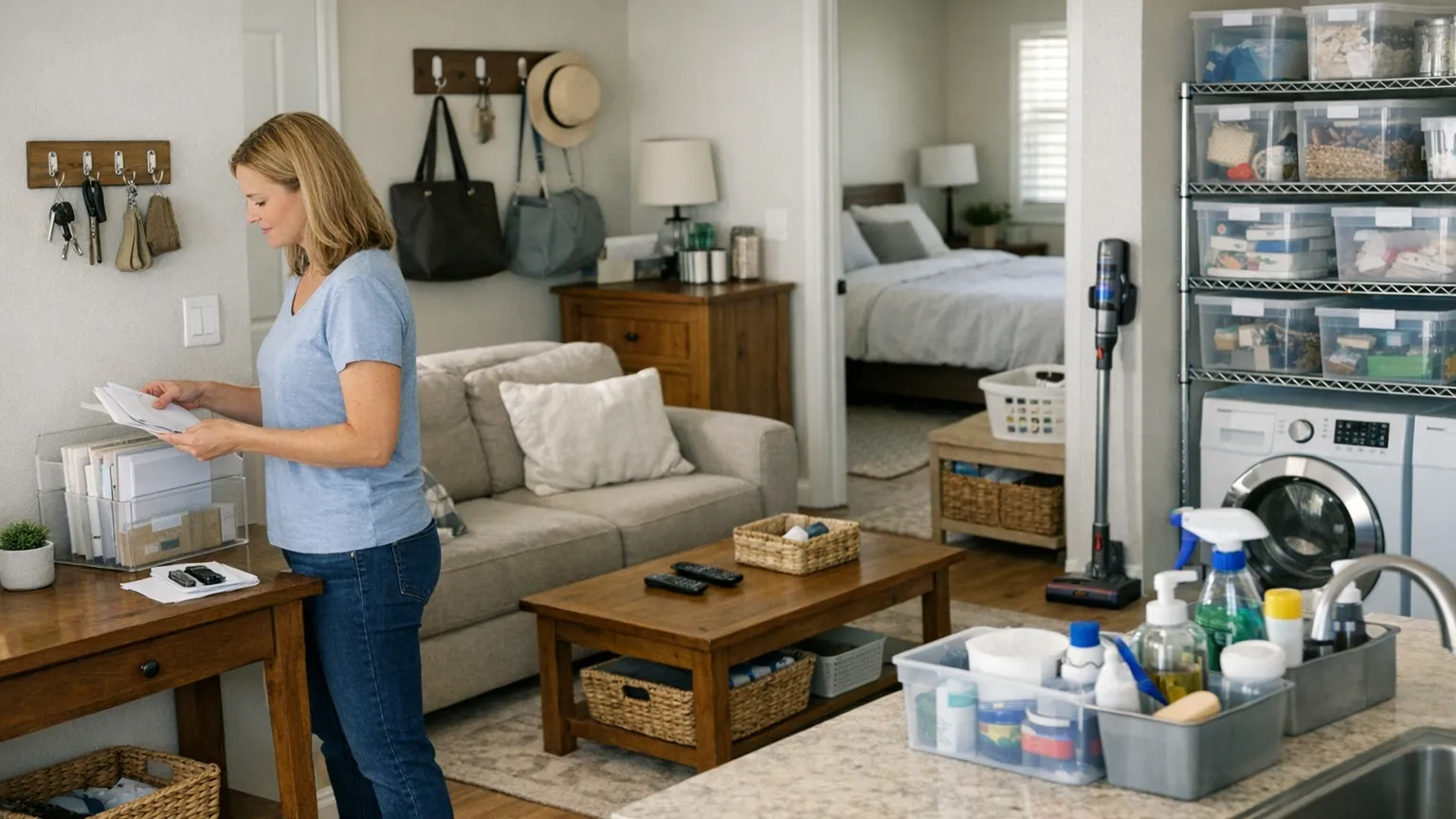
We’ve all been there: that sudden surge of Sunday afternoon energy where we scrub every baseboard and color-coordinate the pantry, only to find the house in a state of “organized chaos” by Wednesday morning. It’s a frustrating cycle that makes us feel like we’re constantly chasing a clean home rather than actually living in one. The truth is, a pristine living space isn’t the result of a marathon cleaning session once a month; it’s the byproduct of small, intentional home organization habits that run in the background of your daily life.
These routines are less about the aesthetic of a labeled glass jar and more about the mental clarity that comes from knowing where your keys are and not tripping over a pile of mail. When your environment is cluttered, your brain often feels the same way. By shifting from a reactive “emergency cleaning” mindset to a proactive organizational flow, you can reclaim your time and reduce the daily friction that wears you down. This guide is designed to help you bridge that gap, offering a roadmap to a home that stays tidy almost by default.
The Foundation of a Frictionless Home
The secret to a home that stays clean isn’t a magic product; it’s a daily cleaning schedule that feels like a natural part of your rhythm rather than a chore. Think of it like brushing your teeth—you don’t think about it, you just do it. A successful schedule focuses on the “high-impact” tasks that prevent a house from feeling messy. This usually begins the moment you wake up.
Making the bed every morning is perhaps one of the simplest home organization habits with the highest psychological ROI. It takes less than two minutes, yet it instantly makes the bedroom look fifty percent tidier and sets a disciplined tone for the rest of the day. It’s a small win that proves you are in control of your environment.
To keep the rest of the house in check, you have to tackle the surfaces. We tend to treat flat surfaces—dining tables, kitchen counters, and entry consoles—as “landing strips” for everything from groceries to junk mail. Decluttering these surfaces every single night is a non-negotiable habit for a pristine home. When you wake up to clear counters, you’re starting the day with a clean slate rather than a mounting to-do list.
Systems That Do the Heavy Lifting
If you find yourself constantly moving piles of “stuff” from one room to another, you’re likely dealing with a storage problem, not a cleaning problem. The most effective organizational system is based on a simple rule: assign a home for everything. If an object doesn’t have a specific designated spot, it is essentially clutter. When every item—from the TV remote to the spare lightbulbs—has a “house,” putting things away becomes a mindless task.
To make this even more efficient, try to organize belongings by frequent usage. We often make the mistake of storing things where they “fit” rather than where we use them. Keep your daily coffee mugs at eye level near the machine, but tuck that Thanksgiving turkey platter on a high shelf. By reducing the physical effort required to reach for—and more importantly, put back—the things you use every day, you eliminate the temptation to leave them on the counter.
Of course, even the best systems can be overwhelmed by an influx of new things. This is where the “one-in-one-out” rule becomes your best friend. For every new pair of shoes or kitchen gadget that enters your home, one must leave. This creates a natural equilibrium and prevents your storage spaces from becoming overstuffed, ensuring that your long-term home organization habits stay functional.
Proactive Maintenance and Micro-Habits
Maintaining a pristine home is often about what you do in the “in-between” moments. Waiting for the coffee to brew? That’s the perfect time to unload the dishwasher. Commercial break during your favorite show? That’s a three-minute window to sort through mail and paperwork. Paperwork is a notorious clutter-builder; by triaging it immediately—shredding the junk and filing the essentials—you prevent the dreaded “paper pile” from ever forming.
Speed is also your greatest ally when it comes to cleanliness. If you clean up spills immediately after they happen, you prevent stains and save yourself from the scrubbing that would be required later. The same applies to high-touch areas. Regularly sanitizing doorknobs, light switches, and fridge handles takes seconds but keeps the home feeling fresh and hygienic.
To make these micro-habits easier to stick to, keep your cleaning supplies easily accessible. You shouldn’t have to go to the garage to get a spray bottle for a kitchen spill. Keep a small kit of essentials—all-purpose cleaner and a microfiber cloth—under the sink in the kitchen and every bathroom. When the tools are right there, the barrier to cleaning vanishes.
Maximizing Space and Minimizing Visual Noise
Many of us struggle with a lack of square footage, but we often overlook the potential of our walls. Learning to utilize vertical storage space efficiently can be a game-changer. Floating shelves, over-the-door organizers, and wall-mounted hooks take the pressure off your floor space and cabinets.
However, be careful not to fill every new shelf with trinkets. To maintain a truly pristine look, you should minimize decorative items on counters. While a few curated pieces add character, an excess of “knick-knacks” creates visual noise and makes cleaning twice as hard because you have to dust around every single item. A minimalist approach to decor makes your home look larger and significantly easier to maintain.
When you do need to store items in bulk, such as in a pantry or a linen closet, use clear bins for storage. Being able to see exactly what you have prevents you from buying duplicates and helps you spot when a category (like snacks or first-aid supplies) is getting messy. It’s the ultimate way to maintain accountability within your cupboards.
Winning the War on Laundry and Deep Cleaning
If there is one area that breaks even the strongest organizational spirit, it’s the laundry. The key to never being buried under a “Mount Washmore” is to establish a consistent laundry routine. Whether you prefer doing one load every morning or dedicating a specific day of the week to it, the goal is to see the process through to completion—washing, drying, folding, and actually putting it away. The task isn’t finished until the clothes are in the drawer.
While daily home organization habits keep the surface looking good, you still need to address the deep-seated grime. Instead of spending an entire Saturday once a month deep cleaning the whole house, try to deep clean one room weekly. This rotation ensures that every corner of your home gets a thorough scrubbing (windows, baseboards, behind the fridge) once every few weeks without it ever becoming an overwhelming, day-long ordeal.
Creating a Sustainable Lifestyle
Adopting these home organization habits isn’t about achieving perfection; it’s about creating a lifestyle that supports your well-being. A clean home provides a sense of sanctuary in a chaotic world. It allows you to host friends without a frantic “cleaning frenzy” and gives you more time to focus on the things that actually matter to you.
Start small. Don’t try to overhaul your entire house in twenty-four hours. Pick two or three habits—maybe making the bed and clearing the kitchen counters—and master those first. Once they become second nature, layer in the next system. Over time, these small actions will compound, and you’ll find that maintaining a pristine space is no longer a struggle, but a simple, rewarding part of your day.
Actionable Steps for a Tidy Home
If you’re ready to start today, here are a few practical ways to implement these systems immediately:
-
The Five-Minute Reset: Before bed, set a timer for five minutes and do a quick sweep of the common areas. Put shoes away, fold the throw blanket, and clear the coffee table.
-
The “One-Touch” Rule: If a task takes less than two minutes (like hanging up a coat or putting a dish in the dishwasher), do it immediately. Don’t touch an item twice by putting it on the counter first.
-
Zone Cleaning: Assign a specific day for your weekly deep clean room. For example, “Mopping Mondays” or “Bathroom Wednesdays.”
-
Audit Your Entryway: Ensure there is a dedicated hook for keys and a bin for shoes right by the door to stop clutter before it even enters the house.