
Fashion is often sold as a one-size-fits-all dream, but for those of us on the shorter side, reality usually involves a trip to the tailor or a constant battle with oversized sleeves. Mastery of petite fashion styling isn’t just about finding clothes that fit; it’s about understanding the architecture of the body. If you’ve ever felt “swallowed” by a trendy maxi dress or wondered why a specific pair of boots makes your legs look shorter, you aren’t alone. The goal isn’t to hide your height, but to celebrate it by creating a balanced, elongated silhouette that projects confidence.
In this guide, we are going to dive deep into the art of dressing for a petite frame. We’ll move past the basic “don’t wear big clothes” advice and look at the strategic choices that actually shift the visual perception of your height. By mastering a few simple styling principles, you can stop feeling like your clothes are wearing you and start curating a wardrobe that feels intentional, sophisticated, and perfectly scaled.
Why Your Current Style Might Be Holding You Back
The most common mistake petite women make is following trends designed for runway models without adjusting the proportions. When we wear silhouettes that cut off our visual line at the wrong places—like the mid-calf or the hips—we inadvertently make ourselves look shorter. Effective petite fashion styling is about creating an uninterrupted vertical line. Every seam, color choice, and hemline should serve the purpose of drawing the eye upward. Let’s break down the twelve best outfit choices that will transform your look and give you that streamlined, taller appearance you’ve been searching for.
The Power of the High Waist and Monochromatic Lines
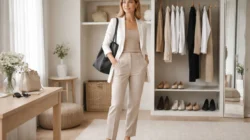
One of the most effective ways to “cheat” your height is to rethink where your waist actually begins. High-waisted tailored trousers are a petite woman’s best friend. By sitting above the natural waistline, these trousers create the illusion that your legs start several inches higher than they actually do. When paired with a tucked-in top, you maximize the length of the lower body. Look for trousers with a slight flare or a straight leg that skims the floor to extend that line even further.
To take this a step further, consider the magic of monochromatic color schemes. Wearing a single color from head to toe—or different shades of the same hue—prevents the “chopping” effect that occurs when you wear high-contrast tops and bottoms. When there is no clear line where the shirt ends and the pants begin, the eye travels smoothly from top to bottom, creating a seamless, elongated silhouette. It’s an effortless way to look taller and instantly more polished.
Vertical Patterns and Necklines for Petite Fashion Styling
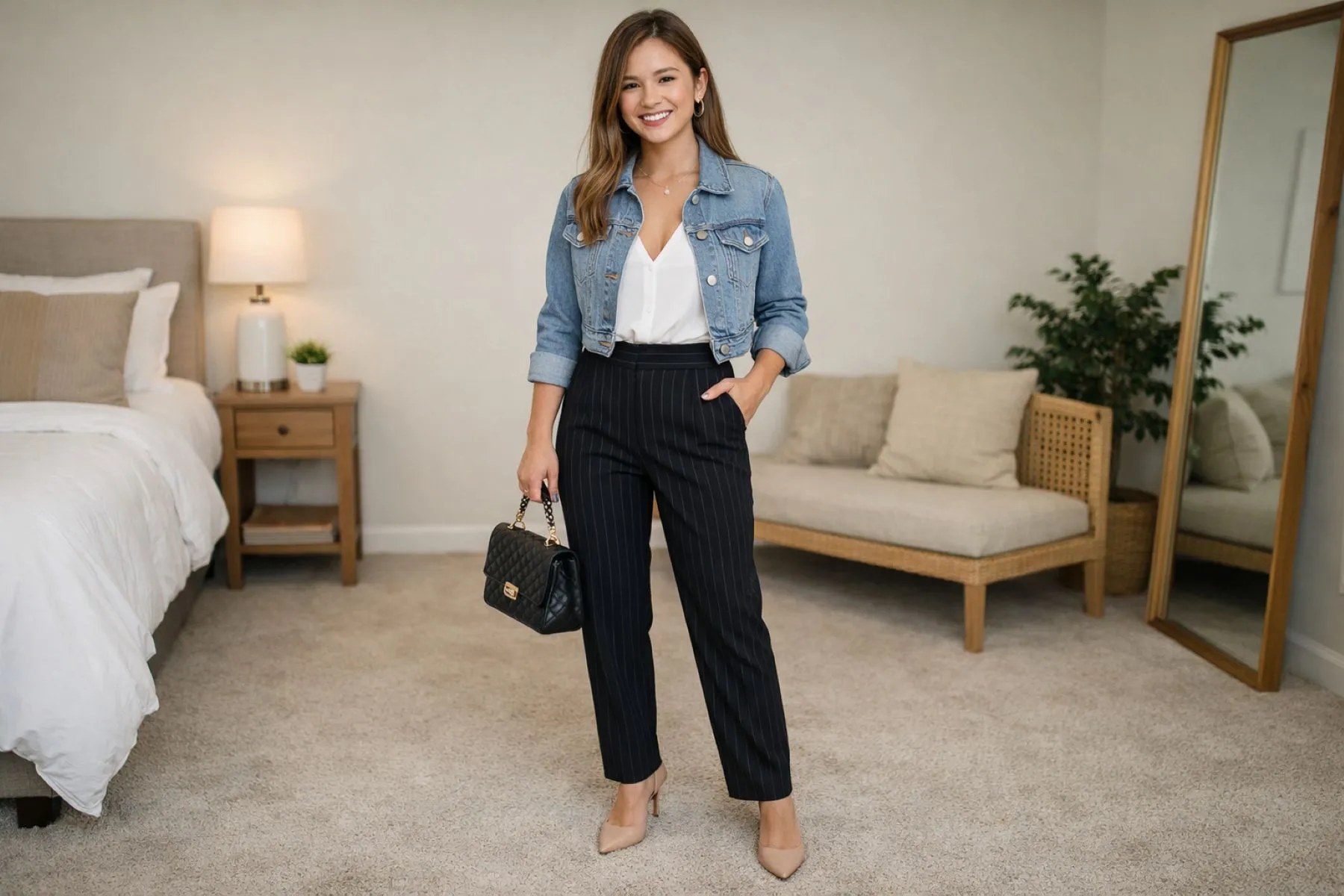
Not all prints are created equal. While large, busy florals can overwhelm a smaller frame, vertical pinstripe patterns act like a visual ladder. Whether it’s a pinstriped blazer or a pair of vertical-striped linen pants, these lines guide the eye vertically, adding perceived inches to your frame. It’s a classic tailoring trick that remains one of the most reliable tools in a petite woman’s arsenal.
Similarly, the neckline of your top plays a huge role in how “open” your silhouette feels. Deep V-neckline tops are particularly effective because they elongate the neck and torso. By showing a bit more skin in a vertical orientation, you break up the “blocky” look that high necklines or heavy scarves can sometimes create. It’s a subtle adjustment that makes a significant difference in how balanced your proportions appear.
Mastering the Art of the Hemline
The length of your skirts and jackets can make or break an outfit. If you’re a fan of shorter styles, mini-length hemlines are actually a great choice for petites. By showing more of the leg, you create a longer visual line. Conversely, a skirt that hits right at the knee or mid-calf can “stunt” the leg line. If you do go for a shorter hem, pairing it with pointed-toe footwear options will further the illusion. Pointed toes extend the line of the foot, unlike rounded or square toes, which can make the foot look blunt and the leg look shorter.
When it comes to outerwear, the cropped denim jacket is a staple for a reason. Most standard jackets hit at the hip, which can make the torso look long and the legs look short. A cropped jacket, however, ends at the waist, drawing the eye upward and emphasizing the length of your trousers or skirt. This “rule of thirds”—keeping the top third of your outfit short and the bottom two-thirds long—is a golden rule in petite fashion styling.
Creating a Slim and Structured Silhouette
The fit of your clothing is perhaps the most critical factor. Baggy clothes might feel comfortable, but they often add bulk without height. Form-fitting wrap dresses are an excellent alternative. They hug the curves in all the right places while the diagonal line of the wrap creates a slimming, lengthening effect. It’s a versatile piece that works for both the office and dinner dates.
To maintain a professional edge, always opt for tucked-in structured shirts. A loose shirt hanging over your hips is a quick way to lose several inches of leg length. By tucking in your shirt, you define your waist and establish your proportions. This works best when you aim for slim vertical silhouettes overall. Avoid “wide” styles that expand horizontally; instead, look for pieces that stay close to the body, creating a narrow, streamlined column of color and fabric.
Essential Accessories in Petite Fashion Styling
We’ve all heard that heels make you taller, but the type of heel matters. Nude-colored heels (matching your specific skin tone) are a secret weapon. Because they blend in with your leg, they don’t create a visual “stop” at the ankle. This makes your legs look like they go on forever, especially when paired with skirts or dresses. Even a low nude block heel is more effective for lengthening than a high black stiletto that contrasts sharply with your skin.
Finally, let’s talk about small-scale accessory choices. It’s tempting to carry a giant tote bag because they are practical, but on a petite frame, an oversized bag can look like you’re carrying a suitcase. It throws off the scale of your entire outfit. Opt for medium or small handbags, daintier jewelry, and thinner belts. When your accessories are in proportion to your body size, you look taller and more in control of your aesthetic.
Practical Tips for Daily Styling
Getting dressed shouldn’t feel like a math equation, but keeping a few “quick checks” in mind can help you avoid common pitfalls:
-
Check the Shoulders: Always ensure the shoulder seams of your blazers and shirts sit exactly on your natural shoulder. Overhanging seams make you look like you’re wearing someone else’s clothes.
-
The “Two-Finger” Rule for Belts: If you use a belt to cinch a waist, try to keep it relatively thin. A massive, wide belt can take up too much “real estate” on your torso, making it look shorter.
-
Tailoring is an Investment: Don’t be afraid to buy something that fits 90% well and have a tailor fix the hem or the sleeves. A perfectly fitted item will always look better than an ill-fitting designer piece.
-
Mind the Gap: When wearing ankle boots with jeans, try to avoid a large gap of skin or a heavy cuff. A seamless transition from pant to boot keeps that vertical line moving.
Embracing Your Best Self
At the end of the day, petite fashion styling isn’t about trying to disappear or pretending you’re six feet tall. It’s about harmony. When you wear clothes that respect your proportions, you move through the world with a different kind of energy. You stop worrying about whether you look “stumpy” and start focusing on the impression you’re making.
By choosing high-waisted cuts, embracing monochromatic looks, and being mindful of your hemlines, you create a silhouette that is both elegant and commanding. Fashion is a tool—use it to highlight your strengths. Now that you have these strategies in your back pocket, why not go through your closet and see which pieces you can style differently today? You might find that your favorite outfit was there all along, just waiting for a little adjustment.