






When we check into a hotel, we often focus on the crisp linens, the organized vanity, and that immediate sense of “home away from home.” It is easy to view the room as a self-sustaining ecosystem that resets itself by magic every afternoon. However, behind that seamless experience is a hardworking housekeeping team navigating tight schedules and physically demanding labor. While staying at a hotel is a chance to relax, practicing proper hotel guest etiquette can drastically improve the working conditions of the staff and, by extension, the quality of service for every guest.
Understanding the nuances of traveler conduct isn’t about doing the staff’s job for them; it’s about being a conscious traveler. By following a few professional guidelines, you help reduce physical strain on cleaners, speed up room turnover during peak hours, and boost the morale of the people who make your stay comfortable. A little bit of mindfulness goes a long way in ensuring the hospitality industry remains a positive environment for everyone involved.
Understanding the Impact of Guest Behavior
Most of us don’t see the behind-the-scenes hustle of a hotel hallway. Housekeepers often have as little as 20 to 30 minutes to transform a room from “lived-in” to “pristine.” When a guest leaves a room in total disarray, it doesn’t just add a few minutes to the clock—it adds up across an entire floor, leading to missed breaks and physical exhaustion for the staff.
By adopting better habits, you are directly contributing to a safer workplace. Bending over to pick up scattered towels or scrubbing dried food off a desk takes a toll on the body over time. When we simplify their workflow, we help prevent repetitive motion injuries and allow them to focus on the deep-cleaning details that make a room feel truly premium. It’s a cycle of respect: a respected staff member is more likely to provide the high-tier service that defines a great travel experience.
Pre-Checkout Bed Preparation and Hotel Guest Etiquette
One of the most common misconceptions in hotel guest etiquette is that “making the bed” before you leave is helpful. While the intention is noble, it actually creates more work. Housekeepers must change the sheets regardless of how neat they look, and a tucked-in bed forces them to undo your work just to get to the dirty linens.
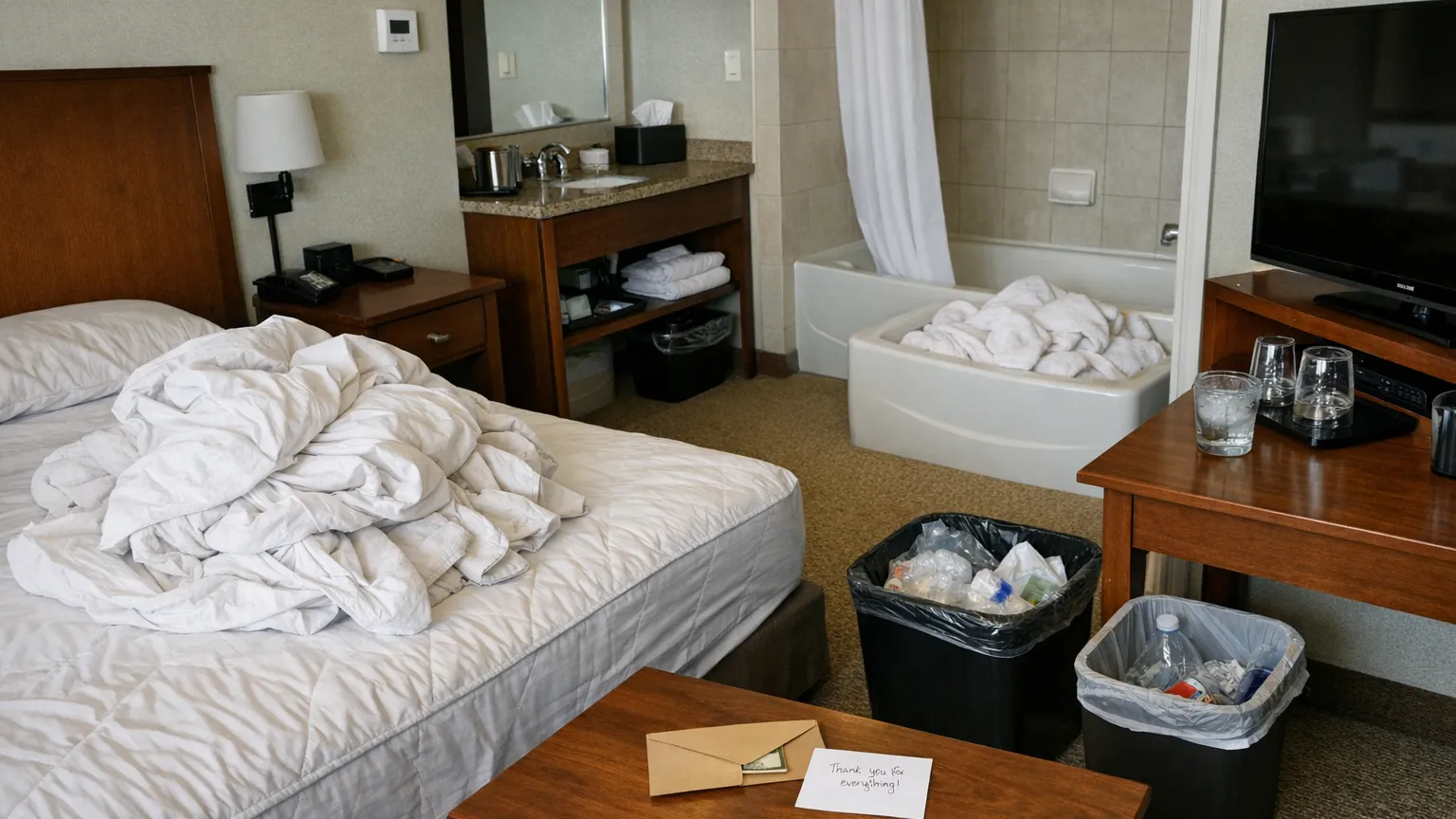
Instead of styling the pillows, the professional move is to strip the bed. Remove the pillowcases and the sheets, but leave the mattress protector and decorative shams alone unless they are visibly soiled. Once you’ve stripped the used linens, gather them into a loose pile on top of the bed. This prevents the staff from having to crawl across the floor or reach under the bed frame to collect stray bedding.
Proper Management of Used Towels
The bathroom is often the most time-consuming part of a room turnover. Many hotels now have “green” policies regarding towels, but if you are checking out, all used linens need to go. The golden rule here is to keep the dampness contained.
Gather all your used towels, washcloths, and floor mats and place them in the bathtub or the base of the shower. This keeps the moisture away from the bathroom carpet or hardwood flooring, which can be damaged by damp fabric. Most importantly, leave the clean, unused towels on the rack. Mixing clean and dirty towels in a single pile forces the housekeeper to wash everything, leading to unnecessary water waste and extra heavy lifting.
Managing Room Trash and Waste
We’ve all been there—ordering late-night takeout or clearing out the snack stash before a flight. However, a room scattered with loose trash is one of the biggest hurdles for housekeeping. Consolidating your waste into the provided bins is the most helpful thing you can do.
If you have leftover food or liquids, try to bag them separately to prevent leaks and odors. If the room doesn’t have a large enough bin, placing everything in a single plastic shopping bag next to the desk is a great alternative. A specific point of professional hotel guest etiquette involves “sharps” or broken glass; if a glass breaks during your stay, never put it directly in the bin. Wrap it in heavy paper or leave a visible note so the housekeeper doesn’t sustain a injury while emptying the trash.
Bathroom Etiquette for Housekeeping
Beyond the towels, the general state of the bathroom vanity matters. Before you head out, take 30 seconds to wipe down any excessive water splashes around the sink. It prevents soap scum from hardening and makes the final polish much faster for the staff.
Ensure all your personal toiletries are packed away or at least grouped together. If you’re staying multiple nights and want stay-over service, clearing the counter allows the housekeeper to wipe the surface without touching your toothbrush or skincare products. Finally, keep the shower curtain open. This allows the tub to air out and prevents the growth of mildew in the folds of the fabric.
Handling Room Amenities and Mini Bar
The little things often take the most time to hunt down. After a few days in a room, the remote control usually ends up under a pillow or tucked into a bedside drawer. As a courtesy, return the remote to the TV stand or its designated holder. It saves the staff from a frantic search when they are trying to finalize the room.
If you used the glassware or coffee mugs, group them together on the tray or desk rather than leaving them scattered around the room. If you’ve indulged in the mini-bar, it is best practice to report your usage at the front desk during checkout. This ensures the billing is accurate and allows the staff to restock the items immediately for the next guest without doing a manual inventory check under pressure.
Final Room Exit Procedures and Hotel Guest Etiquette
The moments before you click the door shut for the last time are the most impactful. A “pro” guest does a quick sweep of the environment. Start by turning off all the lights and the television; it’s an energy-saver and a clear signal that the room is vacant.
Check the thermostat and set it to a neutral temperature—around 70°F (21°C)—so the room isn’t an oven or an icebox when the cleaner enters. Most importantly, double-check that all faucets are tightly closed. A dripping tap is not only wasteful but can lead to overflows if the drain is partially blocked. This is also your final chance to check the “hidden” spots—under the bed and in the shower—for forgotten chargers or jewelry.
Gratuity and Feedback Best Practices
While your behavior saves them time, a tip saves their budget. Tipping is a standard part of hotel guest etiquette in many regions, but how you do it matters. Avoid leaving loose change on the nightstand, as it can be confusing whether the money was left for the staff or simply forgotten by the guest.
The best approach is to place cash in a visible envelope or leave it on the desk with a brief “Thank You” note. If you can’t find an envelope, placing the money under the TV remote is a universal signal that it is a gratuity. If a specific staff member went above and beyond, mention them by name in an online review or a guest comment card. Management often uses these mentions for internal rewards and promotions, making it a powerful way to support their career.
A Professional Standard for Every Traveler
Hotel housekeeping is a profession that relies on efficiency and attention to detail. By taking five minutes to consolidate your trash, strip your bed, and group your towels, you aren’t just being “neat”—you are showing professional respect for another person’s labor. Maintaining high hotel guest etiquette creates a ripple effect of efficiency and kindness that makes the travel industry better for everyone.
Next time you stay at a hotel, try implementing just two or three of these habits. You might find that the “good karma” results in even better service on your next visit.





No Response