






We have all been there—stepping into a fresh, climate-controlled hotel room after a long day of travel. It feels like a private sanctuary where the world’s worries simply disappear. While it is easy to treat a hotel stay as a complete escape from responsibility, the way we occupy these shared spaces has a profound ripple effect. Unfortunately, many travelers unknowingly commit hotel guest etiquette mistakes that impact the people working behind the scenes and the guests in the room next door.
Being a “good guest” is not about following rigid, academic rules; it is about practicing a little bit of situational awareness. Many lapses in courtesy happen not out of malice, but simply because we don’t realize how the hospitality “machine” works. By understanding the flow of hotel operations, we can ensure our luxury doesn’t become someone else’s logistical nightmare.
Understanding Hotel Guest Etiquette Mistakes
At its core, hotel etiquette is the unspoken agreement between a guest, the property, and the staff. It encompasses the habits and behaviors that allow a high-traffic environment to remain clean, quiet, and efficient. When we overlook these small courtesies, it creates a chain reaction that affects room availability, staff well-being, and the overall guest experience. Recognizing these patterns is the first step toward becoming a more mindful traveler and avoiding the most common hotel guest etiquette mistakes.
The Hidden Impact of Late Check-Outs
We often think that staying an extra thirty minutes past check-out time is a harmless indulgence. However, this is one of the most frequent logistical bottlenecks for hotel staff. When a guest lingers without prior coordination, it disrupts the entire housekeeping schedule. Housekeepers work on a strict, minute-by-minute timeline to ensure every room is sanitized and reset before the next wave of arrivals.
A late departure doesn’t just delay the cleaning of one room; it creates a “logistical pile-up” at the front desk. If rooms aren’t ready by the official check-in time, incoming travelers—many of whom may be exhausted from international flights—are left waiting in the lobby. This increases the pressure on front-desk teams who must manage the frustration of newcomers while trying to coordinate with a back-of-house team that is now behind schedule.
The True Cost of “Borrowing” Hotel Amenities
There is a common misconception that everything inside a hotel room is included in the price of the stay. While the small toiletries are yours to keep, “borrowing” larger items like plush robes, high-quality umbrellas, or decorative cushions triggers significant replacement costs for the property. These items are often tracked via inventory software, and missing stock forces staff to spend valuable time investigating where items went.
Beyond the financial aspect, taking these amenities limits availability for the next guest who might truly need them. If a hotel runs low on towels or robes because of “souvenir-hunting,” the quality of the stay decreases for everyone. Furthermore, most modern hotels will simply charge the credit card on file for missing items, leading to unexpected security deposit deductions that can sour the memory of your trip.
Why Leaving a Messy Room Truly Matters
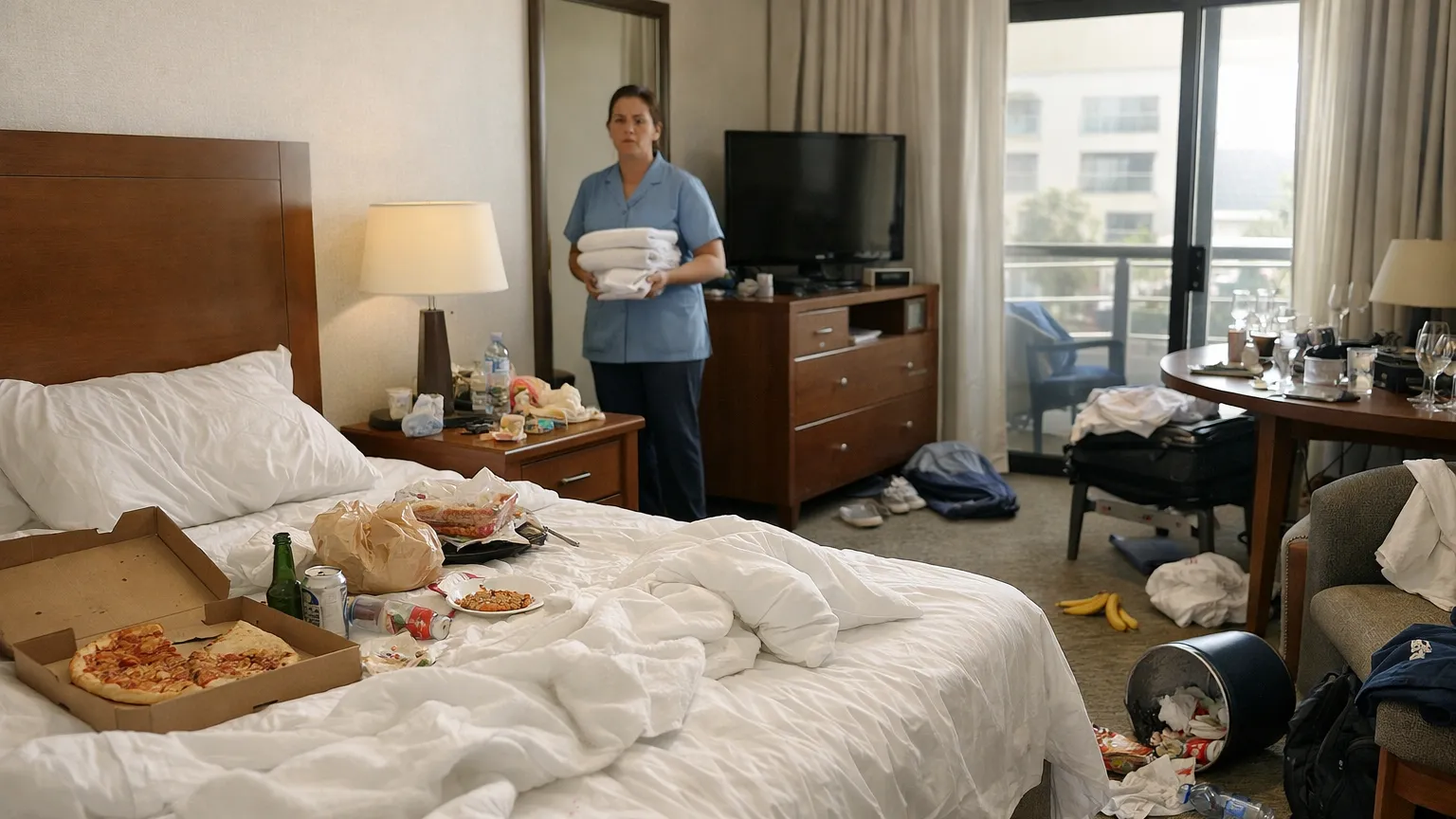
While it is true that we pay for a cleaning service, there is a distinct difference between a room that has been lived in and a room that has been trashed. Leaving a room in complete disarray—with trash scattered across the floor and wet towels piled on the carpet—drastically extends the cleaning time required. This extra labor increases the physical strain on housekeepers, who often have dozens of rooms to finish in a single shift.
When a room requires “extra” cleaning, housekeepers are often forced to skip the deep-cleaning of essential areas to make up for lost time. Perhaps more importantly, it affects staff morale. Walking into a room that has been treated with total disregard can be demoralizing for the people who work hard to maintain a high standard of hospitality. A quick tidy-up is a simple way to avoid disrespectful hotel guest etiquette mistakes.
Misunderstood Towel and Linen Reuse Policies
Most hotels now have placards asking guests to hang up towels they wish to reuse. While some view this as a cost-cutting measure for the hotel, it is primarily an essential environmental standard. Every load of laundry consumes massive amounts of water, electricity, and chemical detergents. By demanding fresh linens every single morning, guests contribute to an unnecessary volume of waste that strains local resources.
Ignoring these eco-friendly policies doesn’t just hurt the planet; it adds an immense workload to the laundry department. When thousands of gallons of water are used daily for towels that were only used once, the property’s carbon footprint skyrockets. Choosing to reuse your towel for a second day is a simple, effective way to support the property’s sustainability efforts without sacrificing your comfort.
The Problem with Excessive Noise in Hallways
Hotel walls can be surprisingly thin, and sound travels through hallways with ease. One of the most disruptive hotel guest etiquette mistakes involves guests who treat the corridors like private lounges. Shouting to friends several doors down or allowing children to run through the halls late at night can severely disturb the sleep cycles of other travelers, including business professionals or families with young children.
When noise becomes an issue, it requires intervention from security or management, which can lead to uncomfortable confrontations. A hostile living environment is the last thing anyone wants on vacation. Being mindful of your volume—especially between 10:00 PM and 8:00 AM—ensures that everyone can enjoy the peace and quiet they paid for.
Impacts of Ignoring Hotel Pool and Gym Rules
Shared facilities like the pool and gym are designed for everyone’s benefit, but they rely on guests following safety and hygiene protocols. Skipping the pre-pool shower or using the gym without proper footwear compromises hygiene and can lead to early facility closures for emergency maintenance. Furthermore, using equipment improperly can ruin expensive machinery, making it unavailable for others.
From a maintenance perspective, ignoring rules regarding glass containers or food near the water increases chemical costs and filtration needs. When guests disregard these boundaries, it forces the hotel to hire additional monitors or limit hours of operation. Following the posted rules ensures that these luxury perks remain safe, clean, and accessible for the duration of your stay.
Improper Disposal of Food Waste in Rooms
Ordering room service or bringing in local takeout is one of the joys of travel, but how we handle the leftovers matters. Leaving open food containers in the trash or on the nightstand can quickly attract pests and unwanted insects, especially in tropical climates. Moreover, certain foods leave lingering odors that are incredibly difficult to remove before the next guest arrives.
Spills that aren’t reported can cause permanent stains on upholstery and carpets, requiring specialized deep-cleaning services that are both expensive and time-consuming. To be a more conscientious guest, consider sealing food waste in a separate bag or placing used room service trays in the hallway as soon as you are finished.
Reflecting on Your Next Stay
At the end of the day, hospitality is built on a foundation of mutual empathy. By avoiding these common hotel guest etiquette mistakes, you aren’t just making the staff’s lives easier—you are contributing to a culture of respect that benefits every traveler. A little bit of kindness and a few small adjustments to our habits can transform a good stay into a great one for everyone involved.





No Response