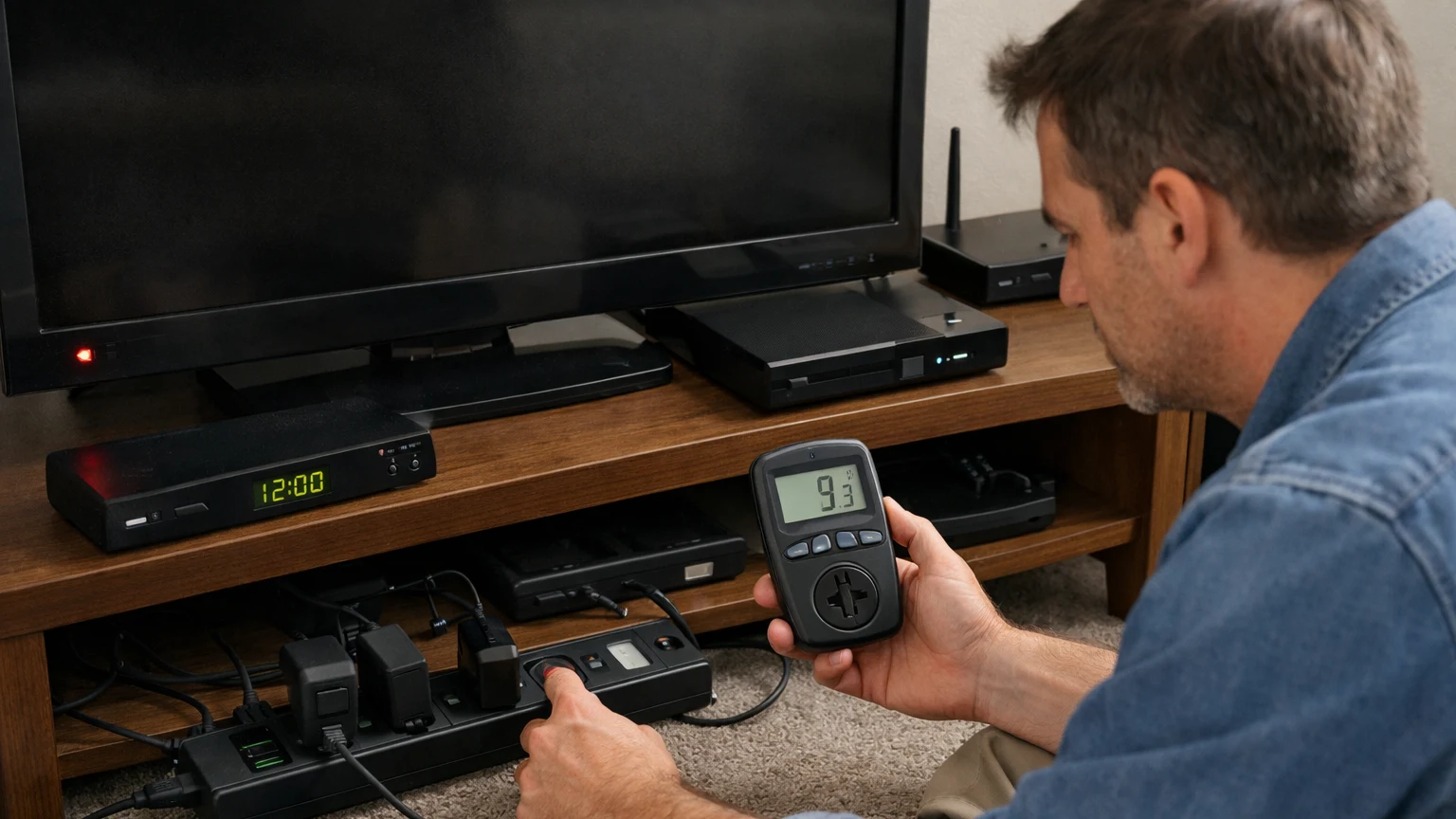
Most of us have a routine when leaving the house: we turn off the lights, lock the front door, and perhaps double-check that the stove is off. We do this to save money and stay safe, assuming that once the “off” switch is flipped, the flow of electricity simply stops. However, there is a quiet thief living in your walls—a phenomenon known as phantom energy loads. These are the small, persistent streams of electricity drawn by appliances even when they are supposedly powered down. While a single microwave clock or a dormant laptop charger might seem insignificant, the cumulative effect of dozens of these “vampires” throughout a modern home creates a massive, invisible drain on both your wallet and the environment. By understanding how this standby power works, you can reclaim control over your utility bills and transform your home into a truly efficient sanctuary.
The Physics of the Invisible Leak
To stop the drain, we first have to understand why it happens. In the early days of household electronics, a switch was a physical break in the circuit; when you flipped it, the copper path was severed, and the electricity had nowhere to go. Today, our devices are rarely truly “off.” Most modern electronics exist in a state of constant readiness.
Standby power consumption occurs because of how modern power supplies are designed. Many devices use “switching power supplies” or internal transformers that remain energized so the device can respond to a remote control signal, maintain internal memory, or keep a digital clock illuminated. From a physics perspective, as long as the device is plugged into a live socket, a small amount of current continues to circulate through the primary side of the transformer. This creates a tiny but constant heat signature and energy draw, effectively turning your home into a network of micro-heaters that provide no warmth but cost plenty of money.
High-Drain Offenders and Phantom Energy Loads in the Living Room
Not all appliances are created equal when it comes to energy waste. The biggest culprits are usually devices that prioritize convenience and “instant-on” features. Your home theater system is often the primary offender for phantom energy loads. Between the smart TV waiting for a signal from the remote, the soundbar, and the gaming console that is silently downloading updates in “rest mode,” a single entertainment center can consume more power while “off” than a modern LED lightbulb does while “on.”
Gaming consoles are particularly notorious. When left in their default standby settings, they stay connected to the internet and keep their processors lightly powered. Similarly, set-top cable boxes or satellite receivers are rarely ever truly off; they are constantly communicating with providers to update guide data. If you feel the top of these devices and they are warm to the touch despite being “powered down,” you are feeling the literal heat of wasted money.
The Hidden Cost of the Digital Glow
We have become so accustomed to digital clocks that we barely notice them. They are on the oven, the microwave, the coffee maker, and the bedside radio. While a single LED display uses a negligible amount of power, the “digital clock display cost” is a cumulative burden. In many homes, the microwave actually uses more electricity over its lifetime to power the clock on the front than it does to actually heat food.
Beyond the display, we have to look at the “wall warts”—those bulky plastic blocks at the end of your chargers. These are often linear transformers that leak energy through a process called core loss. Even if your phone or laptop isn’t attached to the cable, the transformer itself is still converting electricity and dissipating it as heat. If you have a dozen chargers plugged into various outlets around the house, you are essentially paying for a service you aren’t using 24 hours a day.
Mapping Your Home’s Vampire Power Drainage
To eliminate phantom energy loads, you need to think like an auditor. Walk through your home and look for three things: remote control receivers, external power supplies (the “bricks”), and continuous displays. Mapping these patterns reveals that the highest concentration of vampire power is usually in the home office and the living room.
The home office is a secondary hotspot. Desktop computers, monitors, printers, and scanners often sit idle for 20 hours a day. Printers, in particular, keep their fusers warm or run periodic head-cleaning cycles, drawing significant bursts of energy without a single page being printed. By identifying these clusters, you can move away from treating individual devices and start looking at systemic solutions.
Implementing Smart Power Strip Solutions
The most effective weapon against these hidden energy drains is the smart power strip. Unlike a standard power strip, which simply expands the number of outlets, a smart strip acts as an automated gatekeeper. These devices often feature a “master” outlet—usually for your TV or computer. When the strip senses that the master device has been turned off, it automatically cuts power to the “slave” outlets, such as the DVD player, game console, or printer.
This eliminates the need for you to remember to unplug everything manually. For devices that don’t fit into a master-slave relationship, such as a coffee maker or a desk lamp, power strips with integrated timers or motion sensors can ensure that electricity is only available during the hours you are actually awake and using the room.
Optimizing Device Sleep and Manual Habits
Technology can only do so much; some of the biggest savings come from a shift in habits. Most modern operating systems for both PCs and Macs have highly granular energy-saving settings. Instead of using a screensaver—which actually keeps the monitor and graphics card working—set your devices to “Hibernate.” Unlike “Sleep” mode, which keeps the RAM powered, “Hibernate” saves your open programs to the hard drive and cuts power almost entirely.
For the “analog” parts of your life, the best solution is manual disconnection to stop phantom energy loads. It takes three seconds to unplug a toaster or a blender after use. In the laundry room, many modern washers and dryers have digital displays and sensors that draw power continuously. If these are easily accessible, pulling the plug or flipping a dedicated wall switch can prevent these large appliances from sipping power throughout the week.
Monitoring Fluctuations and Calculating Savings
If you are a “see it to believe it” person, investing in a simple plug-in energy monitor (like a Kill A Watt meter) can be eye-opening. By plugging an appliance into the meter and then into the wall, you can see the real-time wattage being used in standby mode.
When you do the math, the results are often staggering. While a single phantom load might only cost you $0.50 to $1.00 per month, the average home has 20 to 40 of these loads. We are talking about an annual “vampire tax” of $100 to $300 for most households. Over a decade, that is thousands of dollars spent on electricity that literally did nothing for you. Beyond the financial aspect, reducing this waste lowers the demand on the power grid, which in turn reduces the carbon footprint of your household.
Taking Control of Your Energy Future
Eliminating phantom energy loads isn’t about living in the dark or sacrificing the conveniences of modern life. It is about mindfulness and reclaiming the energy that is currently slipping through the cracks of your daily routine. By identifying the high-drain culprits, utilizing smart technology like power strips, and fostering simple habits of disconnection, you can silence the drain for good.
Start small: tonight, before you head to bed, walk through one room and unplug everything that doesn’t need to be on. You might find that the quiet, dark house feels a bit more peaceful knowing that you are no longer paying for the “silent drain.”