






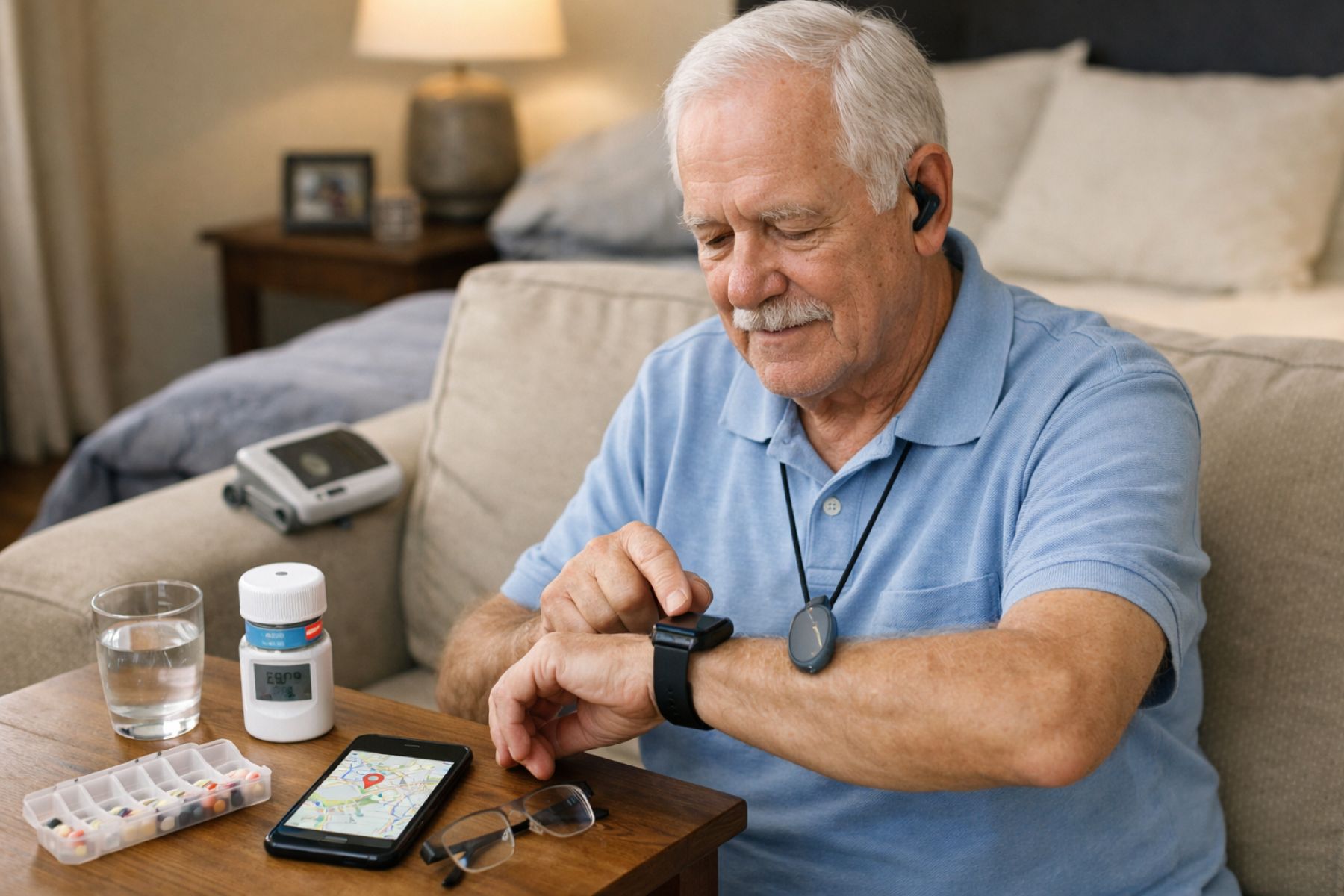
Watching a loved one age often brings a mix of emotions, especially the desire to see them maintain their independence while staying safe. For many years, the conversation around senior safety tech was limited to a single “panic button” or fall detection. While those tools are undeniably life-saving, the landscape has shifted beautifully. Today, senior wearable technology has evolved into a sophisticated, gentle companion that doesn’t just react to emergencies—it helps prevent them.
Think of these modern devices as a supportive friend who keeps a quiet eye on the details, from a resting heart rate to the timing of a pill. They offer a sense of empowerment, allowing older adults to stay in their own homes longer with a renewed sense of confidence. If you are exploring how to support a parent or even looking for yourself, understanding these holistic benefits can change the way you view aging in the digital age.
Understanding Senior Wearable Technology
Before we dive into the specific advantages, it is helpful to clarify what we mean by senior wearable technology. This term covers a range of discreet, user-friendly devices like smartwatches, rings, and even specialized patches or pendants. Unlike the bulky gadgets of the past, today’s wearables are designed with “active aging” in mind. They use advanced sensors to collect real-time data on everything from movement to physiological signals, providing a 24/7 window into one’s health that a traditional doctor’s visit simply cannot capture.
1. Continuous Heart Rate Monitoring
One of the most comforting features of modern wearables is the ability to track heart health around the clock. Instead of a single snapshot at the clinic, these devices monitor heart rate variability and rhythms during rest, exercise, and sleep. This continuous stream of data can be generally helpful for identifying patterns—like a heart rate that stays unusually high during rest—long before a person feels “off.” It gives both the wearer and their family a quiet peace of mind that the most vital engine in the body is being watched over.
2. Automated Medication Management Alerts
We all have those days where we forget if we took a vitamin or a pill, and for seniors on complex regimens, that uncertainty can be stressful. Many wearables now integrate with medication apps to provide gentle vibration or sound alerts when it’s time for a dose. This simple automation removes the “memory load” from the individual, fostering a sense of autonomy. It’s no longer about being “reminded” by a person, but rather following a natural, tech-supported routine that keeps health on track.
3. Real-Time Physical Activity Tracking via Senior Wearable Technology
Maintaining mobility is a cornerstone of independence. Senior wearable technology encourages an active lifestyle by tracking steps, distance, and even intensity of movement. Rather than focusing on high-intensity goals, these devices help users maintain a baseline of daily movement that is appropriate for their fitness level. Seeing progress on a wrist or phone screen can be a wonderful motivator, turning a daily walk into a rewarding goal that supports joint health and cardiovascular strength.
4. Sleep Quality Pattern Analysis
Sleep is when the body repairs itself, yet many older adults struggle with disrupted rest. Modern wearables excel at analyzing sleep cycles—tracking light, deep, and REM stages. By identifying trends, such as frequent nighttime waking or short sleep duration, seniors can make informed adjustments to their evening routines. Better sleep often leads to better cognitive clarity and mood during the day, making this one of the most underrated benefits of wearing a health tracker.
5. Precise GPS Location Tracking
For families of seniors who may experience occasional confusion or those living with early-stage cognitive changes, GPS features offer a vital safety net. Precise location tracking allows loved ones to ensure the senior is safe without being intrusive. Many devices allow for “safe zones” to be set, sending a gentle notification to a caregiver if the wearer moves beyond a familiar area. This allows the senior to continue enjoying walks and outings with the freedom they deserve.
6. Emergency SOS Communication Features
While we hope never to need them, emergency communication features are more streamlined than ever. Many smartwatches now allow a user to call for help or send an SOS message with a simple gesture or button press, even without reaching for a phone. This immediacy is vital during moments of distress. It ensures that help is never more than a few seconds away, which can be the difference between a minor incident and a serious medical emergency.
7. Chronic Disease Symptom Management with Senior Wearable Technology
For those managing conditions like hypertension or diabetes, wearables act as a first line of proactive care. Some of the latest senior wearable technology can track oxygen saturation or offer insights into blood pressure trends. While these aren’t a replacement for professional medical equipment, they provide a “dashboard” of one’s health. This data can be incredibly effective for some when shared with a doctor, as it provides a clearer picture of how a chronic condition behaves in the “real world” outside the exam room.
The journey of aging doesn’t have to be defined by what we lose; it can be enhanced by the tools we gain. Senior wearable technology is a bridge to a more confident, connected, and proactive way of living. By embracing these holistic benefits, older adults can enjoy the freedom of their golden years, knowing that their health and safety are being supported by the best that modern innovation has to offer.






No Response