






Defining a generation is rarely a simple task, but the Baby Boomers present a particularly fascinating case study. Born between 1946 and 1964, this demographic didn’t just witness history; they were the primary engine behind some of the most radical shifts in global culture, technology, and social norms. If you’ve ever wondered why the world looks the way it does today—from the way we protest to the way we consume media—you can likely trace the roots back to the Baby Boomer generation’s unique experiences.
This era was defined by a massive population surge following World War II, creating a youth culture that had never existed on such a scale before. Growing up in a world that was rapidly rebuilding and then rapidly changing, Boomers navigated a landscape of extreme contrast, moving from the simplicity of glass milk bottles to the complexity of the digital revolution.
Understanding the Boomer journey is about more than just a history lesson. It’s about recognizing the resilience of a generation that lived through the height of the Cold War, the birth of rock and roll, and the transition into a post-industrial world. Whether you are a Boomer looking to reminisce or a younger reader trying to bridge the generational gap, this guide explores the milestones that shaped the hearts and minds of millions.
A Childhood of Freedom and Simplicity
Before the world became hyper-connected and digitized, the Boomer childhood was defined by a level of physical freedom that seems almost alien today. It was a time when the neighborhood was the ultimate playground. Children would disappear after breakfast, spend the entire day playing outside unsupervised, and only return when the streetlights flickered on.
This lifestyle wasn’t just about fun; it built a sense of early independence. Most Boomers remember the daily routine of biking or walking to school regardless of the weather, a stark contrast to the modern “carpool” culture. These daily habits were rooted in a physical world—one where you could hear the clink of glass milk bottles on the porch in the morning and where the cream at the top of the bottle was a natural part of the breakfast table.
Domestic life was also marked by unique economic rituals, such as collecting S&H Green Stamps from the grocery store. Families would meticulously paste these stamps into books to trade them for household goods, a precursor to the modern loyalty programs we use on our phones today. It was a tangible, slower way of living that fostered patience and community connection.
The Weight of History: Global Milestones
While childhood felt simple, the geopolitical landscape was anything but. The Boomer generation grew up under the shadow of the Cold War, a period of intense ideological tension that often felt like it could boil over at any moment. Perhaps the most chilling example was the Cuban Missile Crisis, a week where the world held its breath, and many Boomers remember the “duck and cover” drills in their elementary school classrooms.
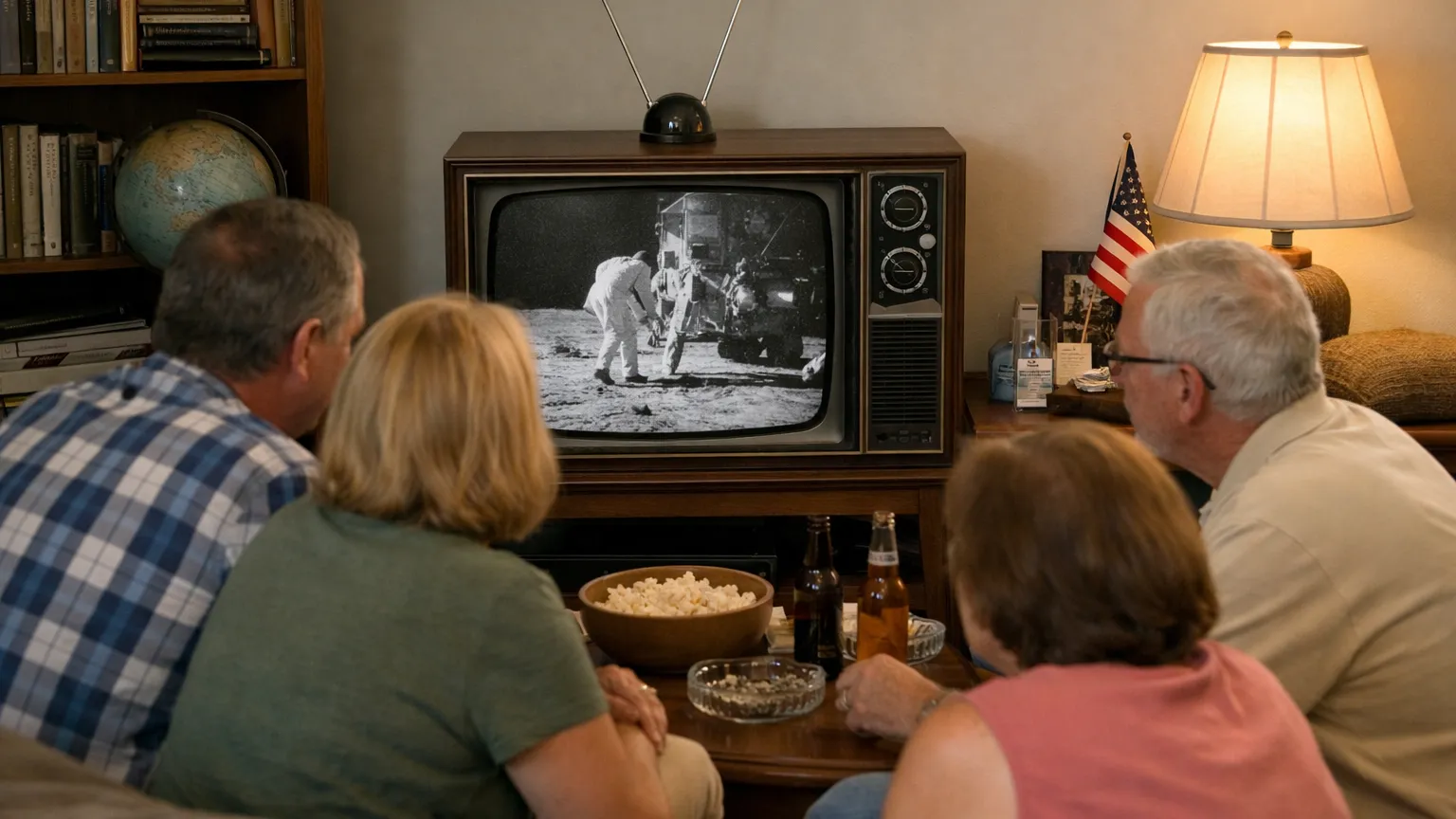
This era of tension was punctuated by moments of profound national trauma and incredible human achievement. The assassination of John F. Kennedy remains a “where were you when” moment for an entire generation, marking a loss of innocence for the American public. Yet, just years later, that same generation watched the impossible become reality as Neil Armstrong took the first steps on the moon.
The Vietnam War, however, was arguably the most defining external conflict for this cohort. Unlike later generations, Boomers faced the reality of the military draft, which brought the political stakes of the era directly into their living rooms. It forced a young population to grapple with questions of patriotism, duty, and government transparency, setting the stage for the massive social shifts that were to follow.
The Cultural Revolution and Social Movements
As the Boomers reached young adulthood, they didn’t just follow the status quo; they challenged it. This generation was the primary fuel for the Civil Rights Movement, pushing for a more equitable society and demanding that the promises of democracy be extended to everyone. Their activism wasn’t limited to the ballot box; it was in the streets, on college campuses, and in the music they listened to.
The anti-war protest era became a hallmark of the Boomer identity, blending political frustration with a burgeoning counterculture. This was the era of Woodstock—a moment where half a million people gathered to celebrate “Three Days of Peace and Music,” proving that youth culture was now a powerful social and economic force.
At the same time, the feminist movement was gaining unprecedented momentum. Boomer women began entering the workforce in record numbers, challenging traditional domestic roles and fighting for reproductive rights and professional equality. Even the “British Invasion,” led by the frenzy of Beatlemania, was more than just a musical trend; it was a shift in how the world viewed celebrity, art, and the global exchange of culture.
Navigating the Great Technological Leap
One of the most impressive aspects of the Baby Boomer generation’s unique experiences is their role as “bridge builders” between the analog and digital worlds. No other generation has had to adapt to such a radical shift in how information is processed. Boomers grew up with the rise of television, moving from grainy black-and-white sets with three channels to the infinite choice of the modern era.
In their early years, TV ads were often focused on health products that would seem questionable today, but they also witnessed the invention of the early internet and the birth of personal computing. Transitioning from rotary phones and paper maps to smartphones and GPS required a level of cognitive flexibility that is often overlooked.
They saw the workplace transform from rows of typewriters and filing cabinets to the high-speed, cloud-based environments of today. While the stereotype sometimes suggests a struggle with technology, the reality is that Boomers were the ones who actually built, marketed, and first adopted many of the foundational technologies we now take for granted.
Economic Prosperity and Professional Loyalty
Economically, many Boomers came of age during a period of remarkable post-war prosperity. This era saw the rise of the middle class, where a single income could often support a family and buy a home. Property values rose steadily, allowing many in this generation to build significant home equity over decades—a cornerstone of their long-term wealth.
The professional environment was also vastly different. This was the era of high employer loyalty, where it was common to stay with a single company for thirty or forty years, eventually retiring with a guaranteed pension. It was a “handshake” economy built on stability, though it also existed in a pre-regulated safety era where workplace protections and environmental standards were still being negotiated.
Building wealth through traditional sectors—real estate, manufacturing, and corporate climbing—became the standard Boomer blueprint. This financial stability has allowed them to remain a dominant economic force even as they transition into their retirement years, though they now face the new challenge of navigating a world where the old “pension and gold watch” model has largely disappeared.
Tips for Bridging the Generational Gap
Whether you are part of this generation or looking to better understand the Boomers in your life, communication is key. Here are a few ways to foster better connections:
-
Value the Oral History: Don’t just read about the moon landing or the 60s protests; ask a Boomer about their personal experience. The nuances of how it felt to live through those moments are far more educational than a textbook.
-
Respect the “Analog” Skills: There is immense value in the tactile skills Boomers mastered—handwriting, map reading, and face-to-face networking. These are becoming lost arts that can still offer great benefits in a digital world.
-
Find Common Ground in Activism: Today’s youth movements for climate and social justice actually share a lot of DNA with the Boomer protests of the 1960s. Recognizing these shared values can turn a “clash” into a collaboration.
-
Acknowledge the Adaptation: Moving from a world of paper to a world of pixels is a massive achievement. A little patience with tech troubleshooting goes a long way in showing respect for the sheer amount of change they have navigated.
Reflecting on a Legacy of Change
The Baby Boomer generation’s unique experiences have left an indelible mark on the fabric of modern society. They were the children of a post-war dream who grew up to be the architects of a cultural revolution. From the quiet suburbs of the 1950s to the loud, neon-soaked halls of the early digital age, their journey has been one of constant adaptation and bold expression.
As we look at the world today, we see the echoes of their music, the results of their activism, and the foundations of the economy they helped build. While every generation has its challenges, the Boomers’ ability to navigate a period of such extreme transition is a testament to their enduring influence.





No Response