

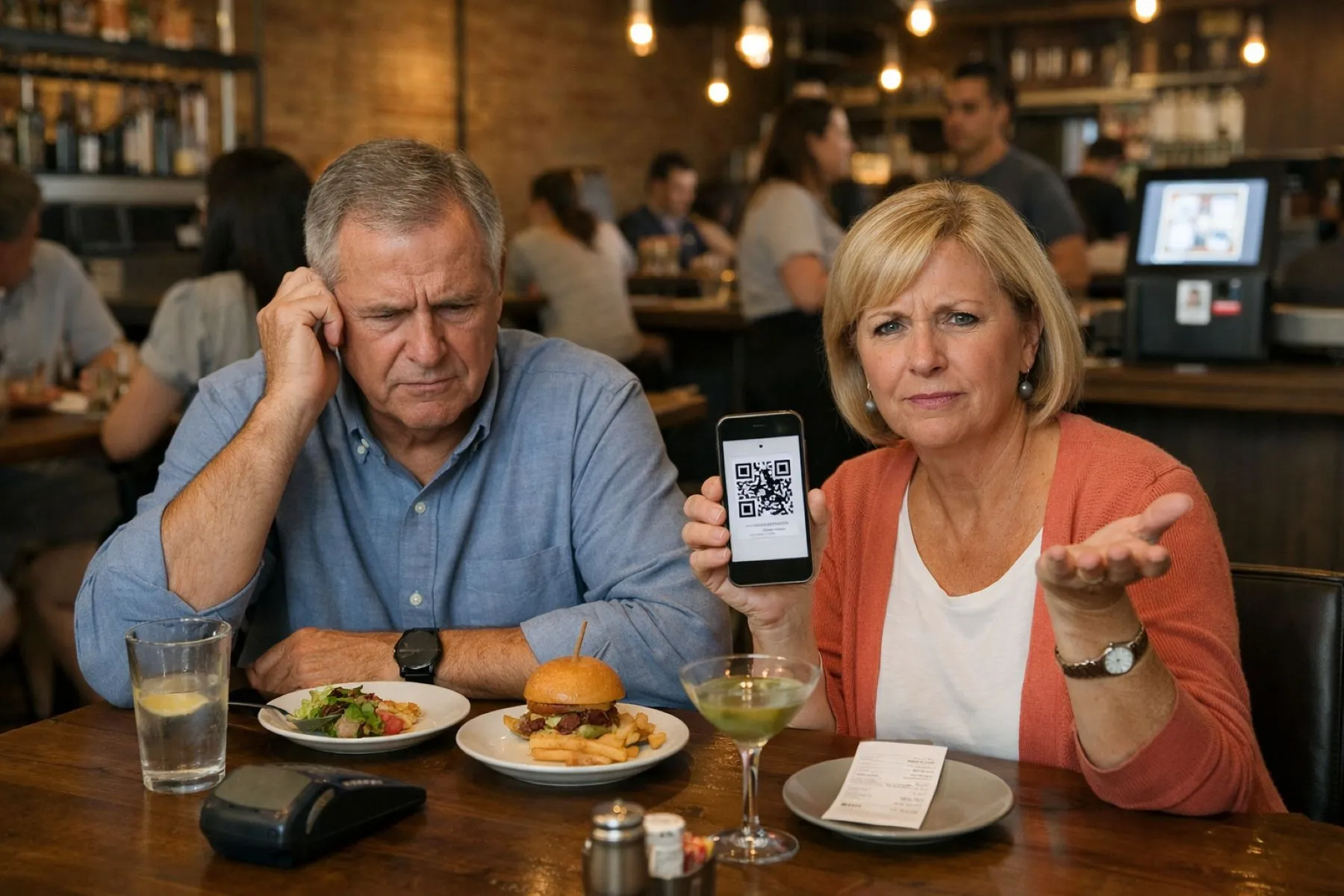
There was a time when dining out was an event defined by predictable rituals: a physical menu handed to you by a server in a crisp uniform, a quiet atmosphere conducive to conversation, and a bill that clearly stated exactly what you were paying for. Today, however, stepping into a trendy bistro can feel like entering a high-tech warehouse where the music is loud, the chairs are metal, and you need a smartphone just to see the price of a burger. For many, these shifts aren’t just “modern updates”—they are fundamental disruptions to the hospitality they grew up with, leading to an increase in Baby Boomer restaurant complaints.
This friction isn’t just about being “grumpy”; it’s a fascinating cultural clash between two different definitions of value. While younger generations might prioritize “vibe,” Instagrammable aesthetics, and digital efficiency, Boomers often view dining as a service-oriented experience where comfort and clarity are king. Understanding the root of these grievances provides a window into how much the world of hospitality has changed and why the “good old days” of dining might actually have some lessons for the future of the industry.
The Great Acoustic Divide and the Industrial Aesthetic
If you ask an older diner about their number one frustration, they won’t start with the food; they’ll start with the noise. The architectural trend of the last decade has leaned heavily into the “industrial chic” look—think exposed brick, polished concrete floors, and high ceilings. While this looks great in a portfolio, it creates an acoustic nightmare that frequently tops the list of Baby Boomer restaurant complaints.
Without soft surfaces like tablecloths or curtains to absorb sound, every clatter of a fork and every burst of laughter echoes, creating a “cocktail party effect” where guests have to shout to be heard. For a generation that views dining out as a primary way to socialize, a restaurant that mimics the volume of a nightclub feels inherently hostile. It transforms a relaxing meal into an exhausting sensory assault.
The Digital Barrier: QR Codes and Kiosks
Perhaps nothing has fueled the generational divide more than the post-pandemic ubiquity of the QR code menu. To a digital native, it’s a minor inconvenience. To a Boomer, it is often viewed as a breach of the hospitality contract. The act of sitting down and immediately having to pull out a phone—the very device many people go to dinner to escape—feels cold and impersonal.
Beyond the technological hurdle, there is the issue of legibility. Reading a multi-page menu on a five-inch screen requires constant zooming, which is a common trigger for Baby Boomer restaurant complaints regarding accessibility. When you pair this with complex self-service ordering kiosks, the “service” element of the industry begins to vanish. For many, if they wanted to do all the work themselves, they would have stayed home.
The Hidden Costs and Tipping Creep
The financial side of dining out has become a labyrinth of confusion that frustrates those who value transparency. In the past, the price on the menu was the price you paid, plus a predictable tip. Today, diners are often met with “wellness surcharges” or “kitchen appreciation taxes” that appear at the bottom of the bill in fine print.
To a generation that prides itself on fiscal responsibility, these hidden fees feel like a lack of integrity. This frustration is compounded by “tipping creep” on digital tablets. When a counter-service barista flips a screen around with preset tip options starting at 22% for a coffee they haven’t even poured yet, it creates a sense of social pressure that feels aggressive rather than earned.
Flavor Fusion and Employee Etiquette
Culinary trends have also moved toward “fusion” and “deconstructed” dishes, which can sometimes alienate those who prefer classic, well-executed staples. Furthermore, the “vibe” of restaurant staff has undergone a massive transformation. The formal training of the past has given way to a much more casual, “friend-to-friend” style of service.
While some find this refreshing, many perceive it as a decline in professional standards. Casual attire and an overly familiar tone can be jarring to someone who views dining out as a disciplined profession. When you add “aggressive table turnover” strategies—where servers hover to clear plates before the table is finished—the experience feels less like a guest being hosted and more like a customer being processed, leading to further Baby Boomer restaurant complaints about the loss of genuine hospitality.
Bridging the Generational Dining Gap
Is it possible for the modern restaurant to satisfy both the TikTok-loving Gen Z diner and the comfort-seeking Baby Boomer? The answer lies in balance and choice. While the industry won’t move backward, there are simple ways to bridge the gap:
-
Offer a Choice: Always have a few physical menus tucked away for those who prefer them.
-
Mind the Acoustics: Investing in acoustic panels can lower the decibel level without ruining the aesthetic.
-
Be Transparent: If there is a surcharge, put it on the menu in bold letters.
-
Train for Versatility: Teach staff to read the table—some want “casual,” while others appreciate traditional etiquette.
A Seat at the Table for Everyone
At the heart of every complaint is a desire for the experience to match the expense. As prices for dining out continue to rise, the expectation for comfort, service, and clarity rises along with them. When a restaurant gets it right, it doesn’t matter what year you were born—you feel seen, valued, and fed.
By listening to Baby Boomer restaurant complaints, the industry can find a middle ground where technology enhances the experience without replacing the human touch, and where “cool” doesn’t have to mean “uncomfortable.”