






There was once a time when the word “anti-aging” conjured images of heavy, floral-scented creams sitting on the vanities of our grandmothers. For a long while, the beauty industry treated skin rejuvenation as a rescue mission—something you only started thinking about once the wrinkles had already settled into permanent residence. But the narrative has shifted dramatically. Today, the conversation has moved from “fixing” to “preserving,” making anti-aging skincare for 30s the essential foundation for a lifetime of healthy skin. We’ve entered the era of the “prejuvenation” movement, where the 30th birthday isn’t a signal of decline, but rather the golden window of opportunity.
In your 30s, your skin is in a fascinating state of transition. You likely still have that youthful glow, but if you look closely in the morning light, you might notice that a late night stays on your face a little longer than it used to. Maybe those faint lines around your eyes don’t disappear quite as fast after you smile, or perhaps your skin feels just a bit less bouncy. This is the stage where the internal machinery of your skin begins to shift gears, and understanding this shift is the key to maintaining a radiant complexion for decades to come. By leaning into preventative care now, you aren’t just chasing youth; you’re investing in the long-term health and structural integrity of your largest organ.
Understanding the Shift to Early Preventative Care
To understand why the 30s are so pivotal, we have to look beneath the surface. Biologically, this is the decade where our skin’s “maintenance crew” starts taking longer lunch breaks. Around the age of 25, our natural collagen production—the protein responsible for firmness—begins to drop by about 1% every year. By the time you hit 30, that cumulative loss starts to manifest as a slight loss of elasticity.
It isn’t just collagen, though. Skin cell turnover, the process where your body sheds old cells and replaces them with fresh ones, begins to sluggishly slow down. In your 20s, this cycle happens every 28 days or so; in your 30s, it can stretch to 35 or 40 days. This lag is why skin can sometimes look dull or “tired” even when you’ve had a full night’s sleep. Furthermore, this is often the decade where the “sun sins” of our youth finally bubble up to the surface in the form of subtle pigmentation or sunspots.
The beauty of starting now is that preventative care is significantly more effective (and often more affordable) than corrective surgery later in life. It is much easier to protect the collagen you currently have than it is to try and rebuild it from scratch at age 60. By intervening early, you are essentially “freezing” your skin’s quality in its prime.
What Age Should You Actually Start Anti-Aging Skincare for 30s?
One of the most frequent questions dermatologists hear is, “Am I too young for this?” The truth is that while “active” treatments—think high-strength retinols or clinical procedures—are the hallmark of the 30s, the foundation should be laid much earlier. Ideally, preventative measures like consistent sun protection and antioxidant use should start in your early 20s.
However, 30 is the definitive milestone where the strategy shifts from general maintenance to targeted intervention. This is the age where your “baseline” skin health needs a more sophisticated toolkit. In your 20s, you could get away with a basic cleanser and moisturizer. In your 30s, your routine needs to become more intentional, focusing on ingredients that communicate with your cells to keep them acting “young.”
The Power Players: Best Anti-Aging Ingredients for Your 30s
Navigating the skincare aisle can feel like deciphering an alchemy textbook, but for 30-something skin, there are five gold-standard ingredients that do the heavy lifting. First and foremost are Retinoids. These vitamin A derivatives are the undisputed kings of skin rejuvenation because they physically speed up cell turnover and tell your skin to produce more collagen. Starting a gentle retinol is perhaps the single best favor you can do for your future self.
During the daytime, Vitamin C acts as your skin’s personal bodyguard. It’s a potent antioxidant that neutralizes environmental damage from pollution and UV rays while brightening the complexion. To handle the slowing hydration levels, Hyaluronic Acid is essential; it’s a humectant that can hold 1,000 times its weight in water, plumping up the skin from the inside out to minimize the appearance of fine lines.
For structural support, Peptides act as messengers that signal the skin to repair itself, while Niacinamide (Vitamin B3) works wonders for the skin barrier. Niacinamide is particularly beloved in an effective anti-aging skincare for 30s routine because it helps minimize pores, evens out skin tone, and ensures your skin isn’t becoming too sensitive or dry from other active treatments.
Why 30-Somethings are Choosing Professional Aesthetic Treatments
In recent years, there has been a noticeable surge in 30-somethings booking appointments at medical spas and dermatology clinics. This shift isn’t just about vanity; it’s about a more informed, career-driven generation that views aesthetic maintenance as a form of self-care and professional branding. With higher disposable income than they had in their 20s, many are realizing that while a $100 cream is great, a $300 professional treatment can often deliver more visible, immediate results.
Social media has also demystified these procedures. We no longer live in an era where “getting work done” is a shameful secret. Instead, it’s shared openly, leading to a much higher level of awareness regarding what is possible. For many, the goal isn’t to look like a different person; it’s to look like the most rested, vibrant version of themselves as they climb the career ladder or navigate the stresses of early parenthood.
Most Popular Professional Procedures and Anti-Aging Skincare for 30s
If you’re considering stepping into a clinic, the “menu” for 30-somethings looks very different than it does for older age groups. The trend now is “Micro-treatments”—subtle tweaks that offer maximum glow with minimum downtime.
-
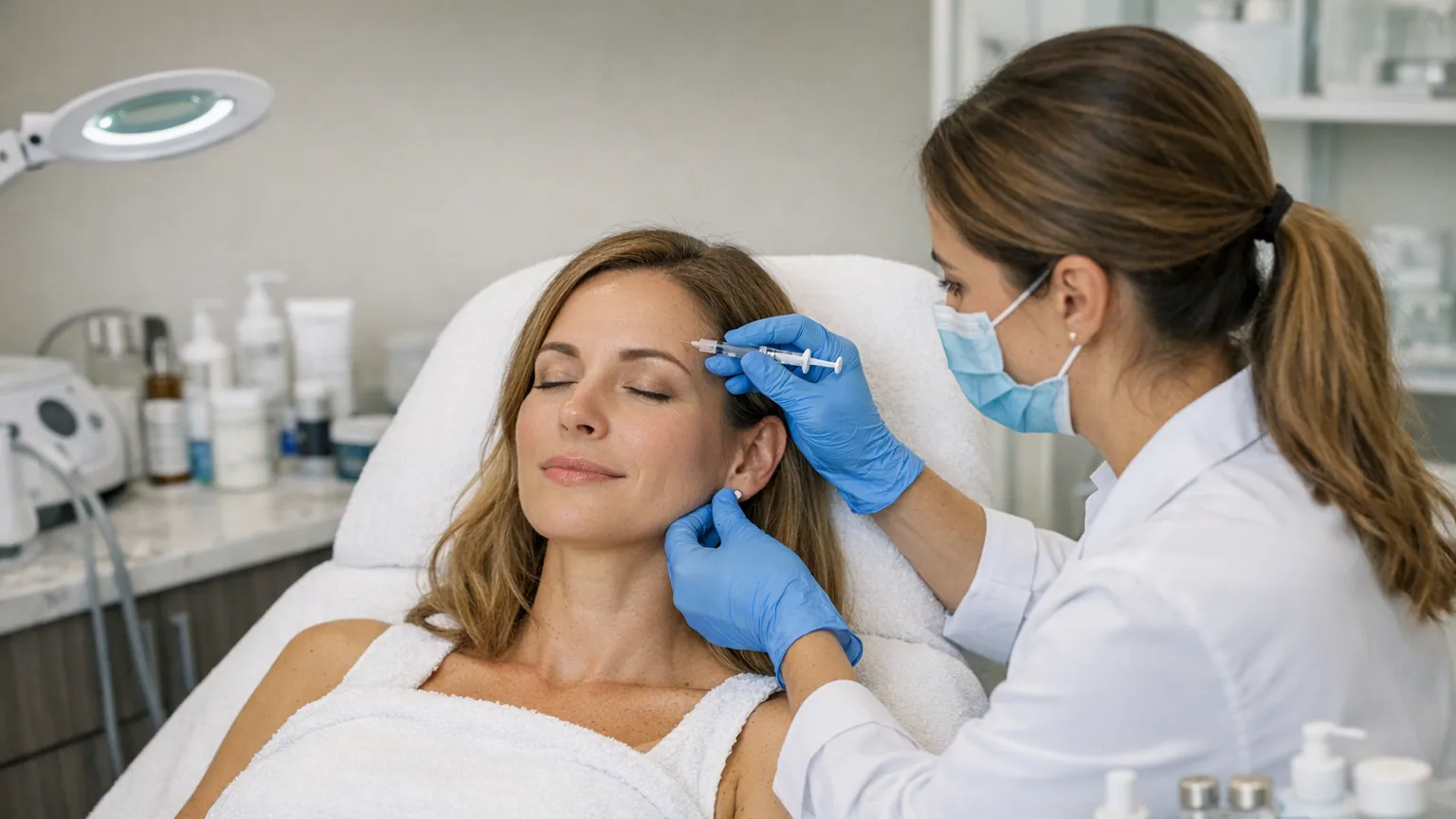
“Baby Botox”: This involves injecting very small amounts of botulinum toxin to soften muscle movement. It doesn’t “freeze” the face; rather, it prevents the repetitive motions that cause deep wrinkles to form.
-
Microneedling: By creating tiny, controlled micro-injuries, this procedure triggers the body’s natural healing response, resulting in a surge of collagen and refined skin texture.
-
Chemical Peels: A professional-grade peel can do in 30 minutes what a bottle of exfoliating toner might take six months to achieve—stripping away dullness.
-
Laser Therapy: For those dealing with the first signs of redness or sun damage, lasers can target pigmentation with precision.
-
Profhilo: Often called “injectable moisturizer,” this treatment uses Hyaluronic Acid to improve skin laxity and “bounce” without changing your face shape.
The Nuance: Anti-Aging in Your 30s vs. Your 50s
It’s important to distinguish that anti-aging skincare for 30s is a different beast entirely than it is in your 50s. In your 50s, the goal is often “reconstruction”—restoring lost volume in the cheeks, repairing deep-set wrinkles, and dealing with significant skin sagging. Treatments at that stage are more intensive and frequent.
In your 30s, the goal is “preservation.” You are maintaining elasticity rather than restoring it. You are focusing on surface hydration and early-stage pigmentation rather than deep volume replacement. The clinical sessions are usually less frequent, serving more as a “tweak-up” to keep the skin functioning at its peak. Think of it like servicing a car; it’s much better to change the oil regularly at 30,000 miles than to wait for the engine to fail at 100,000.
Debunking Common Misconceptions
Despite the wealth of information available, several myths persist. One of the most common is that anti-aging is only for “old” people. As we’ve discussed, if you wait until you feel “old” to start, you’ve missed the most effective window for prevention.
Another fear is that these treatments will “thin” the skin or make you look “unnatural.” In reality, ingredients like retinol actually thicken the deeper layers of the skin over time by boosting collagen. As for the unnatural look? That is almost always the result of over-treating or starting too late with too much filler. When started early and done conservatively, the results are virtually invisible to the naked eye.
Daily Lifestyle Habits to Support Your Treatments
No amount of Botox or expensive serum can outrun a poor lifestyle. To truly maximize your investment in your 30s, your daily habits must align with your skincare goals.
-
The Non-Negotiable SPF: You can spend thousands on lasers, but if you aren’t wearing a high-SPF sunscreen every single day, you are essentially throwing that money away. UV damage is responsible for up to 80% of visible skin aging.
-
Hydration and Diet: Drinking enough water and eating a diet rich in antioxidants (think berries, leafy greens, and fatty fish) provides your skin with the raw materials it needs to repair itself.
-
The Power of Sleep: During deep sleep, your body releases growth hormones that facilitate cell repair. Aiming for at least seven hours is a biological necessity for a glowing complexion.
Embracing the New Prime
Turning 30 is a powerful moment. It is a decade of coming into your own, finding your confidence, and refining your path. Your skincare should reflect that same sense of empowerment. By choosing to embrace a comprehensive approach to anti-aging skincare for 30s, you aren’t fighting against time; you’re working with it. You’re giving your skin the tools it needs to age gracefully, healthily, and on your own terms.
The “New Prime” is all about being proactive. Whether it’s finally committing to a nightly retinol, booking that first consultation for a chemical peel, or simply becoming a devotee of daily sunscreen, every small action you take today is a gift to your future self.





No Response