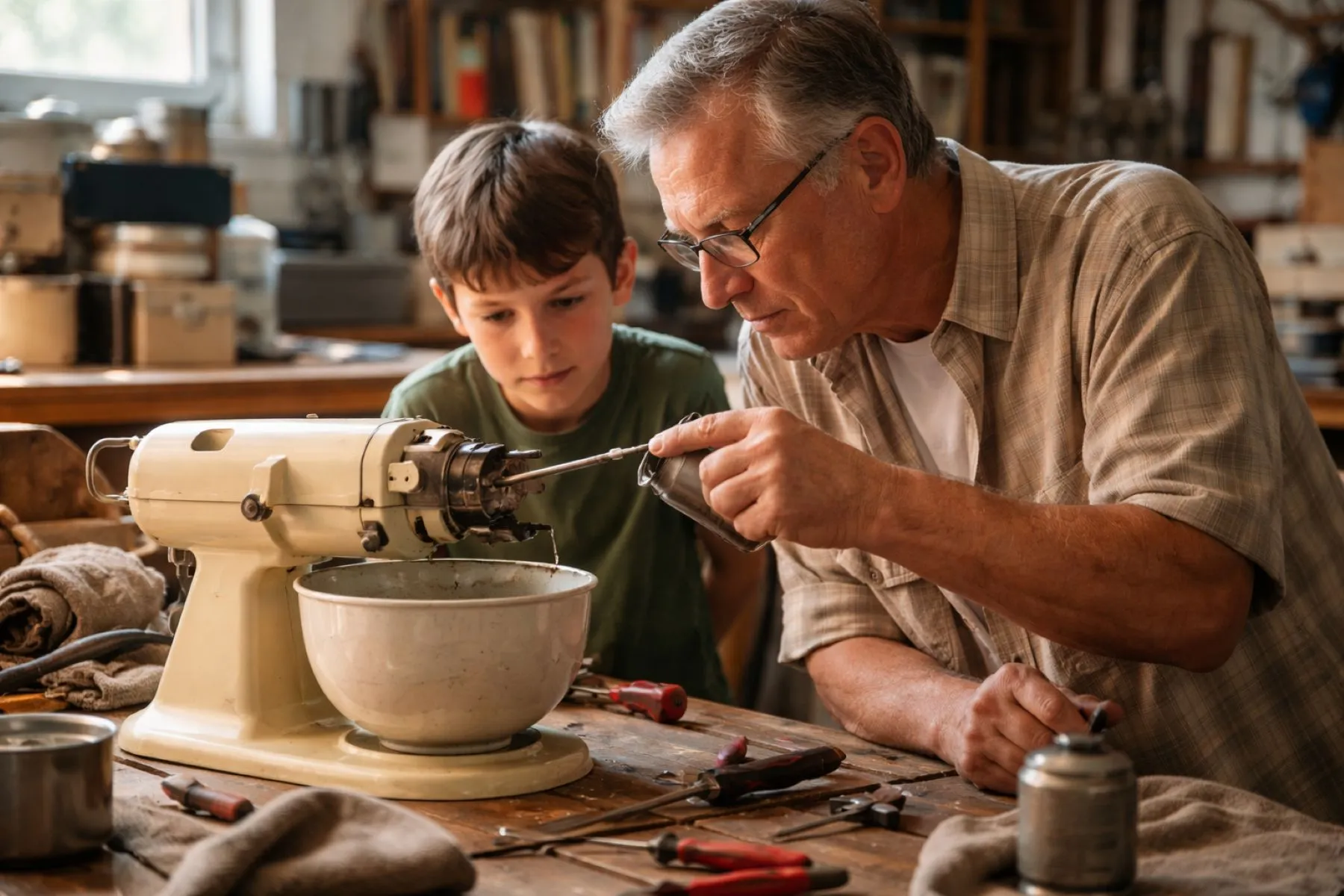
If you’ve ever stepped into an older relative’s kitchen, you might have noticed a heavy, avocado-green mixer or a wood-paneled refrigerator still humming along as if the Nixon administration never ended. It’s a common trope to say that “they don’t make them like they used to,” but we often stop the conversation at the manufacturing line. While the heavy steel and lack of cheap plastic components certainly played a role, there is a missing half of the equation regarding vintage product durability that we rarely talk about: the way people actually lived with their belongings.
In the 1970s, the relationship between a consumer and a product wasn’t a fleeting summer fling; it was a long-term commitment. In an era before “one-click” replacements and overnight shipping, keeping a household running required a specific set of habits—a culture of stewardship—that has largely evaporated in our modern, throwaway society. By looking back at how these items were treated, we can uncover a blueprint for sustainability that goes far beyond simply buying “vintage style.”
The Ritual of the Manual Routine
One of the most striking differences between then and now is the level of “active participation” required to own a machine. Today, we expect our appliances to be invisible—autonomous boxes that work until they don’t. In the 1970s, however, the owner’s manual wasn’t just a legal disclaimer; it was a guide to ensuring long-term mechanical reliability. People were much more likely to engage in manual routine maintenance tasks that we would find tedious today.
This involved a hands-on approach to the mechanical health of the home. It meant regularly oiling the small ports on a sewing machine, vacuuming the dust off refrigerator coils, and manually defrosting the freezer. These small, rhythmic tasks prevented the compounding wear and tear that leads to catastrophic failure. By staying intimately acquainted with how their machines sounded, owners maintained the vintage product durability we admire today.
The Repair Mindset vs. The Discard Culture
In the modern landscape, a broken heating element in a coffee maker usually results in the entire unit being tossed into a landfill. In the 1970s, discarding an item because of a single failed component was seen as a massive waste of money. The “repair, don’t replace” ethos was the default setting for the average household, acting as a pillar of sustainable ownership.
This was supported by a robust infrastructure of local professional repair services. Every neighborhood had a small shop dedicated to fixing televisions, shoes, or small appliances. When we stopped valuing repair, we inadvertently gave manufacturers permission to build products that are impossible to open, let alone fix.
Investing in the Long Game
We often complain about the high cost of quality today, but the 1970s consumer viewed initial price through a different lens. People were generally more willing to save up and invest in a higher initial quality because they understood the math of “cost per year of use.” A heavy-duty washing machine might have cost a significant portion of a monthly salary, but the expectation was a twenty-year lifespan.
This high barrier to entry fostered a sense of value. When you’ve saved for months to afford a piece of equipment, you treat it with a level of reverence. This initial investment wasn’t just about better parts; it was a psychological anchor that ensured the owner would follow strict manufacturer care guidelines to protect their asset and preserve its vintage product durability.
Operating with Patience and Care
Modern life is defined by speed, and we often demand the same from our machines. In contrast, 1970s usage habits were often defined by operating machinery at lower, more sustainable speeds. There was a general understanding that pushing a machine to its absolute limit was a recipe for a short lifespan.
Whether it was allowing a car engine to properly warm up or not overloading a laundry drum, people tended to minimize daily repetitive mechanical stress. This slower pace of life directly translated into a slower pace of mechanical degradation, keeping appliances in peak condition for decades.
Protection and Environmental Control
Vintage product durability was also a matter of where and how items were stored. Before the era of mass consumerism, equipment was often stored in climate-controlled areas or protected with custom covers. You might remember the ubiquitous quilted toaster covers or the heavy plastic slips for mixers.
While these might look dated now, they served a vital purpose: keeping kitchen grease, dust, and moisture away from sensitive mechanical parts. Additionally, the widespread practice of applying protective coatings—like waxing wooden cabinets or polishing chrome—acted as a shield against the slow creep of oxidation and wear.
The Cultural Value of Ownership
Perhaps the most significant factor in vintage product durability wasn’t mechanical at all—it was cultural. In the 1970s, an appliance wasn’t just a tool; it was a part of the home’s history. This mindset stood in direct opposition to modern planned obsolescence cycles.
This sense of stewardship was a family affair. Parents taught children proper handling techniques: not to yank cords, how to gently turn dials, and how to clean up after use. This intergenerational transfer of “thing-knowledge” ensured that household goods were respected, significantly reducing the risk of accidental damage.
Practical Steps for Modern Longevity
While we can’t always change how products are manufactured today, we can adopt the 1970s “custodian” mindset. Here are a few ways to bring that vintage durability back into your home:
-
Read the Manual: Find the maintenance section and set calendar reminders for cleaning filters or lubricating moving parts.
-
Seek Out Repairability: Before buying, check if the item can be taken apart. Support brands that sell replacement parts directly.
-
Slow Down: Don’t always use the “Turbo” setting. Operating at 70-80% capacity can exponentially increase the life of the motor.
-
Protect the Exterior: Use covers for outdoor equipment and keep electronics away from direct sunlight and high humidity.
-
Fix the Small Stuff: Don’t wait for a total breakdown. If a button feels sticky, fix it immediately to prevent total failure.
Rediscovering the Art of Keeping
The incredible lifespan of 1970s household goods wasn’t an accident of engineering alone; it was a partnership between the maker and the user. Those machines survived because they were built to be serviced and owned by people who believed they were worth the effort.
As we move toward a future where sustainability is vital, we don’t necessarily need to invent new technology. Sometimes, we just need to rediscover the old habits of maintenance, repair, and respect. By shifting our perspective from “consumer” to “steward,” we can break the cycle of planned obsolescence and find the satisfaction that comes from owning things that actually last.