From the moment they open their eyes, children are the world’s most dedicated anthropologists. They don’t just live in our homes; they study them. While we often worry about the “big talks” or the formal lessons we try to instill, the reality is that children are far more influenced by the quiet, unscripted moments of our lives. They are constantly scanning for childhood observation cues, those subtle signals that tell them how the world works, how emotions are managed, and what it truly means to be an adult.
Understanding this “silent watching” is both a heavy responsibility and a profound opportunity. We often think of parenting as a series of instructions, but it is actually a continuous performance. Every time we sigh at a red light, check our phones mid-conversation, or navigate a disagreement with a partner, we are providing the raw data our children use to build their own identities. By becoming aware of what they are actually seeing, we can move from accidental modeling to intentional living.
The Emotional Weather Vane: Identifying Subtle Shifts
Children have a biological imperative to be attuned to their parents’ moods. In the wild, a caregiver’s distress meant danger; in a modern living room, it means uncertainty. Long before a child can articulate the concept of “stress,” they can feel the atmospheric pressure change when a parent walks through the door after a difficult day at the office. They notice the tightness in the jaw, the shorter cadence of your speech, and the way you might avoid eye contact.
These shifts are the primary way children learn about emotional regulation. If they see us acknowledge our stress—perhaps by saying, “I’m feeling a bit frustrated today, so I need a minute of quiet”—they learn that emotions are manageable. However, if we mask our feelings with a “fine” that sounds like a door slamming, they decode a different message: that emotions are things to be hidden or feared. They are learning to read the “weather” of the home to decide if it’s safe to be loud, to ask for help, or to simply stay out of the way.
The Integrity Audit: Observing Consistency in Promises
To a child, a promise is a legal contract. Whether it’s an ice cream trip on Saturday or a vow to play Lego after dinner, these small commitments are the foundation of their sense of security. When we follow through, we aren’t just giving them a treat; we are proving that the world is a predictable and trustworthy place. We are teaching them that words have weight and providing a positive childhood observation cue regarding reliability.
Conversely, when “maybe later” consistently becomes “never,” children begin to decode a world where reliability is optional. They stop listening to what we say and start focusing exclusively on what we do. This observation goes beyond mere disappointment; it shapes their internal monologue regarding their own worth. They begin to ask, Am I important enough for them to remember? Maintaining consistency in our verbal promises, no matter how small, is the most direct way to model integrity.
The Digital Wall: Decoding Smartphone Distractions
One of the most significant modern shifts in childhood observation cues involves the glowing rectangle in our palms. Children are incredibly perceptive about where our attention goes. When a parent is physically present but digitally absent, the child decodes a sense of “partial presence.” They see the way our eyes glaze over as we scroll, or how we reflexively reach for the phone during a lull in play.
This cue tells them that the digital world is a high-priority competitor for our affection. It’s not about being “anti-tech,” but about the message sent when we interrupt a child’s story to check a notification. They learn that connection is fragmentable. By practicing intentional phone-free zones, we send a powerful, silent signal: You are more interesting than the internet. This reinforces their sense of self-importance and teaches them the value of deep, undistracted human connection.
The Anatomy of a Mistake: Monitoring Reactions to Failure
How do you react when you drop a glass or miss a deadline? Your child is watching the aftermath. If you meet your own failures with self-loathing or anger, you are handing them a blueprint for perfectionism. They decode that mistakes are shameful and that love or respect is tied to performance.
When we handle our blunders with grace—or even humor—we give our children permission to be human. If they see us say, “Oops, I made a mistake, let me see how I can fix this,” they learn that failure is merely a data point, not a definition of character. This specific childhood observation cue is perhaps the greatest gift we can give their future mental health. It transforms the home from a courtroom into a laboratory where they feel safe to experiment, fail, and grow.
The Art of Play: Gauging Genuine Presence
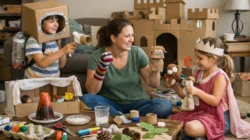
Children have a built-in “authenticity detector.” They can tell the difference between a parent who is “doing time” on the floor with toys and a parent who is actually engaged. While we don’t need to be professional entertainers, the cue of genuine presence is vital. When we are truly there—laughing at their jokes, following their imaginative rules, and making eye contact—we are validating their inner world.
If play feels like a chore we are rushing through, they decode that their interests are burdensome. This doesn’t mean we have to play for hours; ten minutes of “all-in” presence is worth more than two hours of distracted supervision. The cue they are looking for is simple: Does my parent enjoy my company? The answer to that question becomes the cornerstone of their self-esteem.
The Social Blueprint: Analyzing Interpersonal Respect
Children observe how we treat everyone—from our partners and co-parents to the cashier at the grocery store. They are decoding the “hierarchy of respect.” If they see us speak kindly to a waiter but dismissively to a spouse, they learn that kindness is a performance rather than a core value. They are sponges for the nuances of conflict resolution.
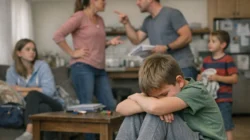
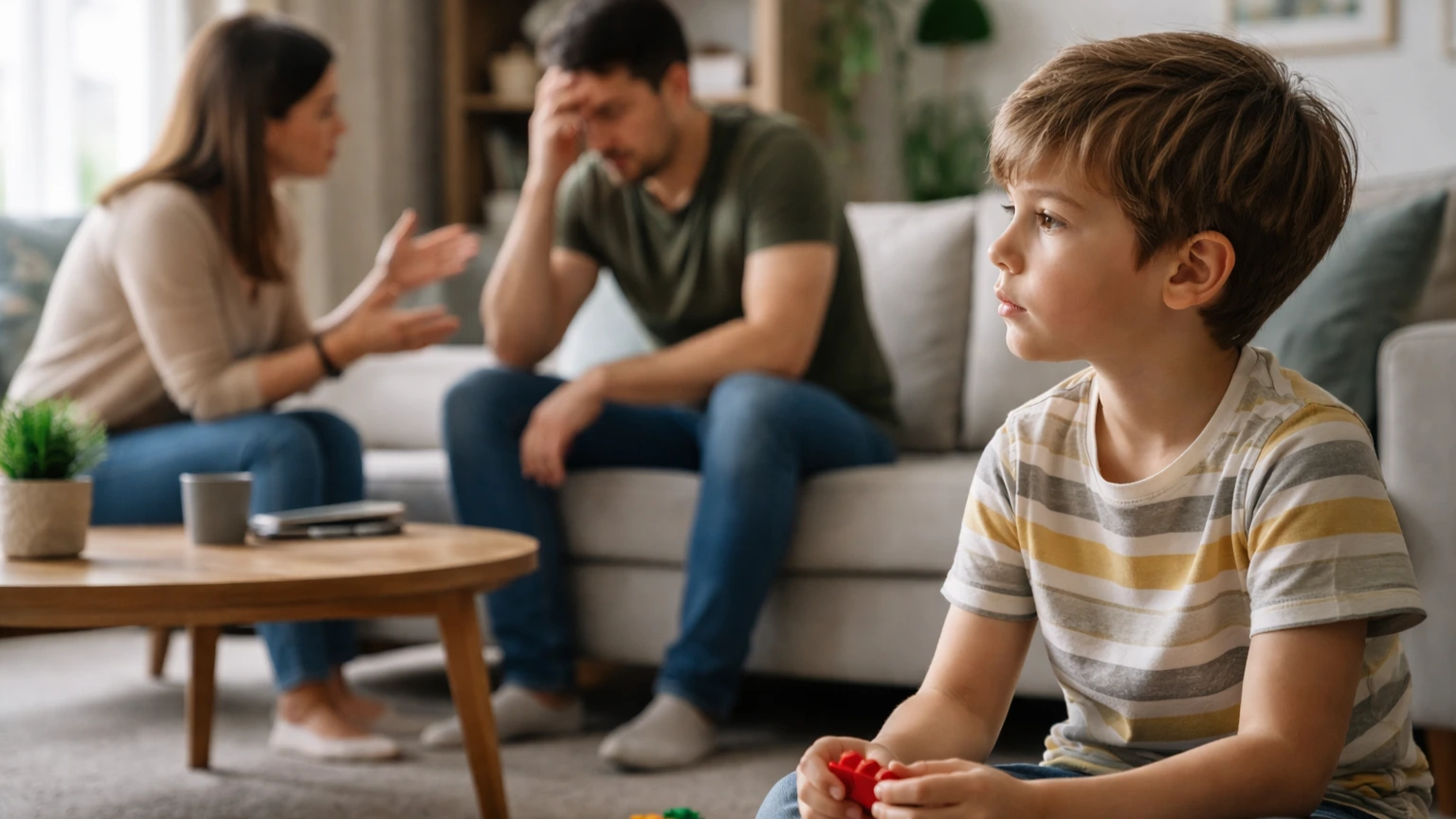
Watching how adults navigate disagreement is their primary education in relationships. Do they see us listen? Do they see us apologize? If they witness a healthy repair after an argument, they learn that relationships are resilient. They decode that you can disagree with someone and still value them. This sets the stage for how they will eventually treat their friends, teachers, and future partners.
Morning Rhythms: Noticing Habitual Energy
The first hour of the day sets the emotional tone for the household. Children notice the “vibe” of the morning routine. Is it a frantic race filled with barking orders, or is it a purposeful start? If the house is governed by chaos and stress every morning, the child decodes that life is a series of fires to be put out. They internalize that “hurry” is the default state of being.
By injecting even a small amount of calm or predictable ritual into the morning—a consistent breakfast, a moment of upbeat music, or a calm goodbye—we provide a cue of stability. They learn that even in a busy world, we can choose our tempo. This habitual energy becomes their own “internal pace” as they grow into independence.
The Fairness Metric: Tracking Rule Enforcement
Children are natural-born lawyers; they have a keen eye for fairness and consistency. They are constantly tracking whether the rules apply to everyone or if they are subject to a parent’s whim. If a rule is enforced strictly on Tuesday but ignored on Thursday because the parent is tired, the child decodes that the rule isn’t actually important—the parent’s mood is.
This leads to “testing boundaries” as a way to find where the floor actually is. When we are consistent with our boundaries, we provide a “felt sense” of safety. They may complain about the rules, but they are secretly decoding a world that has structure and logic. Fairness isn’t about being equal; it’s about being predictable and reliable.
Validating the Self: Sensing Authentic vs. Forced Praise
In an era of “participation trophies,” children have become surprisingly savvy at identifying hollow praise. When we say “Good job!” for every mundane task, the words lose their nutritional value. Children decode that we might just be saying it because we’re supposed to, or worse, that we aren’t really paying attention to what they actually did.
They are looking for specific, authentic observation. Instead of a generic “Great painting,” they value childhood observation cues like, “I see how much effort you put into choosing those colors.” This tells them that you see them—not just the result, but the process. Authentic praise teaches them to value their own effort, while forced praise teaches them to become “praise junkies” who rely on external validation.
The Mirror Effect: Subconscious Coping Skills
Ultimately, children don’t just do what we say; they do what we do. If we cope with stress by eating, shouting, or withdrawing, they will likely adopt those same “environmental coping skills.” They are mirroring our nervous systems. If we practice self-care, exercise, or healthy communication, they see those as the natural tools for navigating life’s ups and downs.
This mirroring is subconscious and powerful. It’s why we often hear our own voices—and our own flaws—reflected back to us in our children’s play or their interactions with peers. It’s a humbling mirror, but it’s also our best guide for personal growth.
Becoming an Intentional Beacon
The realization that our children are constantly decoding our behavior doesn’t have to be paralyzing. We don’t have to be perfect; in fact, being a “perfect” parent would be a terrible signal, as it would give our children an impossible standard to live up to. What they need is a parent who is self-aware.
The goal is to provide childhood observation cues that are grounded in reality, kindness, and resilience. When we mess up, we acknowledge it. When we are distracted, we apologize and reconnect. By being intentional about the silent messages we send, we create a home environment where the “Silent Watcher” feels seen, safe, and empowered to grow.