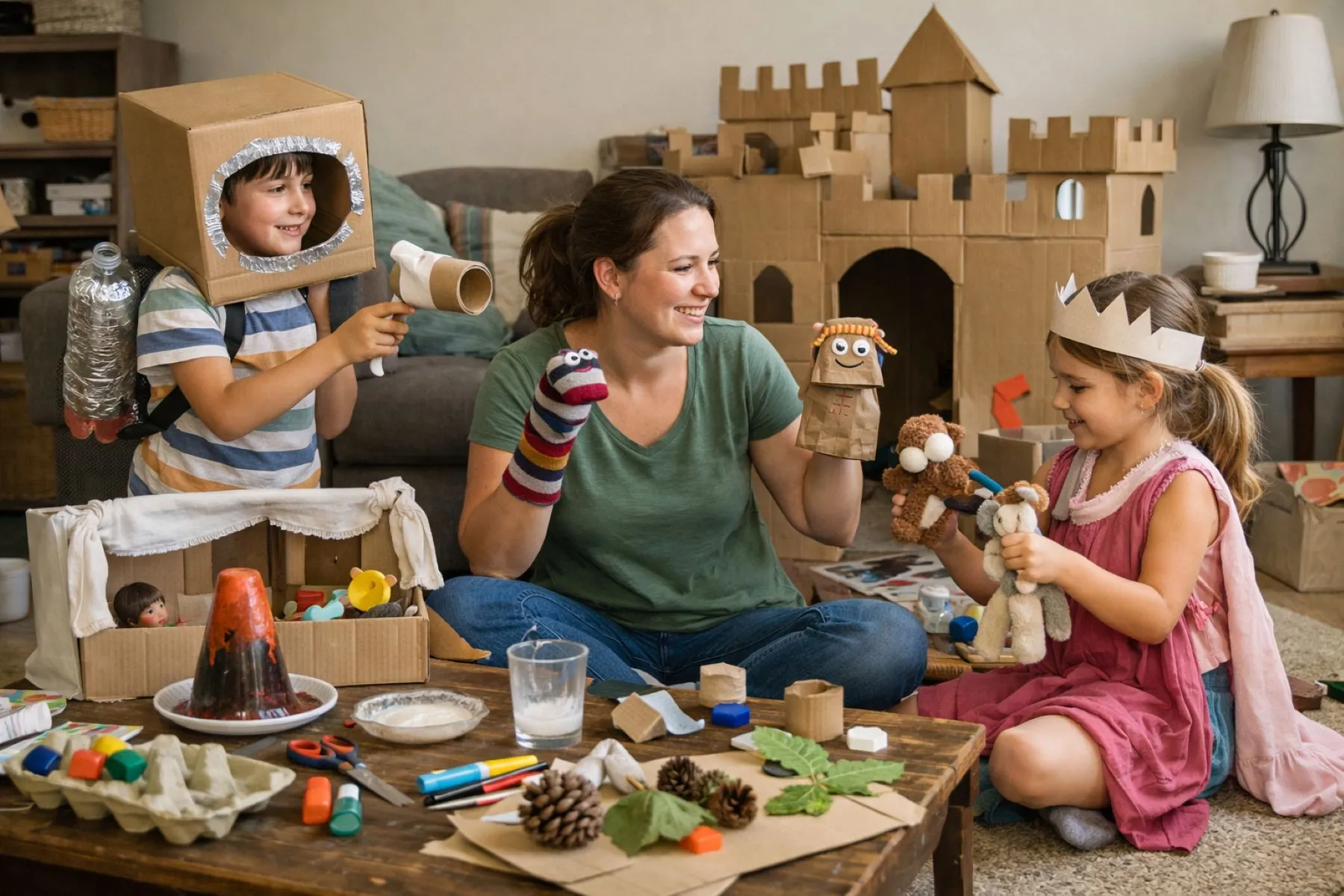
Many parents today feel an unspoken pressure to provide their children with the latest high-tech gadgets, expensive subscription boxes, or premium extracurricular classes to ensure they “keep up.” However, the true essence of a child’s development doesn’t lie in the price tag of their toys, but in the richness of the environment we create for them. Creative parenting on a budget is not just a financial necessity for many; it is actually a powerful pedagogical tool that teaches children how to see the extraordinary within the ordinary.
When we strip away the flashy electronics and pre-packaged entertainment, we invite our children to become the architects of their own worlds. This approach to parenting focuses on resourcefulness, curiosity, and the joy of shared experiences. By leaning into simplicity, we aren’t just saving money; we are fostering a resilient, innovative mindset in our children that will serve them long into adulthood.
Understanding Creative Parenting on a Budget
At its core, creative parenting on a budget is the practice of prioritizing engagement and imagination over material consumption. It involves looking at everyday household items and natural surroundings as potential tools for learning and play. This philosophy suggests that “boredom” is actually a fertile ground for genius, and that limited resources can lead to unlimited cognitive flexibility. Instead of buying a solution, the family works together to create one, turning a quiet afternoon into a masterclass in problem-solving and artistic expression.
Transforming Household Recyclables into Artistic Masterpieces
One of the most effective ways to jumpstart a child’s creative engine is to re-evaluate what we usually toss in the bin. To a child, a plastic bottle, a bunch of bottle caps, and some old magazines aren’t trash—they are the components of a futuristic robot or a sprawling collage. By setting up a “creation station” stocked with cleaned recyclables, you provide a guilt-free space for experimentation.
This process teaches children about the value of sustainability while honing their fine motor skills. As they figure out how to bond different textures together or balance a sculpture made of yogurt cups, they are engaging in early engineering. The lack of a “perfect” kit means there is no right or wrong way to build, which significantly boosts their confidence in their own artistic vision.
The Magic of Imaginative Roleplay Without the Props
Children have an innate ability to transform into anyone or anything, from a brave explorer to a gentle veterinarian. While high-end costume shops offer beautiful outfits, they often dictate the play. When practicing creative parenting on a budget, you can encourage roleplay by using old scarves, hats, or even just a change in tone of voice.
A simple wooden spoon can become a magic wand, a microphone, or a doctor’s thermometer depending on the story being told. This type of play is essential for developing empathy and social understanding, as it allows children to “walk in someone else’s shoes.” By keeping the props minimal and abstract, you force the brain to work harder to maintain the illusion, which strengthens their mental visualization skills.
Engineering Wonders from Simple Cardboard Boxes
There is a long-running joke among parents that children often enjoy the box more than the expensive toy that came inside it. There is profound truth in this. A large cardboard box is perhaps the most versatile toy in existence. With a bit of imagination and perhaps some tape, a box becomes a fortress, a spaceship, a cozy reading nook, or a storefront for a pretend bakery.
Building structures from cardboard encourages spatial awareness and collaborative play. If you have siblings or friends involved, they must negotiate where the “windows” go and how to stabilize the “roof.” These moments of DIY construction provide a sense of ownership and pride that a store-bought plastic playhouse simply cannot replicate.
Narrative Journeys with Everyday Objects
Storytelling is the foundation of human connection, and it doesn’t require a library of brand-new books to flourish. You can practice “object storytelling” by picking three random items—perhaps a key, a leaf, and a lone sock—and challenging your child to weave them into a coherent tale. This exercise stretches their linguistic abilities and encourages them to find connections between unrelated concepts.
This practice also turns mundane routines into adventures. A trip to the grocery store can become a quest for “dragon eggs” (purple potatoes) or “giant’s teeth” (garlic cloves). By infusing the everyday with narrative, you help your child develop a rich internal monologue and a lifelong love for language and literature.
Discovering Wonder Through Nature Scavenger Hunts
The great outdoors is the ultimate free playground, offering a sensory experience that no indoor playroom can match. Organizing a nature scavenger hunt is a brilliant way to get kids moving while teaching them about biology and the change of seasons. You can create a simple list of items to find: something “rough,” something “red,” a leaf shaped like a heart, or a stone with a stripe.
These hunts encourage children to slow down and observe the world with a scientific eye. It fosters a deep appreciation for the environment and provides a healthy dose of physical activity. Whether it’s a local park or just a small backyard, the natural world offers endless opportunities for discovery and grounding, proving that the best educational resources are often right outside our front door.
Exploring the Wonders of Kitchen Science
Your kitchen is essentially a laboratory waiting to be discovered. Many basic scientific principles can be demonstrated using low-cost pantry staples like baking soda, vinegar, food coloring, and dish soap. Creating a “volcano” or watching how oil and water refuse to mix provides a hands-on lesson in chemistry that feels like magic to a young mind.
These experiments encourage a “what if” mindset. Asking your child what they think will happen before adding the next ingredient fosters the scientific method in a way that feels like play. It’s an empowering experience for a child to see that they can manipulate the physical world and produce a visible, exciting reaction using just common household items.
Theatrical Delights with Handmade Puppets
To round out a weekend of creative play, consider putting on a puppet show. You don’t need professional marionettes; some old socks, buttons, and scrap fabric can create a cast of characters with distinct personalities. Designing the puppets is only half the fun; the real magic happens when the “curtain” (a blanket draped over a chair) rises.
Puppet theater allows children to express emotions and practice public speaking in a low-pressure environment. It combines visual arts, scriptwriting, and performance into one cohesive project. By focusing on the process of creation and performance, children learn that entertainment is something they can produce, not just something they consume.
Reflecting on the Power of Resourceful Play
Choosing to lean into creative parenting on a budget is an investment in your child’s character. It teaches them that joy and innovation are not dependent on wealth, but on how we choose to view the world around us. These activities build stronger family bonds because they require time, conversation, and shared effort—things that money truly cannot buy.
As you move forward, remember that your presence and your willingness to play are the most valuable resources you have. A child won’t remember the cost of their toys, but they will certainly remember the afternoon they spent building a cardboard castle with you or the way you helped them turn an old sock into a talking dragon.