






In an era where the world feels increasingly fast-paced and unpredictable, parents often find themselves caught in a tug-of-war between the desire to protect their children and the need to prepare them. We want our kids to be happy, but more importantly, we want them to be capable of handling life when it inevitably gets difficult. This is where parenting lessons for resilience become essential—shaping that invisible psychological muscle that allows a person to bounce back from failure, adapt to change, and keep going when the path gets steep.
Resilience isn’t something children are simply born with; it is a quality cultivated through daily habits, intentional boundaries, and the quiet lessons taught within the home. Often, the most effective “modern” solutions are actually rooted in traditional wisdom—the kind of grit-focused parenting that emphasizes character over comfort. By shifting our focus from immediate happiness to long-term strength, we can equip our children with a toolkit that will serve them for a lifetime.
Traditional Discipline and the Architecture of Character
The word “discipline” often gets a bad rap in modern parenting circles, frequently confused with punishment. However, true discipline is about discipleship—teaching a child how to govern themselves. Building internal strength starts with a structured environment where children understand that they are part of a larger whole. This begins with something as simple as a morning routine. When a child is expected to rise at a consistent hour and make their bed, they are learning the first lesson of mental toughness: doing what needs to be done, even when you don’t feel like it.
Respect for elders and clear behavioral boundaries act as the guardrails for a child’s development. In a world that often prioritizes the “self,” teaching a child to listen to those with more experience and to respect the rules of the house fosters a sense of humility. It teaches them that they are not the center of the universe—a realization that is vital for mental health. When children understand that their actions have consequences, they actually feel more secure, providing the emotional safety net required to take risks elsewhere.
The Value of Hard Work: Key Parenting Lessons for Resilience
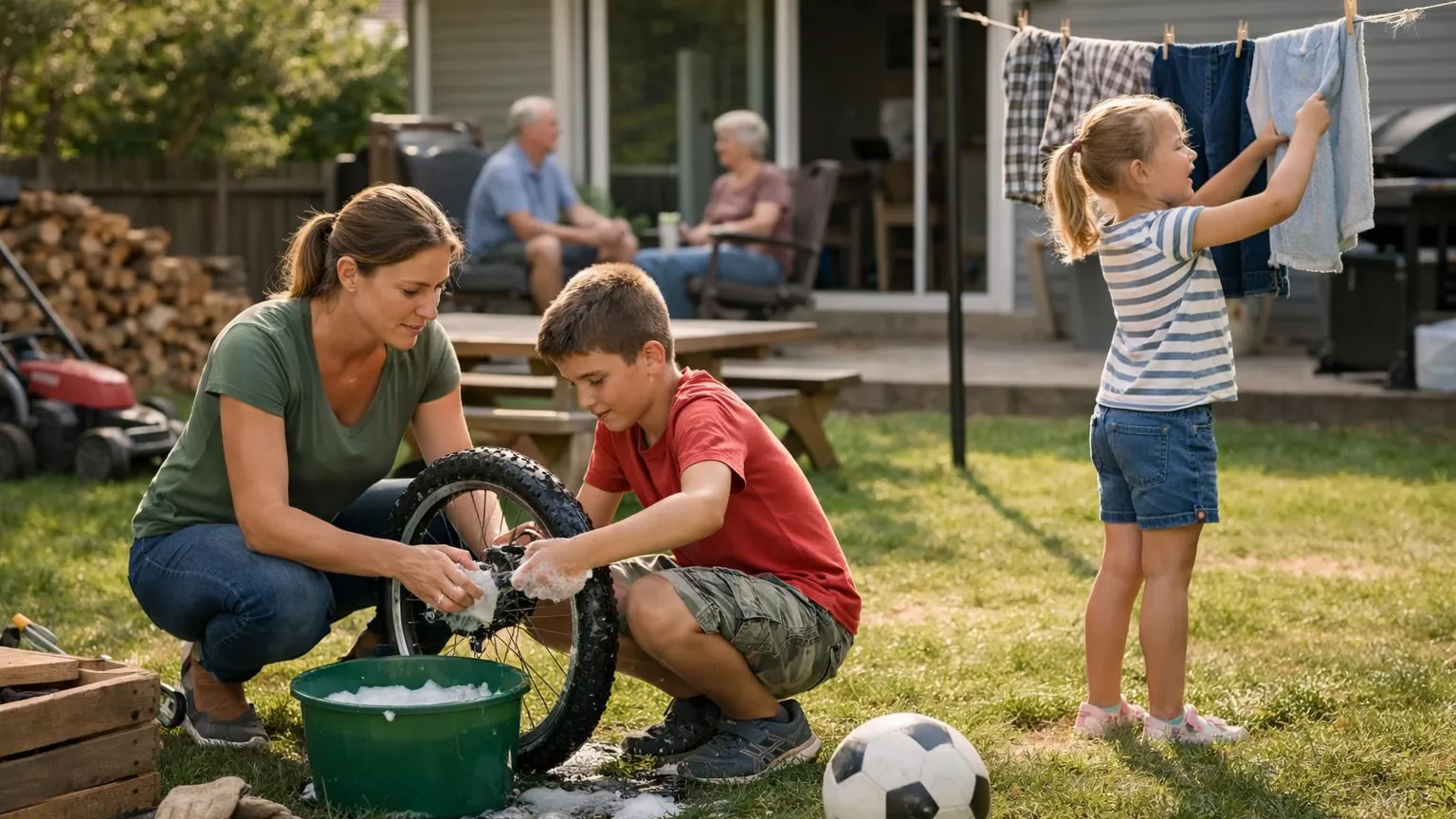
In a world of instant gratification, the concept of “grit” is becoming a rare commodity. Grit is the passion and perseverance for long-term goals, and it is built in the trenches of everyday effort. One of the most practical ways to instill this is through age-appropriate household chores. When a child is responsible for washing the dishes or taking out the trash, they aren’t just helping the parents; they are learning that labor is a normal, dignified part of life.
Beyond chores, developing basic survival skills—like cooking a simple meal or fixing a broken toy—empowers children. It reduces their dependency on others and boosts their “self-efficacy,” the belief in their own ability to succeed. The most important role a parent plays in this process is normalizing effort over instant results. By teaching them that difficulty is not a sign of failure, but a sign of growth, we help them develop a mindset that isn’t afraid of hard work.
Cultivating Emotional Strength Through “Constructive Discomfort”
As parents, our instinct is to swoop in and save our children from any hint of distress. Yet, if we never let them feel the “sting” of life, they will never develop the calluses needed to handle it later. This starts with something as mundane as boredom. In the age of smartphones, we often treat a child’s boredom as an emergency. However, boredom is the gateway to creativity and self-reliance.
Independent problem-solving is another vital skill. If a child loses a toy, we should resist the urge to intervene immediately. Instead, we can ask, “How do you think you can fix this?” This puts the power back in their hands, teaching them they are agents of change. Parenting lessons for resilience often involve stepping back to let the child try, fail, and try again, ensuring they don’t become victims of their circumstances.
Social Intelligence and the Power of Community Values
Resilience is not just an individual trait; it’s built through how we relate to others. In a digital world, promoting face-to-face social interaction is more critical than ever. Real-life social situations involve reading body language and navigating tone—skills that require practice. By encouraging kids to play outside or join clubs, we help them build the social “muscles” needed to navigate complex human environments.
The family unit serves as the first “mini-society.” Sharing resources with siblings teaches children about compromise and equity. Similarly, understanding the value of money is a vital lesson in reality. When children realize that money is a finite resource earned through effort, they develop a grounded perspective. They learn that they cannot always have what they want immediately, which is a key component of emotional stability.
The Long-Term Impact: From Resilient Kids to Thriving Adults
The lessons we teach today aren’t just about making childhood easier; they are about shaping the trajectory of an entire life. A child who has been taught resilience grows into an adult with high adaptability. In the modern workplace, the ability to pivot without crumbling is a superpower. These individuals don’t see change as a threat, but as an opportunity to apply their grit.
Furthermore, these lessons build a foundation of personal integrity. When a child is raised with clear boundaries and a sense of duty, they grow into adults who take responsibility for their actions. This leads to higher emotional intelligence, as they are better equipped to manage their own frustrations and empathize with the struggles of others.
Practical Steps: Applying Parenting Lessons for Resilience Today
Transitioning to a more resilience-focused parenting style doesn’t happen overnight. It’s about small, consistent shifts:
-
Audit Your Responses: Next time your child encounters a minor struggle, count to ten before stepping in.
-
Assign “Ownership” Chores: Give your child a task that is entirely theirs, like feeding a pet, and let them experience the natural consequences if they forget.
-
Model the Behavior: Let your children see you handle a stressful day with calm and persistence. Talk out loud about your process.
-
Prioritize Routine: A tired brain is a fragile brain. Ensure your child has a solid sleep schedule to provide the physical foundation for mental toughness.
Building resilience is a marathon, not a sprint. It requires us as parents to be brave enough to let our children be uncomfortable and patient enough to let them grow at their own pace. By leaning into these timeless lessons, you aren’t just raising a child who can survive the world—you’re raising a child who can change it.






No Response