






In an era of flashing screens, noisy toys, and jam-packed schedules, the concept of “more is more” has dominated the childhood landscape. However, a quiet shift is happening in the world of developmental psychology and modern parenting. We are beginning to realize that the most profound growth often occurs not in the middle of a digital spectacle, but in the serene corners of a quiet room. Low-stimulation play environments are emerging as a vital sanctuary for young children, offering them the mental space they need to navigate their complex world.
Understanding Low-Stimulation Play Environments
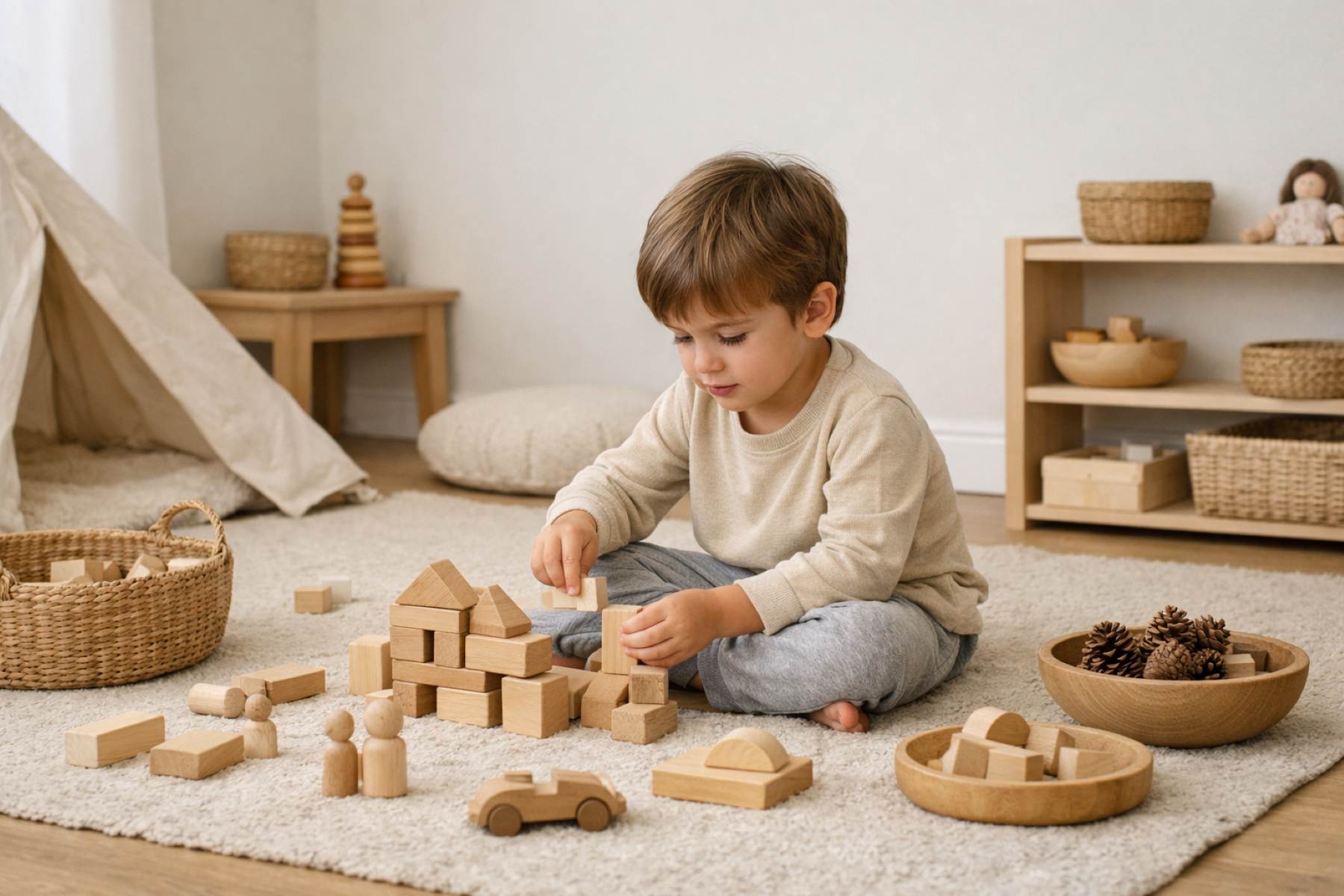
Before exploring the benefits, it is helpful to define what exactly constitutes a low-stimulation play environment. Unlike traditional play areas filled with bright primary colors, loud electronic sounds, and a mountain of plastic toys, a minimalist space focuses on simplicity and intentionality. These environments typically feature neutral colors, natural materials like wood or fabric, and a limited number of “open-ended” toys that don’t dictate how a child should play. The goal is to minimize external “noise”—both literal and visual—so that the child’s internal world can take center stage.
Promoting Emotional Self-Regulation in Low-Stimulation Play Environments
One of the most significant advantages of a quiet play space is its ability to help children develop emotional self-regulation. When a child is constantly bombarded by loud noises or intense visual stimuli, their nervous system stays in a state of high alert. This can make it incredibly difficult for them to process big emotions like frustration or sadness.
In low-stimulation play environments, the “baseline” of the room is calm. This tranquility allows a child to check in with themselves. Without the distraction of a toy that sings or flashes, a toddler can more easily recognize when they are feeling tired or overwhelmed. Over time, this builds a foundation for emotional intelligence, as they learn to soothe themselves and navigate their feelings without needing an external gadget to distract them.
Reducing Sensory Overload and Anxiety
We often forget that children process sensory information much more intensely than adults do. What we perceive as a lively playroom might feel like a chaotic sensory assault to a three-year-old. This sensory overload is a frequent, yet often overlooked, trigger for anxiety and “meltdowns.”
By stripping away the excess, low-stimulation play environments provide a literal “breath of fresh air” for the brain. When the environment is predictable and subdued, the amygdala—the brain’s emotional center—can relax. This reduction in environmental stress helps lower cortisol levels, leading to a child who feels safer, more grounded, and significantly less anxious in their daily life.
Enhancing Deep Focus and Concentration
The modern attention span is under siege, and the habit of “task-switching” often begins in the nursery. Toys that perform for the child—moving, talking, and lighting up—tend to encourage a passive, short-lived form of attention. Once the toy stops its show, the child moves on to the next hit of dopamine.
Conversely, a quiet space fosters “deep work” for toddlers. When a child is given a simple set of wooden blocks in low-stimulation play environments, they are forced to provide the “action” themselves. You might notice them focusing for twenty or thirty minutes on a single structure. This sustained engagement is the precursor to the deep concentration required for academic success and complex problem-solving later in life.
Encouraging Creative Open-Ended Imaginative Play
There is a beautiful irony in play: the less a toy does, the more a child does. A plastic kitchen that makes sizzling sounds tells the child exactly what to do. A simple silk scarf and a few plain bowls, however, could become a soup, a superhero cape, or a soft bed for a stuffed animal.
Low-stimulation play environments are the ultimate breeding ground for imagination. Because the environment isn’t “loudly” telling a story, the child must invent their own. This type of open-ended play is essential for cognitive flexibility. It allows children to experiment with roles, narratives, and social scenarios, turning a quiet corner into a vast universe of their own making.
Strengthening Internal Problem-Solving Skills
In a minimalist setting, challenges arise naturally. A block might fall, or a puzzle piece might not fit. Without the distracting bells and whistles of high-tech toys, the child’s mind stays focused on the problem at hand. They aren’t looking for a button to reset the experience; they are looking for a solution.
This strengthens the “executive function” of the brain. When a child works through the frustration of building a tower or lacing a bead in low-stimulation play environments, they are practicing persistence. They learn that they have the internal resources to fix a problem, which builds a sense of agency and competence that “smart” toys simply cannot provide.
Developing Patience Through Quiet Exploration
Patience is perhaps one of the most difficult skills for a young child to master in our “instant-gratification” culture. High-stimulation toys provide immediate rewards, teaching children that fun is something that happens to them instantly.
Low-stimulation play environments operate on a different tempo. They encourage a slower, more rhythmic pace of life. Whether it’s watching the way shadows move across the floor or carefully stacking stones, these activities teach children that there is value in the “in-between” moments. This quiet exploration cultivates a sense of wonder and the ability to wait, which are crucial components of a balanced personality.
Supporting Long-Term Mental Health Stability
Ultimately, the habits formed in the playroom follow a child into adulthood. By providing low-stimulation play environments, we are giving children the tools to maintain their mental health in an increasingly noisy world. They learn that they don’t need constant external stimulation to be happy or occupied.
This internal peace acts as a protective factor against the burnout and chronic stress often seen in older children and adolescents. By honoring their need for quiet and simplicity today, we are helping them build a resilient mental framework that values reflection, focus, and emotional balance for years to come.
Transitioning to low-stimulation play environments doesn’t require a complete lifestyle overhaul. It can be as simple as rotating toys to reduce clutter, choosing soft lighting over harsh fluorescents, or dedicating “quiet hours” where the TV and loud toys are tucked away. In the silence, you might be surprised to find your child’s creativity—and their sense of calm—blossoming in ways you never expected.





No Response