

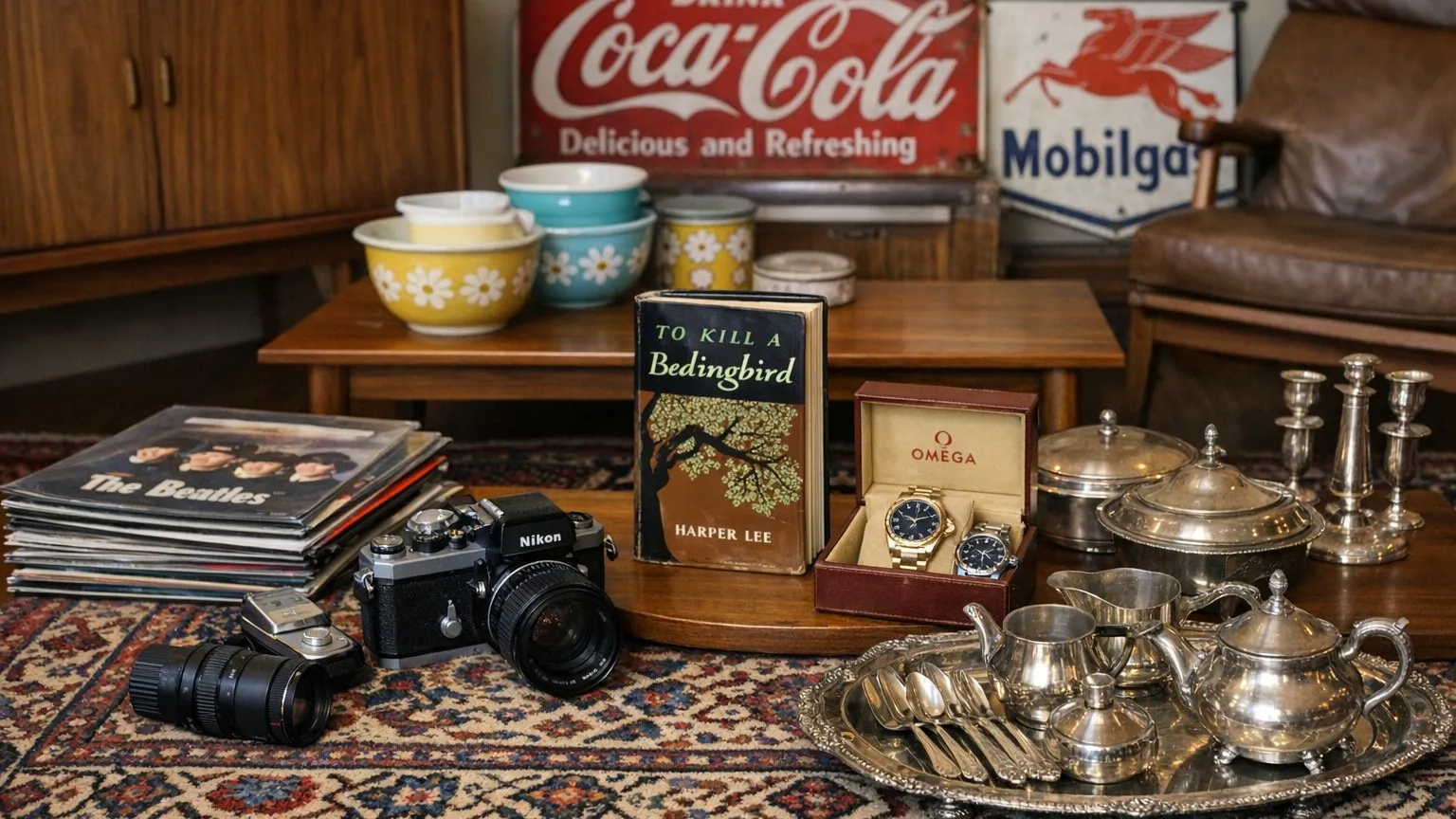
Walking into a Baby Boomer’s home is often like stepping into a beautifully curated time capsule. For years, many of us viewed these spaces as simply “cluttered” or “old-fashioned,” perhaps even dismissing the heavy wooden sideboards and stacks of dusty records as relics of a bygone age. However, the tide of the resale market has turned dramatically. What was once considered a standard household staple in the 1950s and 60s has now become a high-stakes asset class. Today, Baby Boomer collectibles represent more than just nostalgia; they are tangible symbols of financial security that have appreciated at rates often outperforming the stock market.
The market for these items has evolved from a niche hobby into a serious investment strategy. As younger generations seek out quality craftsmanship and authentic history, the value of well-preserved mid-century items has skyrocketed. Whether you are looking to declutter a family estate or you’re a savvy collector hunting at estate sales, understanding the true worth of these items is essential. In this guide, we’ll explore nine specific household treasures that might be hiding in plain sight, offering a unique bridge between sentimental memories and serious financial gain.
The Resurgence of the Tangible Asset
In an era dominated by digital downloads and flat-pack furniture that lasts only a few years, there is a profound longing for things that were “built to last.” The Baby Boomer era was the golden age of manufacturing quality. Items weren’t designed with planned obsolescence in mind; they were designed to be heirlooms. This inherent durability is exactly why these pieces have retained—and in many cases, quadrupled—their value.
When we talk about financial security through vintage acquisitions, we aren’t just talking about “get rich quick” schemes. We are talking about the preservation of wealth through physical objects that possess intrinsic beauty and historical significance. These items offer a hedge against inflation and a sense of stability that a volatile digital portfolio simply cannot provide.
9 Treasures Hiding in the Modern Household
1. Rare Mint Condition Vinyl Records
While your old scratched-up copy of a common pop record might only be worth a few dollars, the world of “Blue Chip” vinyl is booming. Collectors are specifically looking for first-pressings from the 1960s and 70s, particularly in the rock, jazz, and blues genres. A mono pressing of a Beatles album or a rare jazz label like Blue Note can fetch thousands of dollars at auction. The key here is the “mint condition” aspect; the jacket must be crisp, and the wax must be free of skips. For many, these records were the soundtrack of their lives; today, they are the crown jewels of the music memorabilia market.
2. Original Mid-Century Modern Furniture Pieces
If you are sitting in an authentic Eames lounge chair or have a sideboard designed by Hans Wegner, you are sitting on a gold mine. Mid-century modern (MCM) furniture is currently the most sought-after interior style. Genuine pieces from the 1950s—distinguished by their sleek lines, organic curves, and use of teak or rosewood—are highly coveted. Unlike modern replicas, original pieces have a patina and a history that cannot be faked, making them a cornerstone of household wealth.
3. High-Value Baby Boomer Collectibles in the Kitchen
It might sound surprising, but the kitchen cabinet is often the most valuable room in a vintage home. Specifically, brands like Pyrex (particularly the limited-run patterns like “Lucky in Love”) or Fire-King have seen a massive surge in value. Some rare mixing bowls can sell for upwards of $3,000 to $5,000. These items symbolize the heart of the home, and their vibrant colors and indestructible nature make them a favorite for Gen Z and Millennial collectors who want a “retro” aesthetic.
4. Classic Mechanical Luxury Wristwatches
Before the digital revolution, a watch was a mechanical marvel and a rite of passage. Brands like Rolex, Omega, and Patek Philippe from the mid-20th century are legendary for their precision. Even “tool watches” used by divers or pilots in the 60s have become high-value assets. A vintage Omega Speedmaster, for instance, isn’t just a way to tell time; it’s a wearable investment that often appreciates by 10-15% annually.
5. First Edition Hardcover Literary Novels
The bookshelves of a legacy household often contain hidden gems. A first edition, first printing of a classic 20th-century novel—especially if it still has its original dust jacket—is a collector’s dream. Books like To Kill a Mockingbird or The Catcher in the Rye in pristine condition are increasingly rare. The dust jacket is often where 80% of the value lies, as these were frequently thrown away by readers decades ago.
6. Authentic Retro Porcelain Advertising Signs
Before plastic took over, advertising was an art form involving heavy porcelain and enamel. Signs for gasoline, soda, or farm equipment that once hung in garages or general stores are now high-end “mantiques.” Because many were left outside to rust, finding one in excellent condition is rare. These signs serve as bold, graphic pieces of Americana that collectors view as blue-chip investments for industrial-style lofts.
7. Antique Sterling Silver Dining Sets
While “silver plating” is common and holds little value, authentic sterling silver (marked .925) remains a standard of financial security. Beyond the melt value of the silver itself, complete dining sets from renowned makers like Tiffany & Co. or Wallace have significant artistic value. In an age of disposable plastic utensils, the weight and elegance of a sterling set represent a level of prestige and permanent value.
8. Hand-Woven Traditional Persian Area Rugs
A high-quality, hand-knotted Persian rug is one of the few household items that actually gets better with age. Those who invested in authentic Tabriz or Kashan rugs decades ago now hold pieces that are essentially woven currency. These rugs are valued for their knot density, the use of natural vegetable dyes, and their intricate storytelling patterns. As the skill of hand-weaving becomes rarer, the value of these vintage pieces continues to climb.
9. Pre-Digital High-End Photography Equipment
Long before the smartphone, photography was a tactile, mechanical craft. Brands like Leica, Hasselblad, and Nikon produced cameras that were masterpieces of engineering. Film photography has seen a massive “analog” revival recently. A vintage Leica M3, for example, is highly sought after by professional photographers and hobbyists alike. These cameras are built like tanks and, if well-maintained, offer a level of image soul that digital sensors struggle to replicate.
Assessing Potential Baby Boomer Collectibles
If you suspect you have one of these items in your attic or living room, the first step is authentication. Researching “sold” listings on sites like eBay or specialized auction houses (like Sotheby’s or Heritage Auctions) will give you a realistic idea of market value—not just the “asking” price.
Secondly, condition is everything. For many of these Baby Boomer collectibles, a small scratch or a missing original box can drop the value by 50% or more. If you have vintage items, store them in a climate-controlled environment away from direct sunlight and humidity. For mechanical items like watches or cameras, avoid “DIY” repairs; take them to a professional who specializes in vintage restoration to ensure you don’t accidentally strip away the value.
Lastly, consider getting a formal appraisal for insurance purposes. Many homeowners’ insurance policies don’t automatically cover high-value collectibles. Having a documented appraisal ensures that your financial security is protected in the event of a loss.
Turning Nostalgia into a Financial Legacy
The beauty of these assets lies in their dual nature. They are functional, beautiful objects that tell the story of a family’s history, but they are also silent sentinels of wealth. Recognizing the value in these items allows us to appreciate the past while securing our future.
Financial security doesn’t always have to look like a spreadsheet or a stock ticker. Sometimes, it looks like a perfectly preserved teak table, a heavy silver spoon, or a vinyl record spinning at 33 RPM. By looking closer at the “old things” around us, we might just find that the most valuable assets we own have been right in front of us all along.