

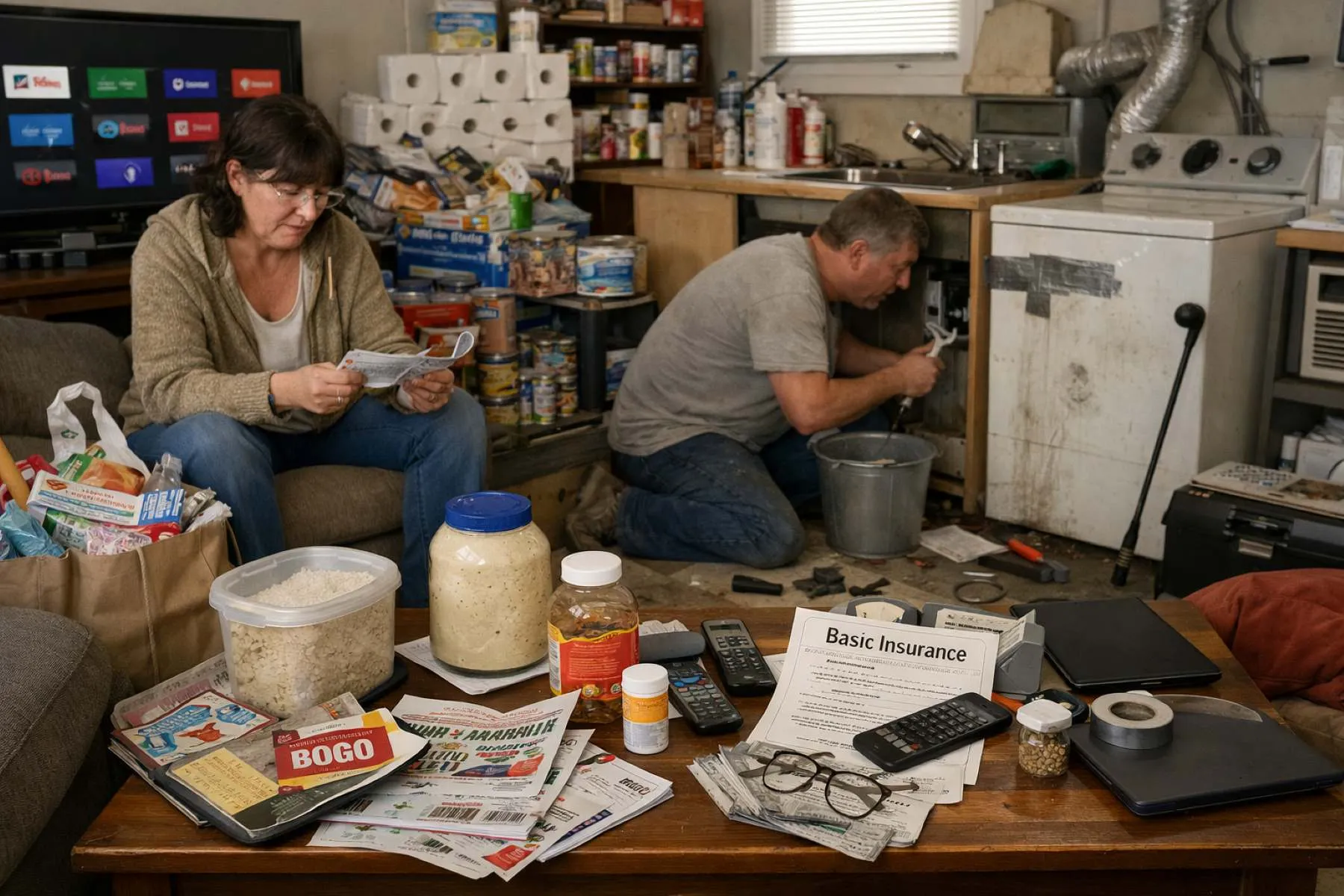
Saving money is an art form that requires a delicate balance between discipline and foresight. For many of us, the drive to be “frugal” becomes a core part of our financial identity. We take pride in finding the best deals, clipping every coupon, and opting for the most budget-friendly alternatives. However, there is a subtle but dangerous line where being “cheap” begins to masquerade as being “frugal.” This phenomenon often leads us straight into frugality traps, where our attempts to save pennies today end up costing us hundreds or even thousands of dollars in the long run.
Defining Frugality Traps and the Psychology of False Savings
Before we dive into the specific habits that drain our bank accounts, it is helpful to understand what a frugality trap actually is. At its core, a frugality trap is a financial decision that prioritizes immediate, low-cost savings over long-term value and durability. It is a form of cognitive bias where the “win” of spending less in the moment blinds us to the inevitable future costs. True frugality is about the efficient allocation of resources to maximize value, whereas false frugality is simply about the lowest price tag. Recognizing this distinction is the first step toward building genuine, sustainable wealth.
The Cycle of Buying Cheap and Frequent Replacements
One of the most common ways we fall into these frugality traps is by consistently choosing the lowest-priced goods available. Whether it is a pair of shoes, a kitchen appliance, or a piece of technology, ultra-cheap items are often manufactured with inferior materials. While you might feel a rush of satisfaction at the checkout counter, these items tend to fail much sooner than their high-quality counterparts.
When an item breaks prematurely, you are forced to buy it again. Over a few years, the cost of replacing three or four “budget” items often far exceeds the price of one well-made, durable product. This “buy it twice” syndrome is a classic drain on your resources that disguises itself as a bargain.
The High Cost of Chasing Low Prices
We often equate frugality with the effort we put into finding a deal. This frequently manifests as driving across town to save a few cents on a gallon of gas or visiting multiple grocery stores to catch different sales. While the math might look good on paper, it often ignores the “hidden” costs of time, vehicle wear and tear, and fuel consumption.
If you spend forty-five minutes of your afternoon and five dollars in gas to save three dollars on a bulk purchase, you have actually lost money. Your time has a specific value, and avoiding these types of frugality traps involves recognizing when the effort of saving a dollar is more expensive than the dollar itself.
The Burden of Hoarding Discounted Goods
The allure of a “clearance” sticker is powerful. Many of us fall into the trap of purchasing items we don’t currently need simply because the discount is too deep to pass up. This leads to a cluttered home and “frozen” capital—money that is sitting on a shelf in the form of a gadget or garment you might never use.
Hoarding discounted goods creates a false sense of preparedness. In reality, these items often expire, go out of style, or are forgotten entirely before they ever serve a purpose. A deal is only a deal if the item was already on your list of necessities; otherwise, it becomes another one of those pesky frugality traps.
Neglecting the Foundation: Health and Maintenance
Perhaps the most damaging frugality traps are those that involve “skimping” on essential care. Ignoring preventative healthcare costs, such as routine dental cleanings or annual physicals, might save you a co-pay this month, but it sets the stage for catastrophic expenses later. Medical issues that could have been caught early often become significantly more expensive and difficult to treat when left ignored.
The same logic applies to your home. Skipping essential maintenance, like cleaning gutters or servicing an HVAC system, can lead to structural damage or total appliance failure. A hundred-dollar tune-up is a wise investment when the alternative is a ten-thousand-dollar repair bill. In these instances, spending money is the only way to truly save it.
The Quality Gap and the Subscription Slide
Prioritizing price over quality is a habit that permeates every aspect of modern life. We see this clearly in the rise of “fast fashion” and disposable electronics. Beyond physical goods, we also fall into digital frugality traps. Collecting unnecessary digital subscriptions—gym memberships we don’t use, streaming services we rarely watch, or “premium” apps—creates a slow leak in our finances. These small monthly charges often fly under the radar, but collectively, they represent a significant annual expense that provides zero return on investment.
Misusing Tools of the Trade: Coupons and DIY
Coupons and “Buy-One-Get-One” (BOGO) offers are designed by marketers to make you spend more, not less. Falling for BOGO deals often results in buying twice as much as you need, leading to waste. Similarly, the “Do-It-Yourself” (DIY) movement can be a massive frugality trap if you lack the proper skills. Attempting a complex plumbing or electrical repair to save on labor costs can result in a disaster that requires a professional to fix at double the original price. Knowing when to pay a professional is a hallmark of an intelligent financial mind.
Investing in the Future: Education and Efficiency
Finally, we must look at what we refuse to spend money on. Neglecting professional skill investment is a “savings” habit that stunts your income potential. Spending money on a certification or a workshop can lead to a salary increase that pays for the course ten times over within a year.
Similarly, refusing to upgrade to high-efficiency appliances or opting for the most basic insurance coverage can be a mistake. High-efficiency tools lower your monthly utility bills, and robust insurance protects you from total financial ruin during an accident. By choosing the cheapest path today, you leave yourself vulnerable to the volatility of tomorrow.
Reflecting on a More Mindful Approach to Wealth
True financial freedom isn’t found in the pursuit of the lowest price, but in the pursuit of the highest value. By recognizing these frugality traps, we can shift our mindset from short-term “saving” to long-term “investing.” It is okay to spend more on things that last, things that keep us healthy, and things that help us grow.
When you look at your finances through a lens of sustainability rather than scarcity, the “cheap” options lose their luster. You begin to see that a well-maintained home, a healthy body, and high-quality tools are the real foundations of a wealthy life. The next time you are tempted by a bargain, ask yourself if it is truly saving you money, or if it is just one of those frugality traps in disguise.