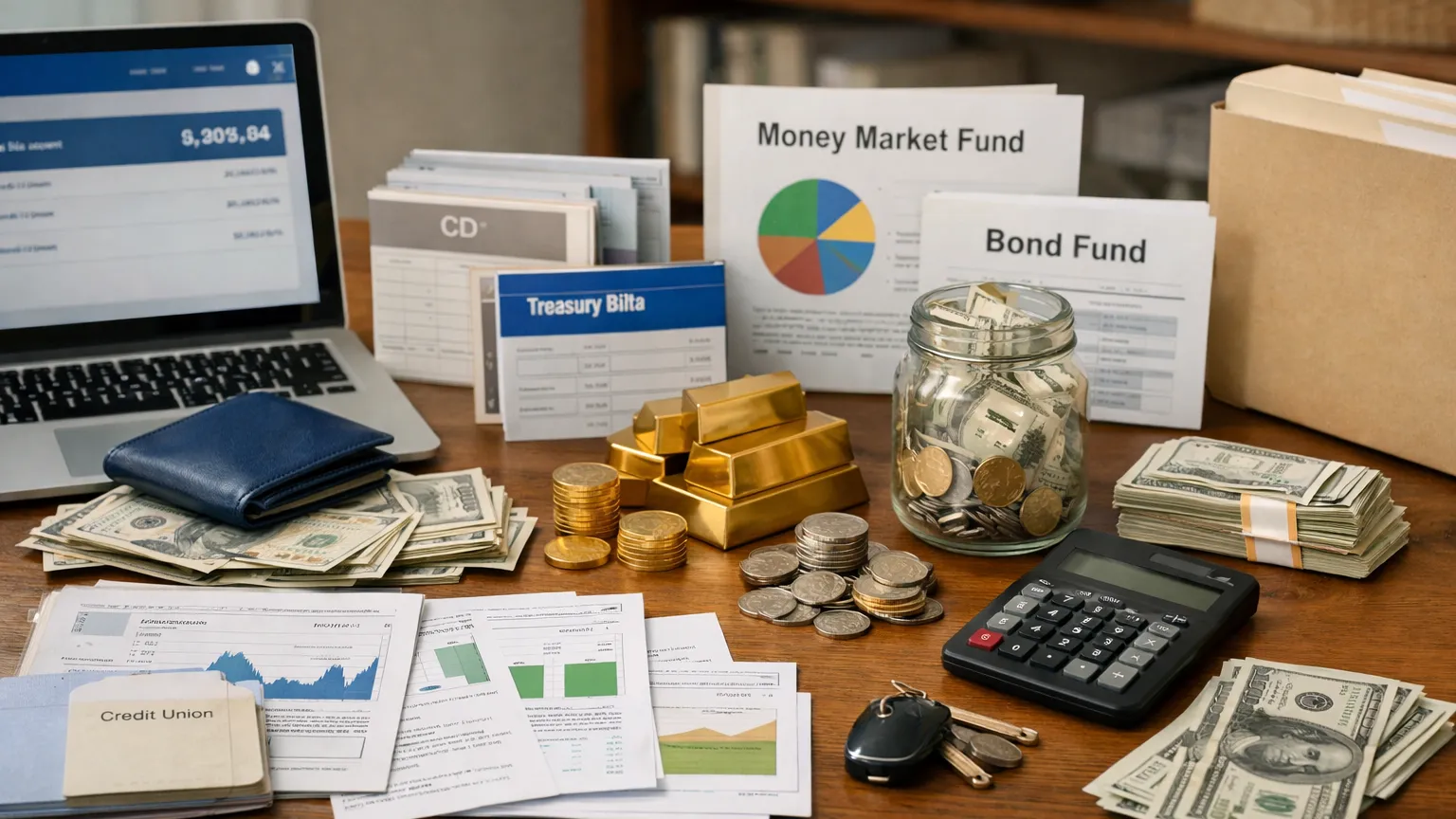
Imagine waking up to the sound of a pipe bursting in your kitchen or realizing that your car’s transmission has finally decided to quit on a Monday morning. These moments are more than just inconveniences; they are tests of our financial resilience. Having a diverse range of emergency fund options is essentially the “sleep-better-at-night” strategy, acting as a buffer between you and the unpredictable chaos of life.
At its core, an emergency fund is a stash of money set aside specifically for unexpected expenses or financial crises. While the concept sounds simple, the challenge often lies in where to put that money. You need a balance: it must be safe enough that it won’t disappear in a market crash, but accessible enough that you can grab it the moment trouble strikes. In this guide, we will explore the nuances of various emergency fund options, helping you build a safety net that is as sturdy as it is flexible.
Finding the Sweet Spot Between Growth and Liquidity
When choosing where to park your rainy-day cash, the primary goal isn’t necessarily to get rich. Instead, you are looking for “liquidity”—the ease with which you can turn an asset into cash without losing its value. If your money is locked in a five-year real estate deal, it’s not an emergency fund; it’s an investment.
The modern financial landscape offers a surprising variety of tools that cater to different risk tolerances and technological comfort levels. From high-tech digital buckets to old-school physical assets, the “best” choice is rarely a single account. Often, the strongest safety net is a combination of several layers, ensuring that you have immediate cash for today and a deeper reserve for a prolonged crisis, such as a job loss.
Navigating Your Primary Emergency Fund Options
High-Yield Savings and Digital Pockets
The cornerstone of most modern safety nets is the high-yield savings account (HYSA). Unlike a traditional brick-and-mortar savings account that offers pennies in interest, HYSAs—often found at online-only banks—provide significantly higher returns while keeping your money fully liquid.
Many of these digital platforms now offer specialized “banking pockets” or “vaults.” This feature allows you to visually separate your emergency fund options from your general savings within the same account. It’s a psychological win; seeing a specific bucket labeled “Emergency Only” makes you much less likely to dip into it for a spontaneous weekend getaway.
Government-Backed Security and Treasury Bills
For those who prioritize absolute safety, looking toward the government is a wise move. Government-backed money market funds and short-term sovereign treasury bills (T-Bills) are considered some of the safest assets on the planet. T-Bills are particularly attractive because they are backed by the full faith and credit of the government and often offer tax advantages at the state and local levels. While they require a few more steps to sell than a standard savings account, their reliability is unmatched during periods of economic volatility.
The Stability of Credit Unions and CD Ladders
If you prefer a more community-focused approach, insured credit union share accounts offer a fantastic alternative to big banks. Credit unions are member-owned, which often translates to lower fees and more personalized service during hard times.
For those who have already saved a substantial cushion, a “Certificate of Deposit (CD) ladder” can maximize interest without sacrificing too much liquidity. By opening multiple CDs that mature at different intervals (e.g., 3 months, 6 months, 9 months), you ensure that a portion of your cash becomes available regularly, providing a steady stream of accessible funds if a long-term emergency arises.
Tangible Assets and Cash Management
In a world that is increasingly digital, there is still a valid argument for keeping a small amount of physical currency at home. A few hundred dollars in a fireproof safe can be a lifesaver during a power outage or a localized banking system glitch. On the other end of the spectrum, diversified cash management accounts offered by brokerage firms combine the features of checking and savings, often providing high insurance limits by sweeping your funds across multiple partner banks.
Sophisticated Vehicles: Gold, Bonds, and Insurance
Beyond the standard bank account, some people choose to diversify their safety net with physical gold bullion or low-risk corporate bond funds. Gold has historically acted as a hedge against inflation, though its price can fluctuate daily. Meanwhile, stable value insurance products—often found in some retirement plans—offer a way to preserve principal while earning a steady rate of return. These are “deeper” reserves, meant to be touched only after your primary liquid cash has been exhausted.
Strategies for Building Your Safety Net Effectively
Building a safety net is a marathon, not a sprint. The standard advice is to aim for three to six months of essential living expenses, but the “right” amount is deeply personal. If you are a freelancer with fluctuating income, you might feel more secure with a twelve-month cushion.
-
Automate your peace of mind: Set up a recurring transfer from your paycheck directly into your chosen emergency fund options. If you never see the money in your checking account, you won’t miss it.
-
Start small but stay consistent: Don’t be discouraged if you can only save $20 a week. Over a year, that’s over $1,000—enough to cover most common household repairs.
-
Tier your liquidity: Keep $1,000 in a standard savings account for instant access, and move the rest into a high-yield account or T-Bills to earn more interest.
-
Define an “Emergency”: Write down what constitutes a legitimate reason to use the funds. A “great deal on a new TV” is not an emergency; a dental abscess is.
Securing Your Financial Future Today
The journey toward financial security is less about the numbers on a screen and more about the freedom those numbers provide. Having a well-structured emergency fund changes your relationship with risk. It turns a potential life-altering crisis into a mere “inconvenience.”
Whether you choose the cutting-edge convenience of digital banking pockets or the rock-solid reliability of treasury bills, the best time to start building your safety net was yesterday; the second best time is today. Reflect on your current financial setup: if an unexpected $1,000 expense arrived tomorrow, would it cause a panic or just a phone call? By choosing the right combination of these emergency fund options, you are not just saving money; you are buying yourself future clarity and calm.