

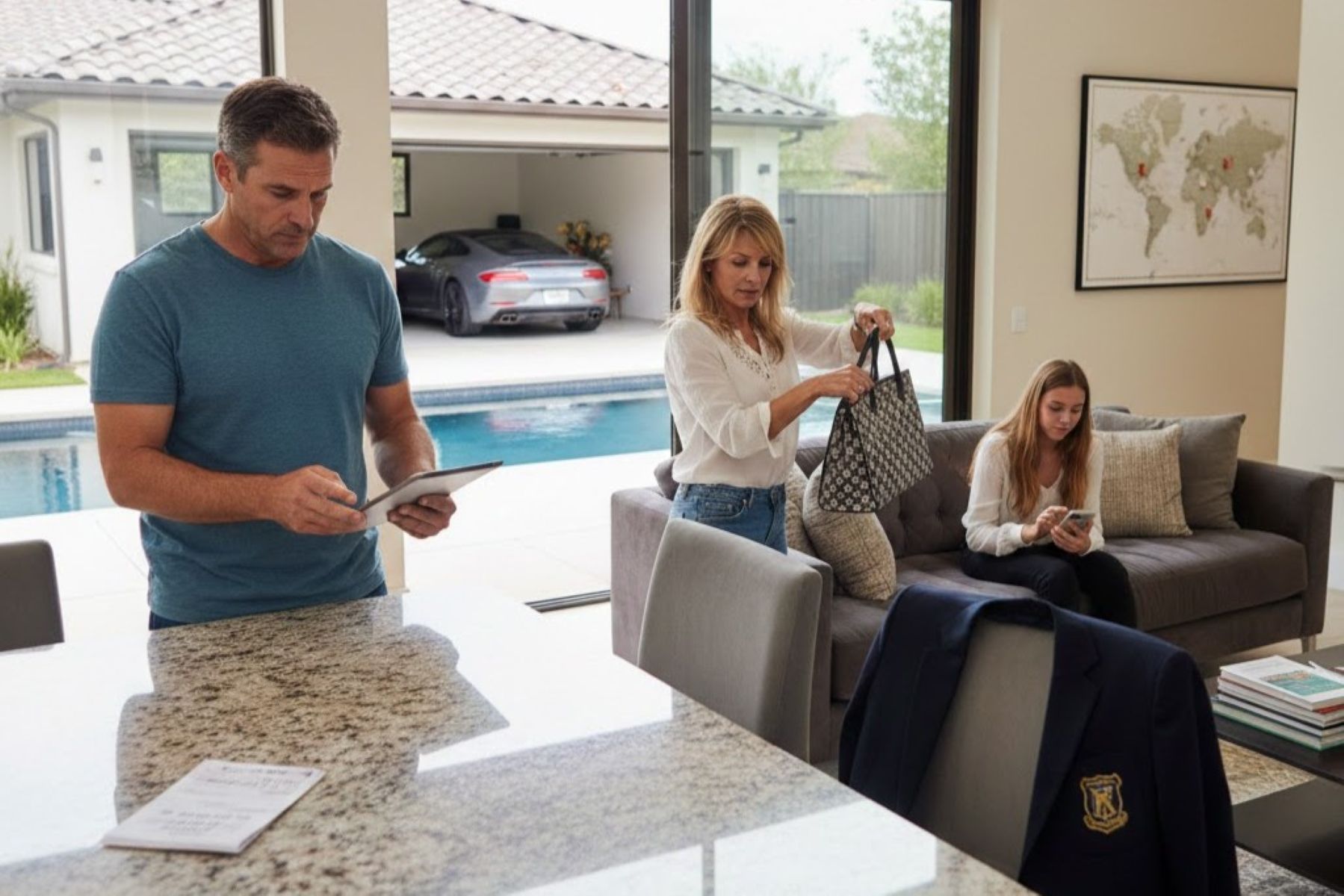
For many professionals and high-earning families, the upper middle class lifestyle is the ultimate reward for years of academic rigor and corporate dedication. It is a life defined by quality, convenience, and the ability to say “yes” to the finer things. However, beneath the polished surface of manicured lawns and premium subscriptions lies a growing concern that financial planners are increasingly vocal about. The very habits that define comfort today may be the silent architects of a restricted tomorrow.
Defining the Upper Middle Class Lifestyle
An upper middle class lifestyle is generally characterized by discretionary income that far exceeds basic needs, allowing for significant spending on “quality of life” assets. This includes living in high-demand zip codes, prioritizing private education, and favoring luxury experiences over utilitarian ones. While this socioeconomic bracket earns significantly more than the national average, the lifestyle is often “high-burn,” meaning the gap between high income and high expenses is surprisingly narrow, leaving little room for the compounding growth necessary for a multi-decade retirement.
The Allure of Luxury Experiences and Prestigious Addresses
One of the most significant shifts in modern wealth is the transition from owning things to “collecting memories.” While prioritizing experiences over material goods is often touted as a healthier psychological choice, the tendency to favor luxury experiences over consistent savings can deplete liquid capital. When every weekend is a curated event and every dinner is an artisanal experience, the capital that should be fueling a brokerage account is instead being spent on temporary moments.
This desire for the best often extends to the roof over one’s head. Escalating housing costs in prestigious neighborhoods are a hallmark of this demographic. It isn’t just the mortgage; it is the “zip code tax” that follows. Living in an elite area often mandates a certain level of home maintenance, landscaping, and community contributions that can act as a permanent drain on wealth. When a disproportionate amount of net worth is tied up in a primary residence, families find themselves “house rich but cash poor” as they approach their golden years.
The Maintenance of High-End Assets and Education
The driveway of an upper middle class home often tells a story of status. Maintaining high-end private vehicle collections is a depreciating endeavor that requires constant capital. Between high insurance premiums, specialized maintenance, and the rapid pace of technological obsolescence, luxury cars are often the largest leak in a household budget. Similarly, the commitment to funding elite international school tuition fees represents a massive, non-negotiable financial pillar. While providing children with a global edge is admirable, the sheer scale of these costs can often eclipse a parent’s total lifetime retirement contributions.
Global Habits and the Designer Aesthetic
Travel has become a competitive sport among the affluent. Frequent high-budget international vacation habits are no longer a once-a-decade treat but an annual or even quarterly expectation. When these trips involve business-class flights and five-star accommodations, the “burn rate” of a family’s wealth accelerates. This is often paired with the habit of accumulating premium designer fashion collections. Unlike historical wealth, which may have focused on a few heirloom pieces, modern luxury consumption is often trend-driven, leading to a closet full of high-cost items that hold very little resale value compared to their initial price tag.
Overlooking the Realities of Longevity
Perhaps the most dangerous oversight in a high-consumption lifestyle is neglecting long-term healthcare inflation costs. Modern medicine allows us to live longer, but those extra years are often expensive. Many upper middle class families assume their current employer-sponsored plans will be mirrored in retirement, failing to account for the skyrocketing costs of private care and specialized medical assistance. This lack of preparation is often exacerbated by relying heavily on single income streams. When a family’s entire lifestyle depends on one high-paying executive role, a single health crisis or industry disruption can cause the entire financial structure to collapse.
The Social Cost of Fine Dining and Status Symbols
Socializing in the upper middle class often revolves around the table. Excessive spending on fine dining experiences is frequently viewed as a networking or lifestyle necessity rather than a luxury. Over time, these daily or weekly habits become “lifestyle creep,” where a $200 dinner feels normal rather than extravagant. This normalized high spending leads many to underestimate post-retirement lifestyle maintenance costs. There is a psychological barrier to “downsizing” one’s palate or social circle, making the transition to a fixed income jarring and often unsustainable.
This is further fueled by the compulsive upgrading of the latest technology gadgets. From the newest smartphone to integrated smart-home systems, the need to stay at the cutting edge is a subtle but persistent drain. The underlying driver is often the social pressure to maintain status symbols. When everyone in your social circle drives a certain brand or wears a specific watch, the “cost of admission” to your own social life becomes a significant financial burden that competes directly with retirement security.
Financial Gaps and Family Obligations
The most technical risk involves insufficient contributions to diversified investment portfolios. Many high earners assume their high salary will last forever, leading them to delay aggressive investing in favor of current consumption. This often leads to expanding consumer debt for lifestyle upgrades—using credit to bridge the gap between a high salary and an even higher set of expectations. Whether it is a kitchen remodel or a club membership, debt used for non-appreciating assets is a direct hit to future stability.
Finally, the trend of supporting adult children with significant financial gifts—from down payments on homes to funding their own luxury weddings—can be the final straw. While the desire to give children a head start is rooted in love, doing so at the expense of one’s own retirement fund often results in the parents eventually becoming a financial burden on those very children later in life.
Achieving an upper middle class lifestyle is a testament to hard work and professional success, and it is something to be celebrated. However, the most successful individuals are those who recognize that true wealth is not defined by what you spend, but by what you retain. By shifting the focus from “displaying” status to “securing” freedom, it is possible to enjoy a high-quality life today without sacrificing the dignity of a well-funded tomorrow.
The key lies in balance—choosing which luxuries truly add value to your life and which are simply products of social expectation. By moderating current spending and prioritizing a robust, diversified investment strategy, you can ensure that your upper middle class lifestyle remains a source of joy rather than a source of future stress.