

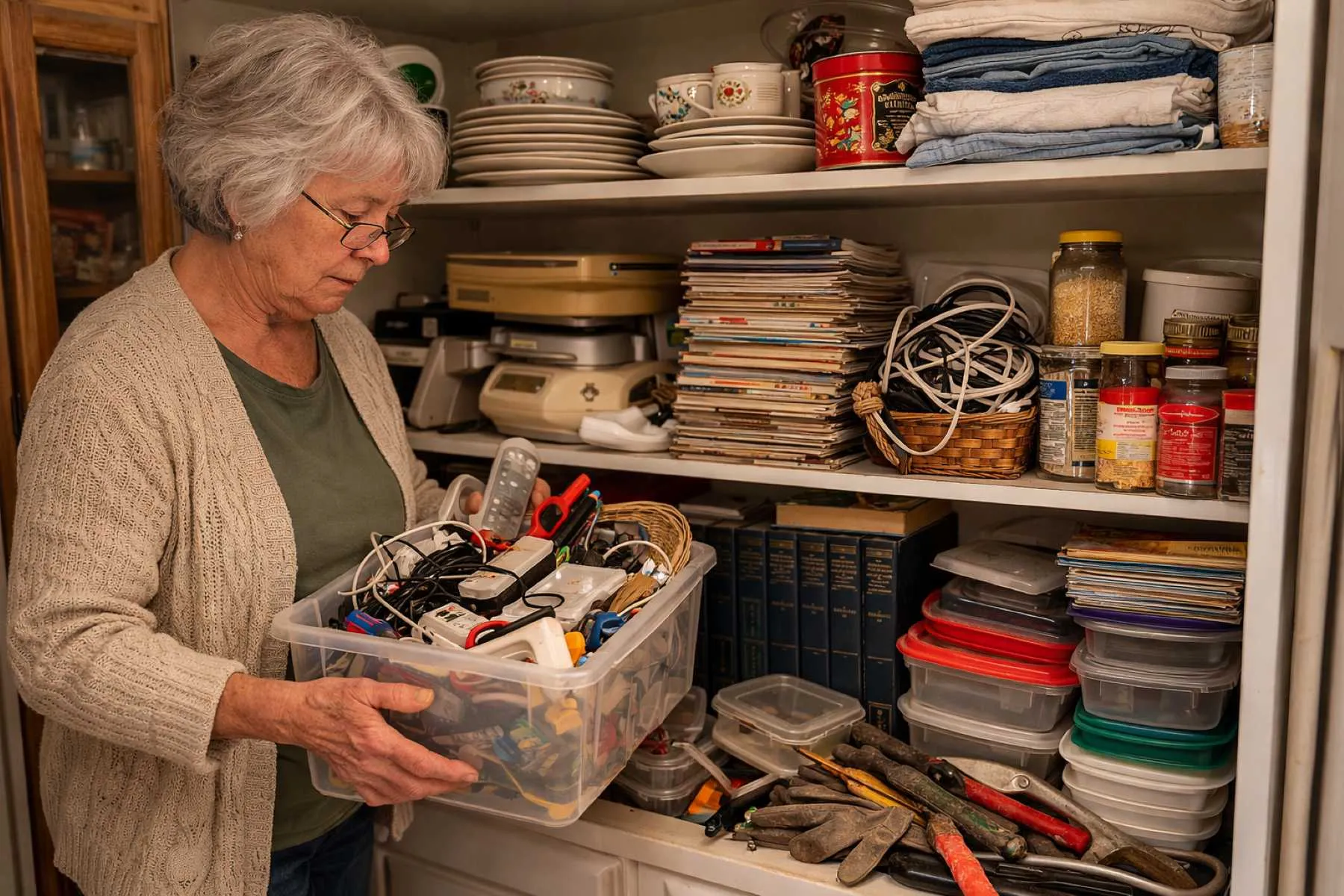
Cleaning out a family home often feels less like a weekend chore and more like an archaeological dig. For many seniors, the items tucked away in attics and kitchen corner cabinets aren’t just “stuff”—mere physical objects—they are symbols of hard work, milestones, and a deeply ingrained sense of preparedness. While younger generations lean toward the “less is more” philosophy of minimalism, many find themselves surrounded by baby boomer clutter: a lifetime of belongings they simply cannot bring themselves to let go of.
This attachment often stems from a generational mindset shaped by parents who lived through scarcity. To a Boomer, discarding a functional item feels wasteful, even if that item hasn’t been touched in twenty years. Understanding the emotional and practical weight behind these objects is the first step in navigating the delicate process of downsizing.
Understanding the Roots of Baby Boomer Clutter
When we discuss baby boomer clutter, we aren’t necessarily referring to “trash” in the traditional sense. Instead, it is a collection of high-quality, sentimental, or “potentially useful” items accumulated over decades. Unlike the disposable goods of the modern era, many of these belongings were significant investments at the time of purchase. This category of surplus is unique because the items are often well-maintained but no longer serve a purpose in a modern, streamlined lifestyle.
1. Vintage sets of fine china
For decades, owning a set of fine china was a rite of passage. These delicate plates and teacups were reserved for the most prestigious holidays. Today, however, lifestyle trends have shifted toward casual dining and dishwasher-safe stoneware. While these sets hold immense sentimental value, they often sit unused for years, taking up vast amounts of precious cabinet space.
2. Bulky inherited antique furniture pieces
Many Boomers feel like the designated guardians of family history. Whether it is a heavy oak sideboard or a massive mahogany wardrobe, these pieces were built to last for centuries. The challenge is that modern homes are often smaller, and the heavy aesthetic of the past doesn’t always mesh with contemporary interior design.
3. Massive stacks of old magazines
There was a time when a subscription to National Geographic or Good Housekeeping was a window to the world. Many seniors keep years—sometimes decades—of these publications. In the digital age, this information is available with a quick search, but the physical weight of these stacks remains a common fixture in many home offices.
4. Outdated physical encyclopedia collections
Before the internet, a set of encyclopedias was the ultimate household resource. Even though the information inside is now decades out of date, the sheer cost and perceived “intellectual value” of these heavy volumes make them incredibly difficult for many to donate or discard.
5. Plastic containers without matching lids
It is a universal kitchen mystery: where do the lids go? Despite the lack of matching pairs, many seniors hold onto a mountain of mismatched plastic containers. The “just in case” mentality suggests that a lid might eventually turn up, but this usually just results in a disorganized and frustrating kitchen cabinet.
6. Excess sewing and craft supplies
The Boomer generation is known for its “DIY” spirit. Scraps of fabric, jars of buttons, and half-finished knitting projects represent potential creativity. While these hobbies are wonderful, the supply often outpaces the time available to complete the projects.
7. Identifying Seasonal Baby Boomer Clutter: Holiday Dinnerware
Beyond the standard fine china, many households have specific sets of dishes exclusively for Christmas or Thanksgiving. These items are only relevant for a few days out of the year, yet they occupy prime real estate in the dining room. Because they are tied to happy memories, they are frequently seen as non-negotiable items during a decluttering session.
8. Tangled boxes of mystery cables
Technology has evolved rapidly, but the cords that powered it often remain. Many seniors keep boxes filled with RCA cables and old phone chargers. The fear that a specific device might need that exact cord someday creates a “tangle” of clutter that is both physically and mentally taxing.
9. Worn-out gardening hand tools
A well-worn trowel or a pair of rusty shears often represents years of hard work. Even after upgrading to newer tools, the old ones are frequently kept as backups. These items usually migrate to a corner of the shed, serving more as a tribute to past labor than a functional tool.
10. Stacks of sentimental greeting cards
In a world of quick text messages, a handwritten card is a treasure. Many Boomers have saved every birthday and anniversary card they have received for forty years. While the sentiment is beautiful, the volume can become overwhelming.
11. Unused guest room bedding sets
The desire to be a good host is a hallmark of this generation. Many homes have closets overflowing with extra pillows and multiple sets of sheets for guests who may only visit once a year. This excess of “extra” linens can make closets impossible to navigate.
12. Old telephone books and directories
Despite smartphones, some seniors feel a sense of security having a physical directory. These bulky books are rarely used but often kept on the bottom shelf of a pantry, taking up space that could be used for more frequent needs.
13. Managing Kitchen Redundancy and Baby Boomer Clutter
How many spatulas or apple corers does one kitchen truly need? Often, a Boomer will have a brand-new version of an appliance but keep the old one “as a spare” in the basement. This redundancy is a classic example of how the fear of a future shortage leads to current accumulation.
14. Fragile souvenir glass decorative figurines
Travel souvenirs and small glass knick-knacks were once popular gifts. These items require frequent dusting and are easily broken, yet they represent specific moments in time. Because they are “fragile,” there is a perceived value that makes letting go feel difficult.
15. Expired pantry staples and spices
Finally, the pantry is often a hidden stronghold of excess. A “waste not, want not” attitude can lead to keeping spices that lost their potency years ago. Because these items are tucked away, they are easy to ignore until a full kitchen audit reveals the extent of the hoard.
Letting go of these items isn’t about erasing the past; it’s about making room for the present. For many, the process of thinning out these collections can be deeply emotional, but it is also incredibly liberating. When we clear away the physical weight of “just in case” items, we find more space to enjoy the things that truly matter. If you are helping a loved one navigate the complexities of baby boomer clutter, remember that patience and empathy are your most important tools.