

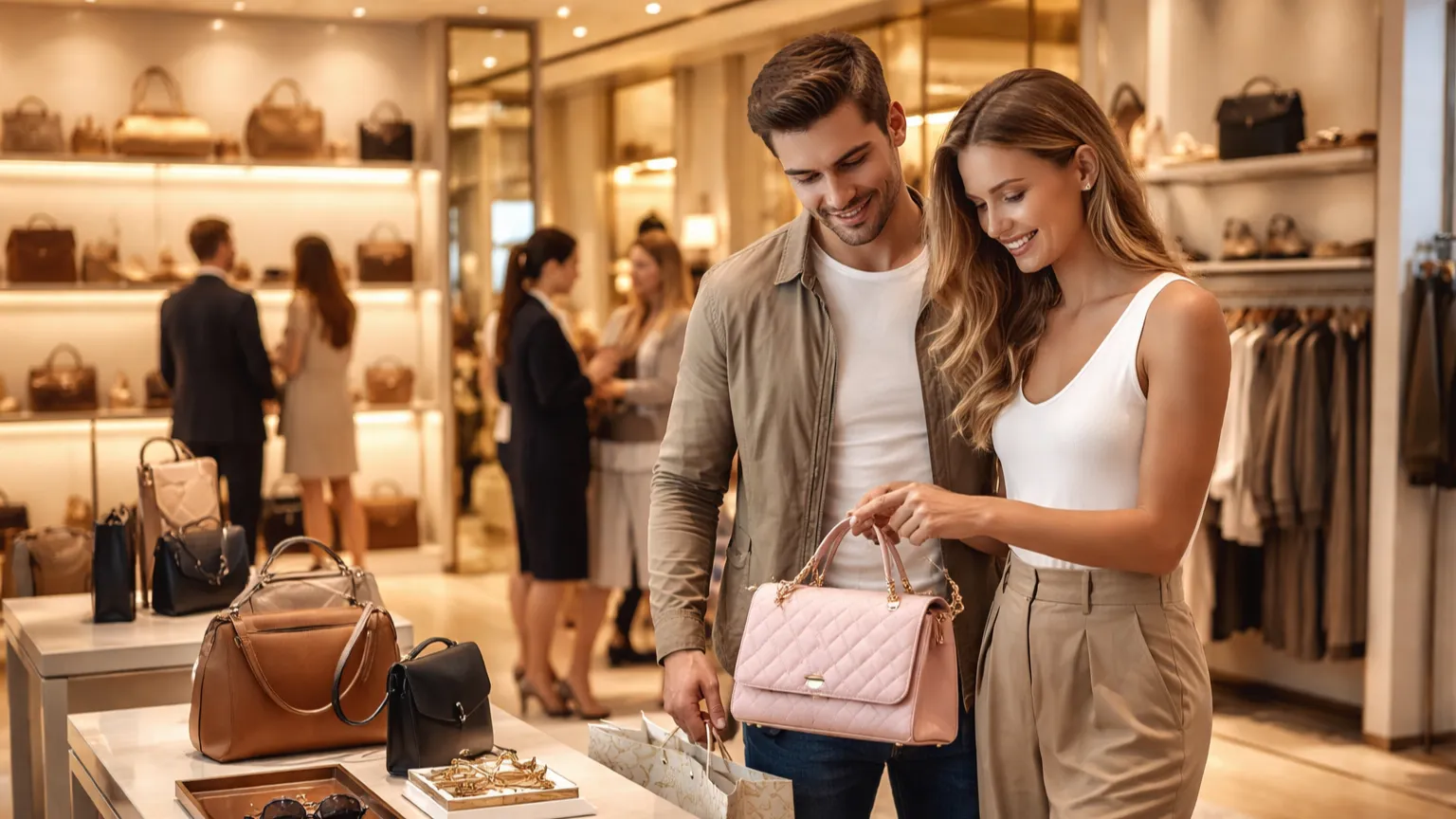
Walking into a high-end boutique feels less like entering a shop and more like stepping into a curated dream. The air is scented with expensive sandalwood, the lighting is soft enough to blur your insecurities, and the carpet is so thick it practically swallows your footsteps. This isn’t just “good design”—it is a masterclass in consumer psychology. We often think of “retail friction” as a bad thing, like a long checkout line or a glitchy website, but luxury retailers use a different kind of friction to slow down our logic and speed up our heart rates.
The problem is that our brains aren’t naturally wired to handle these high-pressure, high-sensory environments. While we think we are making a conscious choice to “treat ourselves,” we are often responding to subtle psychological triggers designed to make us overspend. By understanding the mechanics of how these stores operate, we can peel back the velvet curtain and reclaim control over our wallets. In this article, we’ll explore the invisible forces at play—from scarcity tactics to anchoring biases—and give you the tools to stay grounded the next time you’re surrounded by gold-plated price tags.
The Sensory Symphony: High-End Marketing Triggers
Luxury stores are designed to induce a mild state of sensory “flow.” When you enter a high-end space, the external world—and its associated stresses—tends to vanish. This is no accident. High-end sensory marketing targets our limbic system, the part of the brain responsible for emotions and memory, rather than the rational prefrontal cortex.
The “scent branding” used in expensive stores is often a custom-engineered fragrance that bypasses logical thought. Similarly, the acoustic environment is carefully managed; you won’t hear Top 40 hits, but rather low-tempo, sophisticated music that encourages a slower walking pace. The longer you linger, the more likely you are to form an emotional attachment to an item. This sensory immersion reduces “transactional pain”—the literal neurological discomfort we feel when spending money—making it much easier to justify a purchase that, in any other setting, would seem absurd.
The Power of Scarcity and Consumer Psychology
One of the most potent weapons in the luxury arsenal is the scarcity principle. In a discount department store, you’ll see rows upon rows of the same shirt. In a luxury boutique, you might see one single handbag sitting alone on a marble pedestal under a spotlight. This visual isolation signals to your brain that the item is rare, unique, and highly valuable.
When we perceive an item as scarce, our “loss aversion” kicks in. We stop thinking about whether we actually need the item and start worrying about the pain of someone else buying it. Luxury retailers often heighten this by mentioning that a piece is part of a “limited drop” or that they “only have one more in the back.” This creates an artificial ticking clock in the consumer’s mind, forcing an impulse decision to avoid the regret of missing out.
Deciphering the Architecture of Influence
The layout of an expensive store is a psychological map designed to guide your behavior. Unlike a grocery store where the most essential items (like milk) are at the back, luxury layouts are often “boutique-style” or “labyrinthine.” They use “decompression zones” at the entrance—a wide, open space that allows you to adjust to the luxury atmosphere before you see any merchandise.
As you move deeper, the floor plan often forces you to move in a counter-clockwise direction, which studies suggest can increase spending in certain cultures. High-end stores also utilize “islands” of products rather than long aisles. These islands act as friction points, forcing you to stop, pivot, and engage with items you didn’t intend to look at. Each stop is an opportunity for a salesperson to engage, further lowering your psychological defenses through the power of human connection.
Anchoring Bias: Making a $500 Wallet Look Like a Bargain
Have you ever wondered why the most expensive item in a store is often displayed right at the front? This is a classic application of “anchoring.” By showing you a $10,000 coat first, the store sets a high mental anchor. When you later see a pair of shoes for $800, your brain compares it to the $10,000 anchor rather than the actual value of the shoes.
Suddenly, the $800 shoes feel like a “steal.” The retailer has successfully shifted your perspective from “Is this worth $800?” to “This is so much cheaper than that coat!” This mechanism exploits our inability to evaluate prices in a vacuum. We need a point of reference, and luxury stores are more than happy to provide a very expensive one to make their other high-margin items feel accessible.
Social Proof, Prestige, and the Mirror Effect
The social aspect of luxury shopping is perhaps the most complex psychological layer. High-end stores often employ a subtle form of “exclusionary” service. By maintaining a certain level of formality or even aloofness, they tap into the consumer’s desire for social validation. We want to prove that we belong in that space, and the easiest way to signal that belonging is by making a purchase.
Furthermore, the mirrors in these stores are often tilted or specially lit to make the customer look their absolute best. When you see a “better” version of yourself in the mirror while wearing a luxury item, your brain begins to associate that item with a higher social status and improved self-image. It becomes less about the fabric and more about the identity you are buying into.
Counteracting the Impulse: Strategies for the Savvy Shopper
Recognizing these tactics is half the battle, but keeping your credit card in your wallet requires a proactive strategy. The goal isn’t to stop shopping altogether, but to shop with intention rather than under the influence of psychological manipulation.
-
The 72-Hour Rule: The most effective way to break a sensory spell is time. If you find yourself desperately wanting an item in a store, commit to waiting 72 hours. Once you are out of the “scented” environment and back in your own reality, the emotional intensity of the desire usually fades.
-
The “Cost-Per-Wear” Calculation: Instead of looking at the price tag in isolation, calculate how often you will actually use the item. A $1,000 coat you wear 200 times a year ($5 per wear) is a better investment than a $200 dress you wear once. This shifts the focus from the “sparkle” of the store to the utility of the object.
-
Leave the “Enablers” at Home: Retailers love it when you shop with friends because peer pressure—even if it’s well-meaning—is a massive spending trigger. If you are serious about avoiding an impulse buy, shop alone or with a friend who is known for being frugal.
-
Identify Your Triggers: Are you shopping because you’re bored, sad, or looking for a status boost? Identifying the emotional “why” behind the shop can help you address the need without spending money.
Master Your Money by Mastering Your Mind
The world of high-end retail is a fascinating intersection of art, design, and deep-seated consumer psychology. These stores are designed to make us feel special, wealthy, and successful, but that feeling often comes at a high financial cost. By understanding that your “impulse” to buy is often a carefully manufactured response to your environment, you can start to observe the process rather than being controlled by it.
Next time you step into a luxury boutique, take a deep breath and look for the “anchors.” Notice the scent, the lighting, and the way the items are spaced. When you see the gears of the machine turning, the magic starts to fade, and your rational mind takes back the wheel. You can appreciate the beauty of the design without having to own a piece of it.