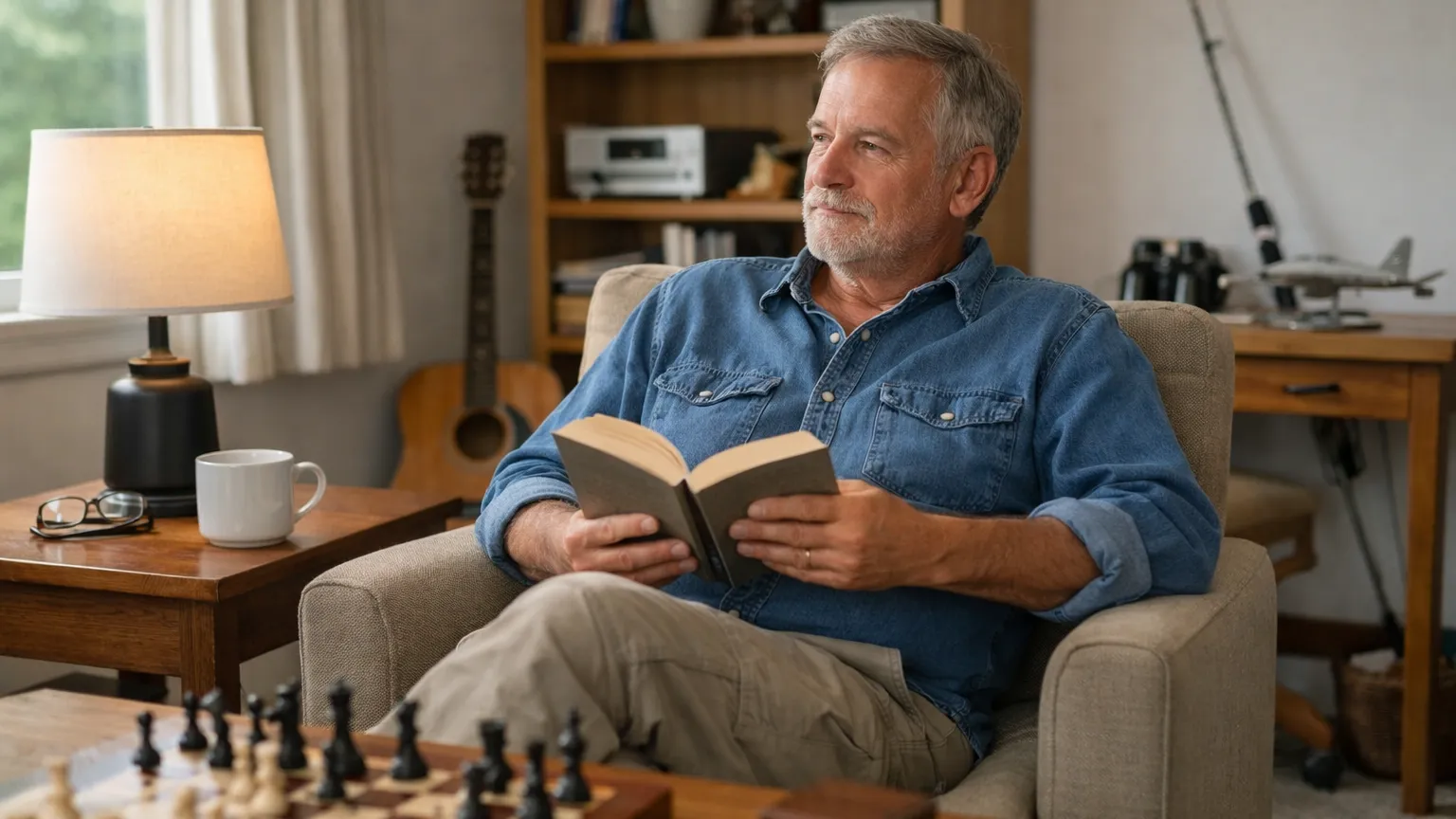
There is a long-standing cultural narrative that paints the picture of an older man living alone as a figure of sympathy—perhaps a bit lonely, slightly disheveled, and surely longing for the domestic hum of a busy household. However, if you look closer at the shifting demographics and older single men psychology, a very different reality emerges. For a growing number of men entering their 50s, 60s, and beyond, solitude isn’t a sentence; it’s a hard-earned sanctuary.
This shift toward “solo living” among older men is rarely about a dislike for people. Instead, it is often a deeply conscious choice rooted in the pursuit of psychological peace. After decades of navigating the complex demands of careers, parenting, and long-term partnerships, many men are discovering that living alone offers a unique form of emotional liberation that they simply couldn’t access in their younger years. By understanding the psychology behind this choice, we can see how solitude becomes a tool for self-actualization rather than a byproduct of isolation.
In this article, we will explore the nuanced layers of why older men are increasingly finding their “second act” more fulfilling in the quiet of their own company. From the elimination of domestic friction to the profound joy of authentic hobbies, we’ll dive into how the absence of “social performance” allows for a richer, more grounded life.
The Shift Toward Emotional Independence
For many men, the middle and later years of life represent the first time they are truly “off the clock” emotionally. From a young age, men are often conditioned to be the emotional anchors or the primary providers, roles that require a constant output of energy toward others. When a man reaches a stage where he can live alone, he often experiences a massive drop in what psychologists call “emotional labor.”
This transition allows for a transition from external validation to internal satisfaction. Instead of managing the moods, expectations, or needs of a partner or household, the older single man begins to prioritize his own emotional baseline. This isn’t about being selfish; it’s about a newfound sense of self-governance. He learns that his happiness isn’t a communal project, but a personal responsibility, leading to a level of stability that is often missing in high-conflict or high-pressure domestic environments.
The Relief of Escaping Domestic Friction
One of the most immediate benefits of solitary living is the total elimination of long-term domestic conflict. Long-term relationships, while rewarding, often carry decades of “residue”—the small bickering over chores, the major disagreements over finances, and the constant compromise required to keep two lives synchronized. For many men, the end of a long-term marriage or partnership brings an unexpected sense of physical lightness.
Living alone means the end of the “negotiated life.” There is no longer a need to justify a purchase, explain a mess, or compromise on the temperature of the living room. This mastery over one’s physical living environment is a significant psychological boost. When your home is a predictable, conflict-free zone, your nervous system finally has the chance to downregulate. The home stops being a place of potential tension and starts being a true recovery pod.
Reclaiming the Daily Rhythm and Older Single Men Psychology
In a shared household, time is rarely your own. Your morning routine is dictated by someone else’s schedule; your evenings are shaped by communal meals and shared entertainment. Older men living alone often report that the greatest luxury is the “sovereignty of the clock.” If they want to wake up at 5:00 AM to read in total silence, they can. If they want to skip dinner or eat a bowl of cereal at midnight, there is no one to judge or accommodate.
This total control over daily routines fosters a deep sense of competence. There is a quiet pride in maintaining a household exactly how one likes it. Whether it’s the meticulous organization of a garage or the intentional simplicity of a minimalist kitchen, the environment becomes a reflection of the man’s internal state. This alignment between the inner self and the outer world is a cornerstone of psychological well-being in later life.
The End of Financial and Social Performance
Society places a heavy burden on men to be the “providers” and “performers.” Throughout their careers, many men feel the pressure to maintain a certain status or financial trajectory to support a family’s lifestyle. Living solo in later years often allows for a radical simplification of these obligations. Without the need to fund a large family home or keep up with the social “arms race” of middle-class couples, many men find they need much less to be happy.
Similarly, the pressure of “social performance” begins to fade. Younger men often engage in social circles to network or satisfy a partner’s social calendar. The older single man, however, tends to prune his social life down to the essentials. He no longer feels the need to impress acquaintances or attend events out of obligation. This leads to fewer but deeper connections, where he can be his authentic self without the mask of the “successful professional” or “happy husband.”
Finding Meaning Through Authentic Hobbies
Without the distractions of a busy household, many men find themselves returning to passions they shelved decades ago. Whether it’s woodworking, long-distance cycling, restoration projects, or learning a new language, the ability to focus intensely on a hobby without interruption is a profound source of “flow”—that psychological state where time seems to disappear.
These aren’t just “time-fillers.” For the older man, these activities are often a way of reclaiming an identity that was lost during the years of heavy responsibility. When a man can spend four hours in a workshop or three hours hiking alone, he isn’t lonely; he is engaged with the world on his own terms. This mastery over a craft or a physical pursuit provides a sense of purpose that replaces the external validation of a job title.
The Power of Introspection and Self-Awareness
Solitude is a mirror. For men who have spent their lives looking outward—at their bosses, their wives, and their children—living alone forces a look inward. While this can be daunting at first, it usually leads to a refined sense of self-awareness. Older single men psychology often involves becoming more comfortable with their own thoughts, their history, and even their flaws.
This introspection leads to a “quieting of the ego.” There is less to prove and more to understand. By navigating the world solo, men often develop a more robust philosophical outlook on life. They become more resilient because they know they can rely on themselves for emotional support. This mental fortitude is one of the most underrated benefits of solitude; it creates a “peace of mind” that isn’t dependent on anyone else’s presence.
Moving Beyond Traditional Gender Roles
For much of history, older men were seen as incapable of taking care of themselves—the “bumbling” bachelor who couldn’t cook a meal or keep a clean house. Today’s older men are shattering that stereotype. By mastering the domestic arts—cooking, cleaning, decorating, and self-care—men are breaking free from rigid traditional gender roles.
There is a unique psychological satisfaction in self-sufficiency. Knowing how to prepare a healthy meal for oneself or how to curate a living space that is both comfortable and aesthetic provides a sense of agency. This independence challenges the idea that men “need” a woman to manage their lives, allowing for a more balanced and respectful view of relationships should they choose to enter one again in the future.
Practical Steps for Embracing Solitude
If you are an older man transitioning into living alone, or if you are supporting someone who is, the key is to view this phase as an active choice rather than a passive occurrence. Here are a few ways to maximize the psychological benefits:
-
Curate Your Space: Treat your home as a sanctuary. Fill it only with things that serve a purpose or bring you joy.
-
Establish “Solo Rituals”: Create small, daily habits that celebrate your independence, such as a specific coffee routine or an evening walk.
-
Prioritize Health as Autonomy: Staying physically fit isn’t just about longevity; it’s about maintaining the ability to live independently for as long as possible.
-
Seek Quality Over Quantity: Don’t fear losing a large social circle. Focus on three or four high-quality friendships where you can be truly honest.
-
Embrace the Silence: Learn to sit in a quiet room without reaching for a screen. This is where the deepest psychological processing happens.
The New Chapter of Peace
The psychological freedom of solitude in later life is a testament to the human capacity for growth. It suggests that our final chapters don’t have to be a slow decline into isolation, but can instead be a vibrant, peaceful, and deeply intentional way of living. For the man who has spent a lifetime serving others, the quiet of a solo home isn’t a void—it’s a full and beautiful space where he can finally meet himself. Through the lens of older single men psychology, we see that living alone isn’t about being “left behind,” but about moving forward into a state of profound personal clarity.