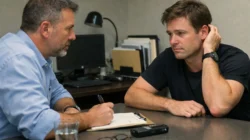
Trust is the invisible thread that holds a relationship together, creating a sense of safety and mutual understanding. However, there are moments when that thread feels a little frayed, or a conversation feels slightly “off” without a clear reason why. Often, this intuition stems from deceptive body language, those tiny, involuntary physical shifts that occur when someone’s words don’t quite align with their internal reality.
Understanding these cues isn’t about becoming a suspicious detective; rather, it is about developing a deeper sense of emotional intelligence. Most people aren’t “master manipulators.” When a partner withholds the truth, their nervous system often reacts before their conscious mind can catch up, leading to subtle leaks in their composure that are fascinating to observe once you know what to look for.
Understanding Deceptive Body Language in Relationships
Before we explore the specific signs, it is helpful to define what deceptive body language actually is. At its core, it refers to the non-verbal signals—gestures, facial expressions, and postures—that contradict the spoken word. This happens because the human brain has to work significantly harder to construct a lie than it does to tell the truth.
This cognitive load often manifests as physical “noise.” While a person can carefully choose their words, they have much less control over their autonomic nervous system. When the stress of deception kicks in, the body may respond with micro-expressions or restless movements that provide a window into their true state of mind.
The Tell-Tale Flutter: Frequent Blinking
One of the earliest signs of cognitive stress is a change in blinking patterns. While we all blink naturally to keep our eyes hydrated, the rate often spikes during a stressful discussion. If you notice your partner blinking rapidly while recounting a story or answering a simple question, it may be a sign that their brain is processing information at an accelerated, perhaps defensive, rate.
Interestingly, some people may actually blink less than usual while they are actively telling a lie, as they are concentrating intensely on maintaining eye contact. However, once the lie is delivered, the blink rate usually surges as a physiological release of tension.
The Weight of Silence: Unnatural Pauses
Conversations usually have a rhythmic, predictable flow. When that rhythm breaks, it is often because the speaker needs extra time to manufacture a narrative. Unnatural pauses before answering a question can be a significant indicator of deception. These aren’t the thoughtful pauses of someone reflecting on a deep memory, but rather the hesitant “buffering” of someone ensuring their story is consistent.
These gaps in timing often feel heavy or forced. If a simple question about their day results in a five-second delay, it might suggest they are mentally scanning for the “right” answer rather than the true one.
Fleeting Truths: Micro-expressions of Hidden Guilt
Micro-expressions are facial movements that last only a fraction of a second. They are incredibly difficult to fake or suppress because they are driven by the limbic system. You might see a quick flash of a downward turn of the lips or a slight furrowing of the brow that vanishes as quickly as it appeared.
These tiny bursts of emotion often reveal hidden guilt or fear. Even if your partner is smiling and nodding, a micro-expression of sadness or tension can signal that their outward display is merely a mask for a more complex internal struggle.
Identifying Deceptive Body Language Through Inconsistent Gestures
We naturally use our hands to emphasize our points when we are being honest and passionate. However, when someone is being dishonest, their hand gestures often become “stiff” or inconsistent with their tone. You might notice a partner describing an exciting event while their hands remain tucked in their pockets or gripped tightly together.
In some cases, the gestures might come after the words are spoken, rather than simultaneously. This “lag” happens because the brain is prioritizing the verbal lie and forgets to coordinate the natural physical accompaniment that usually comes with authentic storytelling.
Windows to the Soul: Dilated Pupils
Our pupils respond to more than just light; they respond to psychological arousal and cognitive effort. When a person is under the stress of maintaining a deception, their pupils often dilate. This is an involuntary reaction of the sympathetic nervous system, often referred to as the “fight or flight” response.
During a stressful or sensitive discussion, dilated pupils can indicate that your partner is feeling a high level of internal pressure. While this doesn’t always prove a lie—it could just be general anxiety—it is a strong indicator that the conversation has moved into high-stakes territory for them.
Guarding the Heart: Defensive Posture and Crossed Arms
Physical openness usually reflects emotional openness. Conversely, a defensive posture often acts as a subconscious shield. If a partner suddenly crosses their arms tightly across their chest or turns their body slightly away from you during a specific topic, they may be trying to protect themselves from the scrutiny of the conversation.
This “blocking” behavior creates a physical barrier between the two of you. It is a primitive instinct to protect the vital organs when feeling threatened, and in a modern context, that threat is often the fear of being “found out.”
The Exit Strategy: Shifting Feet Toward the Door
Our feet often reveal what our faces try to hide. Proponents of body language analysis often suggest that because we are less conscious of our lower extremities, they are more honest. If your partner’s torso is facing you, but their feet are pointed toward the nearest exit, it is a classic sign of “intent to leave.”
This subconscious alignment suggests that they are uncomfortable and looking for an escape from the current interaction. It is a subtle but powerful cue that the topic at hand is causing significant internal distress or a desire to avoid further questioning.
How Mouth Movements Reveal Deceptive Body Language
One of the most common gestures associated with deceptive body language is touching or covering the mouth. This is a behavior that often begins in childhood—think of a toddler covering their mouth after saying something they shouldn’t. As adults, this becomes more subtle, like a quick graze of the lips or a finger resting against the nose.
Subconsciously, the person is trying to “block” the untruthful words from coming out or is reacting to the physical tingling sensation that some people experience in their facial tissues when they are stressed or lying.
Reaching New Heights: Sudden Changes in Vocal Pitch
The voice is a sensitive instrument that reacts immediately to changes in tension. When a person is lying, the muscles in the throat often tighten, which can cause the vocal pitch to rise or become slightly strained. You might also notice their voice cracking or becoming unusually thin.
Beyond pitch, the tempo of speech often changes as well. Some people speed up to “get it over with,” while others slow down to a crawl to avoid making a mistake. These deviations from their “baseline” or normal speaking style are key indicators of a shift in honesty.
The “TMI” Trap: Excessive and Unnecessary Details
A common misconception is that liars are brief. In reality, many people overcompensate by providing a mountain of unnecessary details to make their story seem more “real.” This is known as the “Othello Error” or simply “over-explaining.”
If your partner begins describing the specific color of the napkins at a restaurant or the exact brand of a stranger’s shoes in a way that feels irrelevant to the story, they may be trying to bury the lie under a pile of fabricated facts. Truthful people generally stick to the core narrative unless prompted for more.
Breaking the Connection: Avoiding Natural Eye Contact
While many people believe that liars always look away, the reality is more nuanced. Some people will indeed avoid eye contact because of the shame or pressure they feel. However, others will overcompensate by staring intensely at you to “prove” they aren’t lying.
The key is to look for a break in their natural pattern. If your partner usually looks you in the eye but suddenly can’t stop looking at their phone or the floor, it’s a sign. Conversely, if they are usually casual but suddenly lock eyes with an unblinking gaze, it may be a calculated attempt at appearing honest.
The Breath of Stress: Shallow or Heavy Breathing
Finally, pay attention to the breath. Deception triggers a physiological stress response that often changes the respiratory rate. You may notice your partner’s chest rising and falling more rapidly, or they may take deep, audible sighs as they try to regulate their nerves.
Heavy breathing is often accompanied by a dry mouth, leading to frequent swallowing or licking of the lips. These are all signs that the body is in a state of high alert, struggling to maintain the facade of a calm, truthful conversation.
Navigating the complexities of deceptive body language is not about catching your partner in a “gotcha” moment. It is about fostering a space where honesty feels safe. We all occasionally use “white lies” or omit details to avoid conflict, but when these patterns become frequent, they can signal a deeper disconnect in the relationship.