





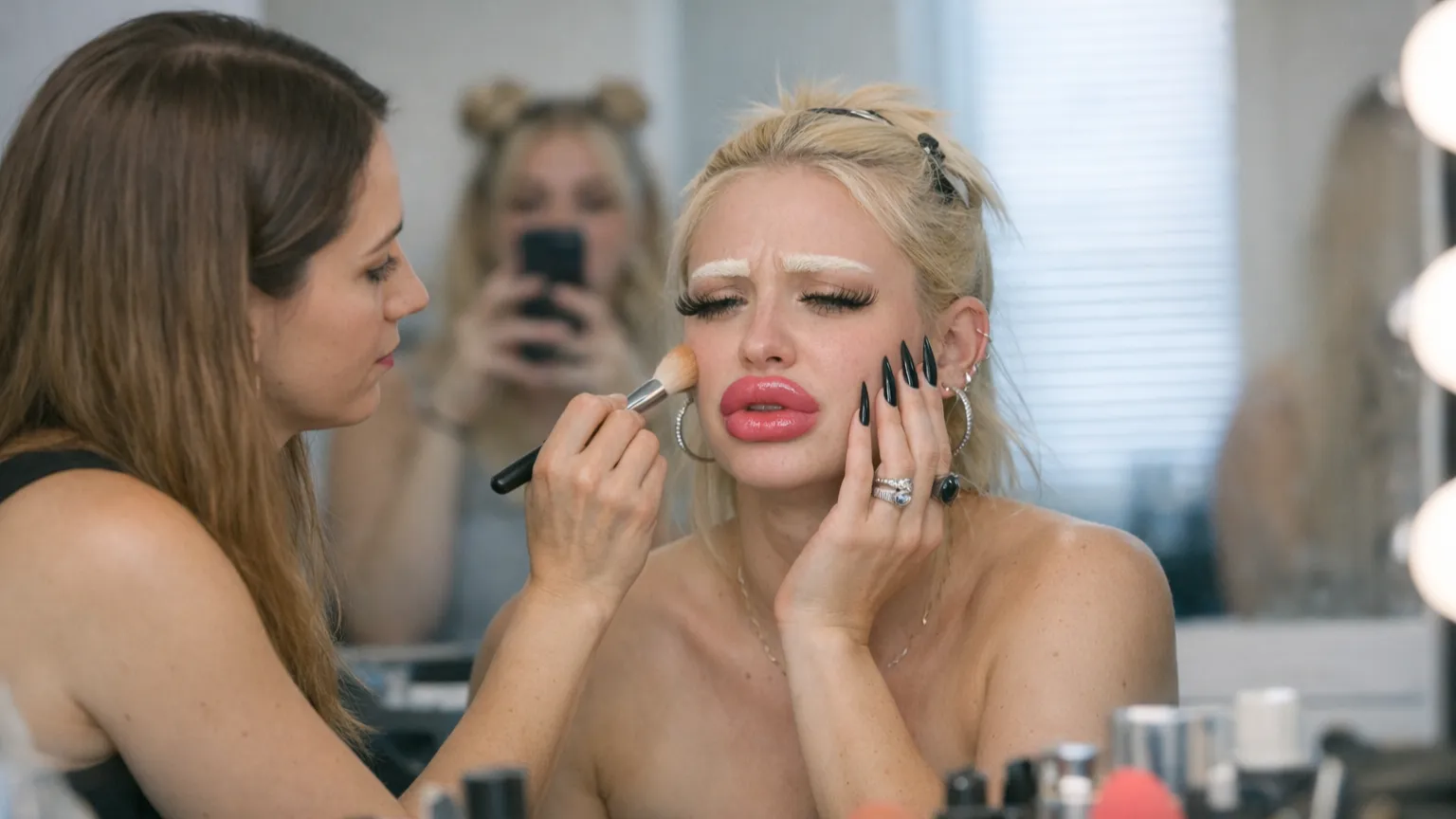
We have all had that moment while scrolling through a social media feed where we pause, squint, and wonder, “Wait, are people actually doing that now?” Whether it is the resurgence of bleached eyebrows that make a face look startlingly alien, or the intentional application of dark circles under the eyes to look “tired-chic,” beauty has taken a turn toward the strange. While beauty was once defined by harmony and symmetry, today’s landscape is increasingly dominated by polarizing beauty trends that prioritize “ugly-cool” aesthetics over traditional perfection.
This shift isn’t just about bad taste or a passing fad. It is a complex intersection of psychology, digital tribalism, and a desperate search for identity in an oversaturated world. Understanding why we are drawn to—and sometimes repulsed by—these movements can help us navigate the modern beauty cycle without losing our sense of self. By digging into the “ick” factor, we can learn to appreciate innovation while protecting our confidence and our wallets from the more toxic side of the trend cycle.
Defining the Ilfeel Phenomenon in Beauty
In recent years, the term “ilfeel” (a slang derivative of “ill feel”) has become a shorthand for that visceral, sudden loss of attraction or the feeling of being “turned off” by someone’s aesthetic choices. When we examine polarizing beauty trends, they often represent a psychological “ick” response. It happens when an aesthetic choice feels so unnatural or jarring that it triggers a subconscious social rejection.
This isn’t just about being judgmental; it is often a reaction to a perceived mismatch in aesthetic harmony. Our brains are hardwired to look for certain patterns of health and vitality. When a trend intentionally mimics exhaustion or extreme distortion, it creates cognitive dissonance. We see something that should be beautiful, but the signals being sent are contradictory. This tension is exactly what makes these controversial looks so “sticky” in our minds—they challenge our biological expectations of what a human face should look like.
Why We Follow Polarizing Beauty Trends
If these looks are so divisive, why do millions of people flock to recreate them? The answer lies in our primal desire for belonging. Humans are social creatures, and in the digital age, belonging is often signaled through visual mimicry. When a specific look—no matter how strange—starts appearing on the “Explore” pages of influential creators, it stops looking repulsive and starts looking like an entry ticket to an exclusive club.
Constant social media exposure plays a massive role here. Through the “mere exposure effect,” the more we see polarizing beauty trends, the more we tend to like them. What looked bizarre on Monday starts to look interesting by Wednesday, and by Friday, we are buying the products to try it ourselves. This is fueled by a potent mix of FOMO (Fear of Missing Out) and the need for validation from digital peers. We don’t want to be the ones “left behind,” so we adopt the new aesthetic to prove we are current and “in the know.”
The Psychological Drivers of Controversial Aesthetics
Beyond just wanting to fit in, many people use unconventional makeup as a tool for rebellion. Breaking traditional beauty norms is a powerful way to assert or reclaim identity. By embracing something “ugly,” a person can signal that they aren’t playing by the old rules of being “pretty” for societal expectations. It becomes a badge of high status—a way of saying, “I am so confident that I can pull off something that would look terrible on anyone else.”
There is also the inescapable reality of the digital algorithm. In a sea of “clean girl” aesthetics and minimalist makeup, something shocking grabs the eye. Attention is the currency of the modern world, and nothing generates comments, shares, and saves quite like polarizing beauty trends. For many, the “ick” factor is a deliberate strategy to cut through the noise. When individual expression meets the need for engagement, the result is often a look that prioritizes impact over actual beauty.
The Hidden Cost of Chasing the “Ick”
While experimenting with makeup is harmless fun, the darker side of these fads can lead to significant issues. Chasing every extreme look often results in a distorted self-perception. When we spend hours staring at filtered or “on-trend” versions of ourselves, we lose touch with what a real face looks like in the mirror. This can lead to a cycle of never feeling “enough” unless we are following the latest, most extreme movement.
Then there is the practical side: the financial waste and potential physical damage. Many polarizing beauty trends require specialized products or, in more extreme cases, “tweakments” and cosmetic procedures. What is trendy today—like extreme fillers or specific surgical lifts—might be the “ilfeel” of tomorrow. Reversing these procedures is often more expensive and painful than getting them in the first place.
Recognizing When a Trend Becomes Toxic
How do you know if you are participating in a trend for the right reasons? A trend becomes toxic the moment it starts to erode your genuine self-confidence. If you find yourself ignoring your own personal comfort levels just to fit a certain aesthetic, it’s time to take a step back.
Warning signs include feeling “forced” by the algorithm to change your appearance or prioritizing the “shareability” of a look over how you actually feel. When we lose our unique personal identity in favor of a carbon-copy “trendy” face, we sacrifice the very thing that makes us attractive: our individuality.
How to Stay Stylish Without Looking “Ilfeel”
The key to navigating the fast-paced world of beauty is to develop a “filter” for polarizing beauty trends. You don’t have to ignore them entirely, but you should adopt them selectively.
-
Focus on Skin Health: Trends come and go, but healthy, glowing skin is never out of style.
-
Understand Your Proportions: Not every trend works for every face shape. Learn what highlights your best features.
-
The 24-Hour Rule: If you see a controversial look you want to try, wait a day. Often, the urge is just a temporary reaction to social media hype.
-
Authenticity Over Impact: Ask yourself, “Do I actually like how this looks, or do I just like that it’s popular?”
Finding Beauty in the Middle Ground
At the end of the day, beauty is subjective, and the “repulsive” trend of today might just be the avant-garde masterpiece of tomorrow. However, the most sustainable way to approach aesthetics is through the lens of self-respect rather than social desperation. We can appreciate the creativity of polarizing beauty trends without feeling the need to wear them ourselves.
By staying grounded in our own identity, we can enjoy the spectacle of the beauty world without falling victim to its more “ilfeel” moments. After all, the most attractive thing you can wear is a sense of self that doesn’t shift with the changing of an algorithm.





No Response