






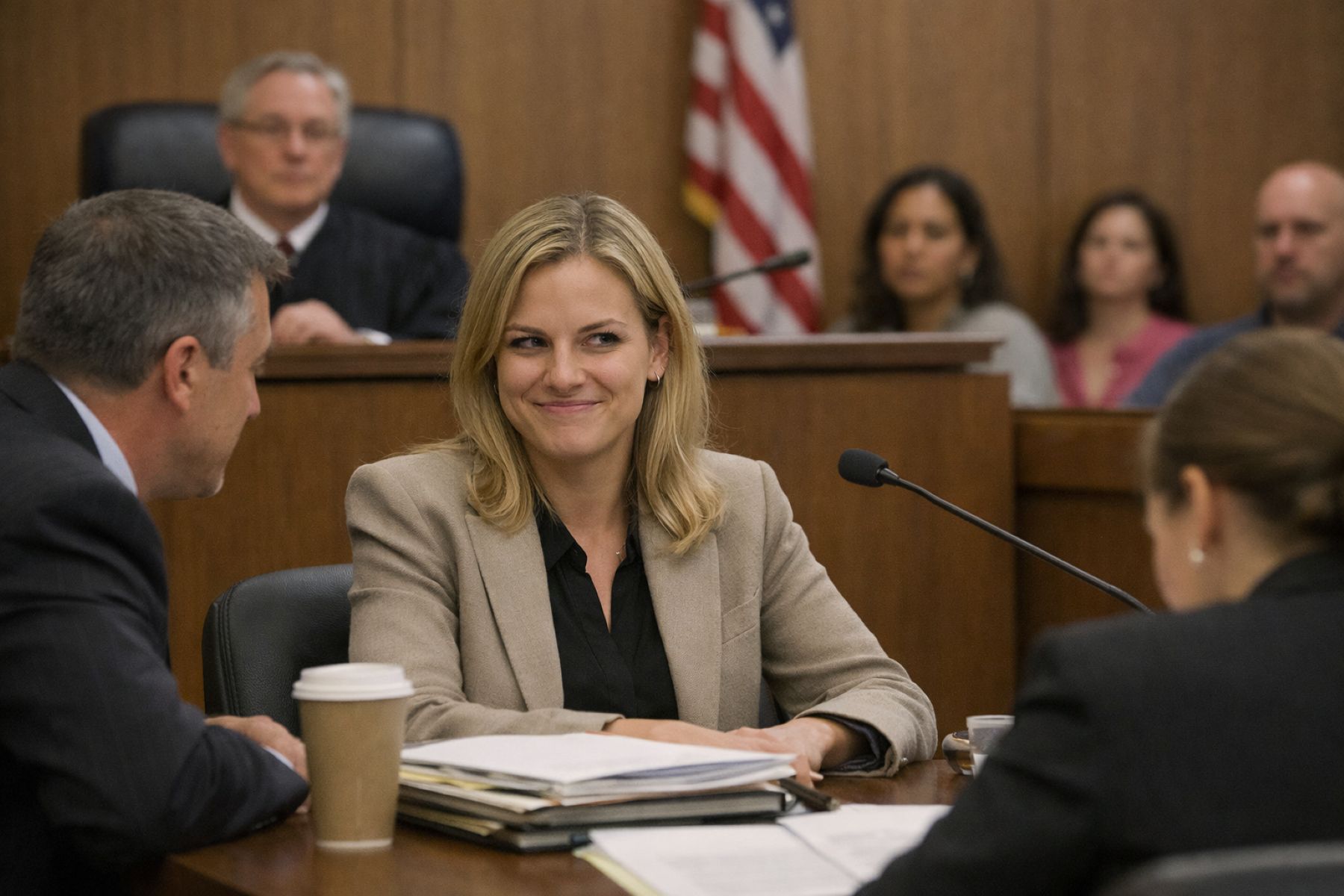
The courtroom is a theater of high stakes where every gesture is scrutinized under a microscopic lens. While we often expect to see tears, stoic expressions, or displays of anger, one of the most polarizing sights in a legal proceeding is a smile. When a defendant or witness smiles in front of a judge or jury, the public reaction is often swift and judgmental. However, the complexity of courtroom smile meanings suggests that human psychology is rarely as simple as it appears on a television screen. Understanding the nuances of these expressions requires looking past the surface to see the complex internal battles being fought.
Defining the Courtroom Smile
The term courtroom smile meanings refers to the various psychological and emotional drivers that cause an individual to smile during a legal proceeding. Unlike a smile shared between friends, a courtroom smile is rarely an expression of genuine joy. Instead, it is a non-verbal communication tool influenced by the high-pressure environment of the justice system. These expressions can range from a biological reflex to a calculated tactical move, and they play a significant role in how the public and legal professionals perceive a person’s character and credibility.
1. Expressing Defiance Against Formal Authority
One of the most common reasons a defendant might smile during a trial is to signal defiance. In an environment designed to strip away an individual’s power and autonomy, a smile can serve as a final vestige of control. By smiling when faced with serious accusations or stern reprimands from a judge, an individual is essentially communicating that the system cannot break their spirit.
This specific manifestation of courtroom smile meanings is often misinterpreted as a lack of remorse, but from a psychological perspective, it is a defense mechanism. It creates a barrier between the individual and the weight of the legal institution. For some, it is a way to maintain a sense of self-identity when the legal process attempts to reduce them to a mere case number.
2. Masking High Levels of Anxiety
We often associate smiling with happiness, but in high-stress situations, the “social mask” becomes a primary survival tool. When a person is overwhelmed by anxiety, their brain may default to a practiced social expression to hide their vulnerability. In a courtroom, where being perceived as weak can feel like a disadvantage, a defendant may smile to cover the fact that their heart is racing and their palms are sweating.
This mask is frequently a subconscious effort to appear “normal” under abnormal circumstances. Unfortunately, this can backfire significantly. To an observer, a smile fueled by sheer terror might look like a smirk of arrogance, leading to a disconnect between the individual’s internal state and the public’s perception of their guilt or innocence.
3. Projecting Confidence to Impress Jurors
Legal strategy often involves more than just the evidence presented; it involves the “optics” of the person sitting at the defense table. Attorneys may advise their clients to remain composed, but sometimes that composure morphs into a confident smile. The logic behind this is to project an aura of innocence. The underlying thought is that a guilty person would be cowering, while an innocent person has nothing to fear and can, therefore, remain pleasant.
However, this is a delicate balancing act. While projecting confidence can be effective for some, it risks alienating jurors who expect a level of gravity and solemnity given the nature of the proceedings. When a smile feels performative rather than authentic, it can erode the very trust it was meant to build.
4. Utilizing Deceptive Manipulation Tactics
It would be naive to ignore that in some instances, a smile is a calculated tool of manipulation. Individuals with certain personality traits may use charm as a weapon to disarm their accusers or win over a jury. By appearing likable, they hope to create a cognitive dissonance in the minds of the observers—making it harder for people to reconcile a “friendly” face with a “criminal” act.
These courtroom smile meanings are often characterized by their lack of “Duchenne” markers, meaning they don’t reach the eyes. They are structural and intentional. While the goal is to sway the room in their favor, legal experts and seasoned jurors are often trained or naturally inclined to look for the lack of genuine emotion behind these tactical expressions.
5. Coping With Extreme Emotional Stress
The human brain has strange ways of processing trauma and extreme stress. In moments of peak emotional intensity, some people experience a phenomenon known as “inappropriate affect.” This is when a person’s outward expression does not match their internal emotional state or the situation at hand. For some, the overwhelming weight of a trial can trigger a nervous smile or even laughter.
This is not a sign of joy or disrespect; it is a neurological “short circuit.” When the mind can no longer process the gravity of the situation, it may flip to a diametrically opposed emotion as a way to vent the pressure. Understanding this is crucial for a fair assessment, as punishing someone for a biological stress response can lead to a profound misunderstanding of their character.
6. Showing Contempt for Legal Allegations
A smile can also be a silent “editorial” on the evidence being presented. When a witness provides testimony that a defendant believes is false or absurd, the defendant might respond with a contemptuous smile. This is a way of saying, “This is a joke,” without ever uttering a word. It is a tool used to discredit the proceedings and the validity of the claims being made.
While this may feel satisfying to the individual in the moment, it is often the most damaging type of smile to display in a courtroom. It can be perceived by the judge and jury as a lack of respect for the law and a disregard for the seriousness of the charges, regardless of whether the allegations are actually true or false.
7. Reacting To Nervous Involuntary Reflexes
Finally, many courtroom smile meanings are simply the result of involuntary reflexes. The “fear grin” is a phenomenon observed in many primates, including humans. When faced with a threat, an individual may pull back their lips and show their teeth in a way that mimics a smile. It is an evolutionary signal of submission or an attempt to appease an aggressor.
In a modern legal setting, this ancient reflex still exists. A person might smile because they are startled, confused, or deeply uncomfortable. These micro-expressions happen in a fraction of a second and are often outside of the person’s conscious control. Because they happen so quickly, they are easily captured by cameras and frozen in time, leading to lasting public misconceptions about the person’s true intent.
Complexity of Human Emotion
Navigating the various courtroom smile meanings reminds us that the human experience is rarely black and white. What we see on the surface—a simple curve of the lips—is often the tip of a massive emotional iceberg. Whether it is a shield against authority, a mask for terror, or a biological reflex, a smile in the courtroom is a reminder that the legal process is not just about facts and figures, but about the complex, often messy, reality of human psychology.
By approaching these moments with a bit more nuance and empathy, we can better understand the people behind the headlines. It’s a helpful reminder that in the search for justice, things are not always what they seem at first glance.






No Response