







Love is often portrayed in movies as a singular, grand event—a moment where two people meet and suddenly everything clicks into place forever. However, anyone who has navigated the complexities of a long-term partnership knows that love is less like a static portrait and more like a living, breathing journey. Understanding the natural progression of relationship stages can provide a much-needed map for couples trying to find their way through the inevitable peaks and valleys of intimacy.
Defining Relationship Stages and Their Importance
Before we explore the specific milestones of a partnership, it is helpful to understand what we mean by relationship stages. In a psychological and social context, these stages represent the developmental phases a couple goes through as they move from being strangers to life partners. Each phase serves a specific purpose: it tests compatibility, builds trust, and eventually solidifies the foundation of a shared life. Recognizing which stage you are currently in helps normalize the challenges you might be facing, transforming a “crisis” into a predictable part of emotional growth.
Identifying the Initial Attraction Phase
Every great story has a beginning, and in the world of romance, it starts with the spark of initial attraction. This first of the relationship stages is characterized by a mix of curiosity and physical chemistry. During this time, we are often on our best behavior, presenting the most polished versions of ourselves to a potential partner. It is a period of discovery where every conversation feels like unearthing a hidden treasure.
While this stage is exciting, it is also surface-level. We are looking for commonalities—shared hobbies, similar tastes in music, or a matching sense of humor. The focus here is primarily on the “high” of meeting someone new. Because we don’t yet know the other person’s flaws, it is easy to project our desires onto them, seeing them as the perfect solution to our previous romantic disappointments.
Experiencing the Intense Honeymoon Period
As the initial attraction deepens, couples transition into what is widely known as the honeymoon period. This is perhaps the most vibrant and chemically fueled phase of all relationship stages. Biologically, our brains are flooded with dopamine, oxytocin, and norepinephrine. This “love cocktail” creates a sense of euphoria that makes us feel incredibly bonded and almost inseparable from our partner.
In this stage, differences are often overlooked or viewed as “endearing quirks.” If one partner is perpetually late, the other might see it as a sign of a relaxed personality rather than a potential source of future conflict. The focus is entirely on the “we,” and the world outside the relationship often seems to fade into the background. While beautiful, this stage is unsustainable by design; the human body and mind eventually need to return to a state of equilibrium.
Navigating the Power Struggle Conflict
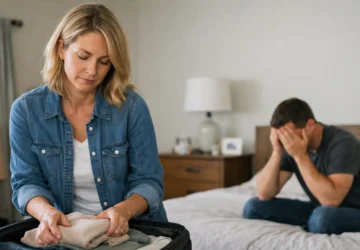
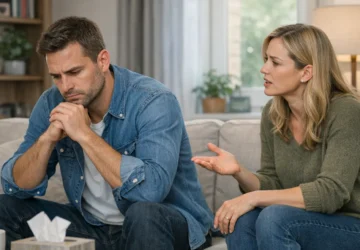
This brings us to the most critical juncture: the power struggle. Most couples find that the rose-colored glasses eventually begin to dim, and the “perfect” partner starts to show their human side. This is the stage where the majority of breakups occur because the illusion of perfection is shattered. Suddenly, those endearing quirks become genuine annoyances, and the focus shifts from what we have in common to the ways in which we differ.
The power struggle is essentially a battle for autonomy within the “we.” Partners may try to change one another to fit their initial idealized image, leading to resentment and defensive behavior. It is important to realize that this stage is not a sign that the relationship is failing, but rather a necessary step toward authenticity. Navigating this phase requires moving away from the desire to “win” an argument and moving toward a desire to understand the other person’s perspective. It is about learning how to disagree without disconnecting.
Transitioning Toward Realistic Mutual Acceptance
For the couples who manage to communicate through the power struggle, a beautiful transition occurs toward realistic mutual acceptance. In this stage, the intense fire of the honeymoon phase is replaced by a warm, steady glow. You no longer feel the need to change your partner, and they no longer feel the need to hide their imperfections from you. There is a profound sense of “I see you, the real you, and I choose to stay.”
This phase is marked by a return to the self. Partners begin to re-engage with their individual hobbies, friendships, and goals, but they do so with the secure knowledge that their “home base” is stable. The relationship becomes a partnership of two whole individuals rather than two halves trying to complete each other. Conflict still happens, but it is handled with much more grace and a focus on resolution rather than blame.
Building Sustainable Long-Term Commitment
The final evolution of relationship stages is the move into sustainable, long-term commitment. This is the stage of “The We-Whole.” By this point, the couple has survived various life tests—perhaps career changes, family losses, or health scares—and has proven their loyalty to one another. The commitment here is not just a feeling, but a daily decision to invest in the well-being of the other person.
In this stage, couples often look outward. They might focus on raising a family, contributing to their community, or building a legacy together. The security of the relationship provides a platform for both individuals to reach their highest potential. It is a state of deep, soul-level friendship where words are often unnecessary because the understanding is so profound. While it lacks the frantic energy of the first stage, it possesses a depth and richness that only time and shared history can provide.




No Response