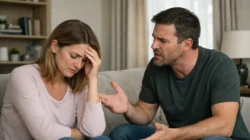


In the quiet moments following a breakup or a divorce, a specific kind of silence often settles into a home. For many men, this silence isn’t just the absence of noise; it is the sudden, heavy realization of everything they took for granted. The phenomenon of regret in marriage often follows a predictable yet painful pattern where appreciation only arrives once the person who provided stability is gone. It is a reflective journey that many embark on too late, discovering that the foundations of their daily happiness were built by someone they failed to truly see until the relationship reached a breaking point.
Understanding Regret in Marriage and the “Walkaway Wife” Syndrome
Before diving into the mechanics of this delayed appreciation, it is important to understand what regret in marriage actually looks like in a modern context. It often stems from a psychological blind spot known as habituation, where a partner becomes so integrated into one’s daily life that their efforts become invisible.
When a wife eventually decides to leave—a move often referred to by therapists as the “Walkaway Wife Syndrome”—it usually comes after years of unheard pleas for change. For the husband, the sudden absence acts as a harsh catalyst, forcing a confrontation with a reality he had previously ignored or minimized.
1. Losing the Constant Emotional Support
One of the most immediate sources of regret in marriage is the sudden evaporation of a dedicated emotional safety net. In many traditional and modern dynamics, the wife serves as the primary—and sometimes only—emotional outlet for her husband. She is the one who listens to his frustrations about work, validates his fears, and celebrates his small wins.
When that connection is severed, the man often realizes he hasn’t built a similar support system elsewhere. He finds himself in an emotional vacuum, realizing that her “nagging” or “checking in” was actually the glue keeping his mental well-being intact.
2. Witnessing Her Newfound Personal Independence
There is a particular sting that comes when a man sees his former partner thriving on her own. During the marriage, he may have viewed her through a lens of dependency, assuming she needed his presence to navigate life effectively. However, seeing her rediscover her hobbies or carry a new sense of confidence can be a jarring wake-up call.
This newfound independence often signals that she wasn’t “stuck” with him, but was choosing to stay until the cost became too high. Realizing that she is perfectly capable—and perhaps even happier—without his influence often triggers a deep sense of missed opportunity and marital regret.
3. Recognizing Her Silent Sacrifices Post-Separation
While a marriage is active, many of a wife’s contributions are “invisible labor.” These are the small, repetitive tasks and sacrifices that keep a household running and a family connected. It might be the way she managed social calendars or quietly gave up her own professional desires to support his career trajectory.
It is often only in the aftermath that these sacrifices become visible. When the man has to manage these complexities himself, the regret in marriage becomes palpable. He realizes that her life was often structured around his needs, a fact he may have dismissed as “just the way things are” during the union.
4. Facing the Void of Daily Care
The domestic routine is perhaps the most underestimated aspect of marital stability. Regret often hits hardest in the mundane moments—walking into a house that no longer feels like a home because the warmth has departed. It isn’t just about chores; it’s about the “mental load” of maintaining a nurturing environment.
When a man is faced with the sterile reality of a solo existence, the lack of daily care becomes a constant reminder of what he lost. He begins to see that her presence provided a layer of comfort and security that he didn’t realize was a luxury until it was gone.
5. Observing Her Growth Without His Influence
Sometimes, a husband may unconsciously stifle his wife’s growth by demanding her focus remain on his needs. Seeing her bloom after the separation—perhaps pursuing a degree or a new promotion—can be incredibly eye-opening.
This transformation proves that the version of her he knew was likely a diminished one, shaped by the pressures of an imbalanced relationship. Realizing that he was a barrier to her potential rather than a partner in her growth is a common catalyst for long-term regret in marriage. He mourns the person she could have been by his side if he had only encouraged her more.
6. Understanding the Impact of Emotional Neglect
Regret often involves a painful look back at the “quiet” moments. A man might realize that while he wasn’t “doing anything wrong” in a traditional sense—like cheating—he was committing the sin of omission. Emotional neglect is the failure to show up, to listen, and to engage.
In hindsight, he may remember the times she reached out for a hand and he stayed glued to a screen. Understanding that he effectively “starved” the relationship of intimacy is a heavy burden. This insight usually comes too late, as the emotional bridge has already been burned by years of perceived indifference.
7. Realizing True Worth Through Permanent Absence
There is an old saying that we don’t know what we have until it’s gone, and in the realm of regret in marriage, this is a foundational truth. Permanent absence removes the “safety of the status quo.” As long as she was there, he felt he had time to fix things later.
When “later” never comes, the finality of the situation forces an honest evaluation of her true worth. He finally sees her not just as a “wife,” but as an individual with immense value and strength. The realization that such a person is no longer part of his inner circle is the ultimate source of pain.
While the pain of delayed realization is significant, it also offers a powerful opportunity for personal transformation. Reflecting on regret in marriage isn’t just about mourning the past; it’s about learning how to be a more present, appreciative, and emotionally available person in the future.
For those currently in a relationship, these insights serve as a gentle nudge to look at your partner today with fresh eyes. Appreciation doesn’t have to wait for damage to be done; it can start with a simple conversation, a moment of gratitude, and the decision to truly see the person standing right in front of you.