






Keeping our minds sharp is a goal many of us share, yet the path to achieving it often feels cluttered with expensive apps and complex programs. We frequently hear about the importance of “brain training,” but finding practical, evidence-based methods that don’t require a subscription or specialized equipment can be a challenge. The truth is that cognitive health is less about high-tech gadgets and more about the consistent, intentional ways we engage with the world around us.
Developing a sharper intellect is a journey of small, daily choices. By understanding how our brains adapt to new challenges, we can integrate simple habits that foster resilience and clarity. This approach isn’t just about “fixing” a problem; it’s about nurturing our most valuable resource so we can navigate life with more confidence and ease.
Understanding the Essence of Brain Training
At its core, brain training refers to the practice of engaging in specific activities designed to maintain or improve cognitive abilities such as memory, processing speed, and problem-solving. This concept is rooted in the scientific principle of neuroplasticity—the brain’s remarkable ability to reorganize itself by forming new neural connections throughout life. While the term is often associated with digital games, the most effective forms of mental stimulation frequently involve real-world tasks that challenge our established patterns of thinking.
Rather than looking for a “magic pill” or a single revolutionary exercise, it is more helpful to view brain training as a holistic lifestyle. When we introduce novelty and complexity into our routine, we encourage the brain to stay flexible. This proactive engagement helps keep our mental gears running smoothly, allowing us to process information more efficiently and approach daily obstacles with a fresh perspective.
Master the Art of Memory Challenges
One of the most rewarding ways to stimulate your mind is through deliberate memory challenges. You don’t need a deck of cards or a specialized program to do this; your daily environment is filled with opportunities. For instance, after you visit a new neighborhood or a friend’s house, try to sketch a map of the area from memory. Visualizing the turns you took and the landmarks you passed forces your brain to retrieve and organize spatial information, strengthening the pathways associated with navigation and recall.
Another effective technique involves active listening during your favorite podcasts or conversations. Instead of letting the information wash over you, try to list three to five specific facts you learned, first in the order you heard them and then in reverse. This backward recall is particularly challenging because it requires high levels of working memory and concentration. Incorporating these small “memory sprints” into your day can significantly enhance your ability to retain and utilize information in your professional and personal life.
Embracing the Power of Novelty Tasks
Our brains are designed to be efficient, which means they often switch to “autopilot” when we perform familiar tasks. To break this cycle and encourage new neural growth, we can introduce novelty into our physical movements. Simple changes, such as using your non-dominant hand to brush your teeth or eat your breakfast, can be surprisingly difficult. This forces the brain to communicate across hemispheres and develop new motor pathways, a process that is as humbling as it is beneficial.
You can also expand this sense of novelty to your environment. Try taking a completely different route on your daily walk or commute, or even something as quirky as flipping a few household objects—like a desk clock or a framed photo—upside down. When your brain encounters these unexpected sights, it has to work harder to interpret the visual data and recognize the object. These “neurobic” exercises may seem small, but they effectively “wake up” the brain and keep it from settling into a stagnant routine.
Engaging with Puzzle Games and Mental Math
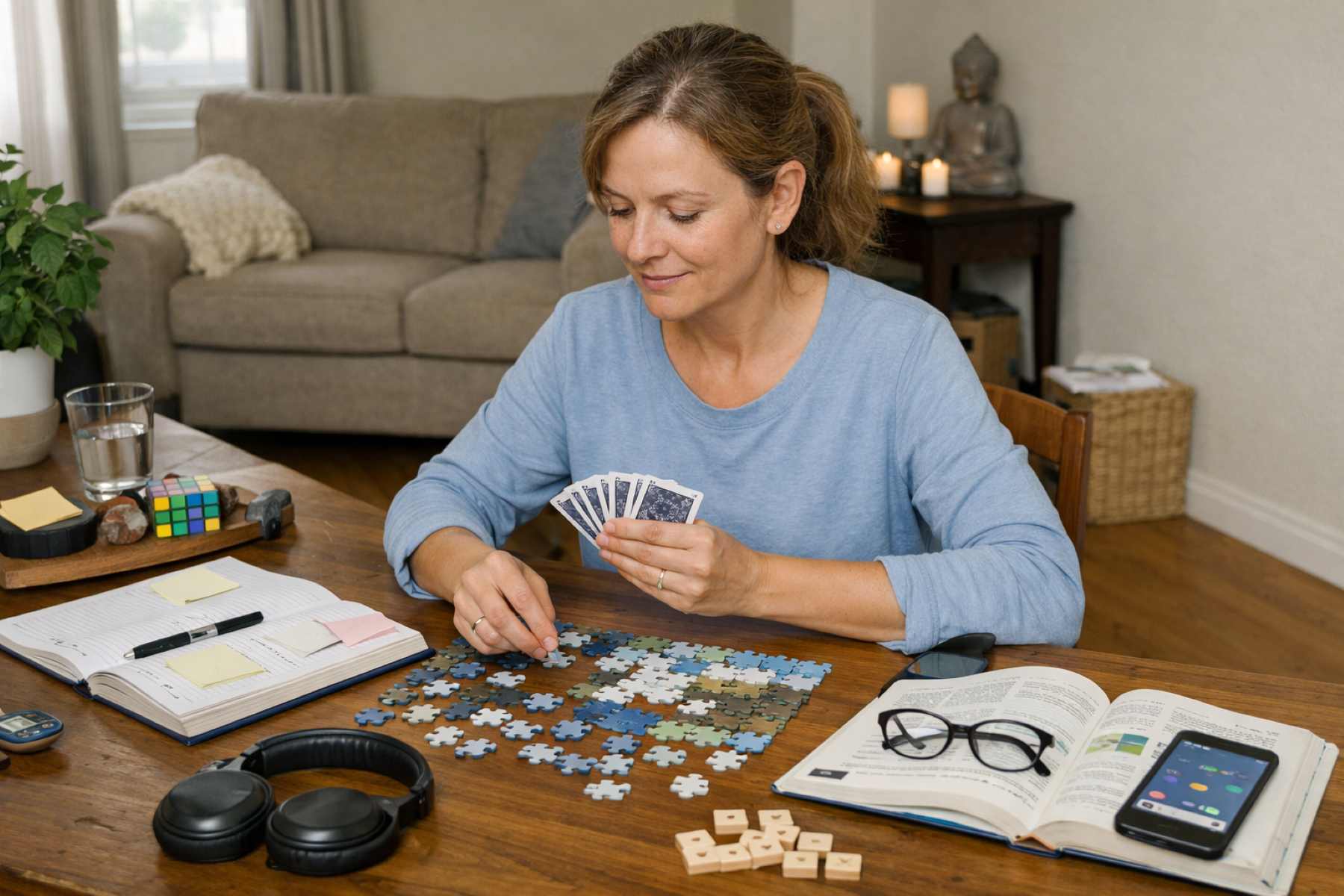
Puzzles have long been a staple of cognitive health for a good reason. Whether it is a jigsaw puzzle on the dining room table or a casual card game with family, these activities require a blend of strategy, pattern recognition, and patience. Unlike digital distractions that often rely on fast reflexes, traditional puzzles encourage a deeper level of focus. They require us to hold multiple pieces of information in our minds simultaneously while we search for the perfect fit, which is an excellent workout for our problem-solving faculties.
In a world where we rely heavily on calculators, practicing mental math is another fantastic way to stay sharp. Try calculating the total of your groceries as you add them to your cart or determining the tip at a restaurant without reaching for your phone. These quick calculations engage the prefrontal cortex, the area of the brain responsible for higher-level thinking. By making math a part of your daily “mental movement,” you build a foundation of cognitive stamina that serves you well in more complex decision-making scenarios.
Cultivating Focus Through Mindfulness Practices
While many brain-training exercises focus on “doing,” some of the most profound benefits come from learning how to “be.” Mindfulness practices, such as meditation or intentional deep breathing, are essential for cognitive health because they train our ability to direct and sustain attention. In an era of constant notifications, the skill of focusing on a single breath is a powerful antidote to mental fragmentation.
Regular mindfulness sessions can help reduce the “mental noise” that often leads to stress and forgetfulness. By calming the nervous system, you create a more hospitable environment for learning and memory. You might start with just five minutes of quiet reflection each morning, noticing the physical sensations of your breath. Over time, this practice builds a sense of mental clarity that allows you to approach your other cognitive challenges with a steady, focused mind.
Expanding Horizons with Continuous Learning
Perhaps the most comprehensive way to support your brain is to remain a lifelong student. Picking up a new skill—whether it’s learning a few phrases of a new language, trying out a complex recipe, or mastering a basic craft—demands a high level of cognitive engagement. When we learn something new, we aren’t just adding data to our mental hard drive; we are literally changing the structure of our brains to accommodate new patterns of behavior and understanding.
This type of learning is generally helpful because it combines several cognitive functions at once, including memory, motor skills, and logical reasoning. The key is to choose activities that are genuinely interesting to you, as curiosity acts as a natural fuel for the brain. When you are engaged and inspired by what you are learning, the process feels less like a chore and more like an adventure, making it far more likely that you will stick with the habit for the long term.
Investing in your cognitive health doesn’t require a lifestyle overhaul or a significant financial investment. By weaving memory challenges, novelty, puzzles, mindfulness, and new learning into the fabric of your daily life, you can build a resilient and agile mind. These simple yet effective brain training approaches are most powerful when they are part of a balanced life that also prioritizes restorative sleep and physical movement.






No Response