






Aging is often portrayed as a period of slowing down, but for many, it represents a unique opportunity to refine daily habits and embrace a more intentional way of living. Establishing a disciplined lifestyle for seniors isn’t about rigid rules or joyless routines; rather, it is about creating a supportive structure that fosters independence, vitality, and mental clarity. By approaching discipline as a form of self-care, older adults can unlock a level of physical and emotional freedom that makes the golden years truly shine.
Defining the Disciplined Lifestyle for Seniors
When we speak of a disciplined lifestyle for seniors, we are referring to the consistent practice of habits that support holistic well-being. Unlike the high-pressure discipline of one’s career years, senior discipline is rooted in sustainability and mindfulness. It involves making conscious choices—from the way we move to the way we rest—that align with the body’s changing needs. This lifestyle acts as a proactive shield, helping to manage the natural transitions of aging while maximizing the quality of every day.
Why Unconventional Habits Prove Effective for Healthy Aging
While standard advice like “eat your greens” and “walk more” remains foundational, incorporating unique or unconventional habits can offer surprising advantages. These “brain-hacking” or “body-tuning” techniques challenge the status quo of aging by introducing novelty. When we step outside of our comfort zones, we force our neurological and physiological systems to adapt, which is the key to longevity. These habits often target specific needs, such as neuroplasticity and deep-tissue stability, that traditional exercise might overlook.
1. The Surprising Benefits of Walking Backward
It may sound unusual, but walking backward in a controlled, safe environment is a powerhouse habit for senior health. This practice, often used in physical therapy, sharpens spatial awareness and balance by forcing the brain to process movement without the usual visual cues. Beyond the mental challenge, it strengthens neglected muscle groups in the legs and calves that aren’t typically engaged during forward motion. By focusing intensely on each step, seniors can increase their mindfulness and significantly reduce the risk of future stumbles.
2. Brushing Teeth with the Non-Dominant Hand
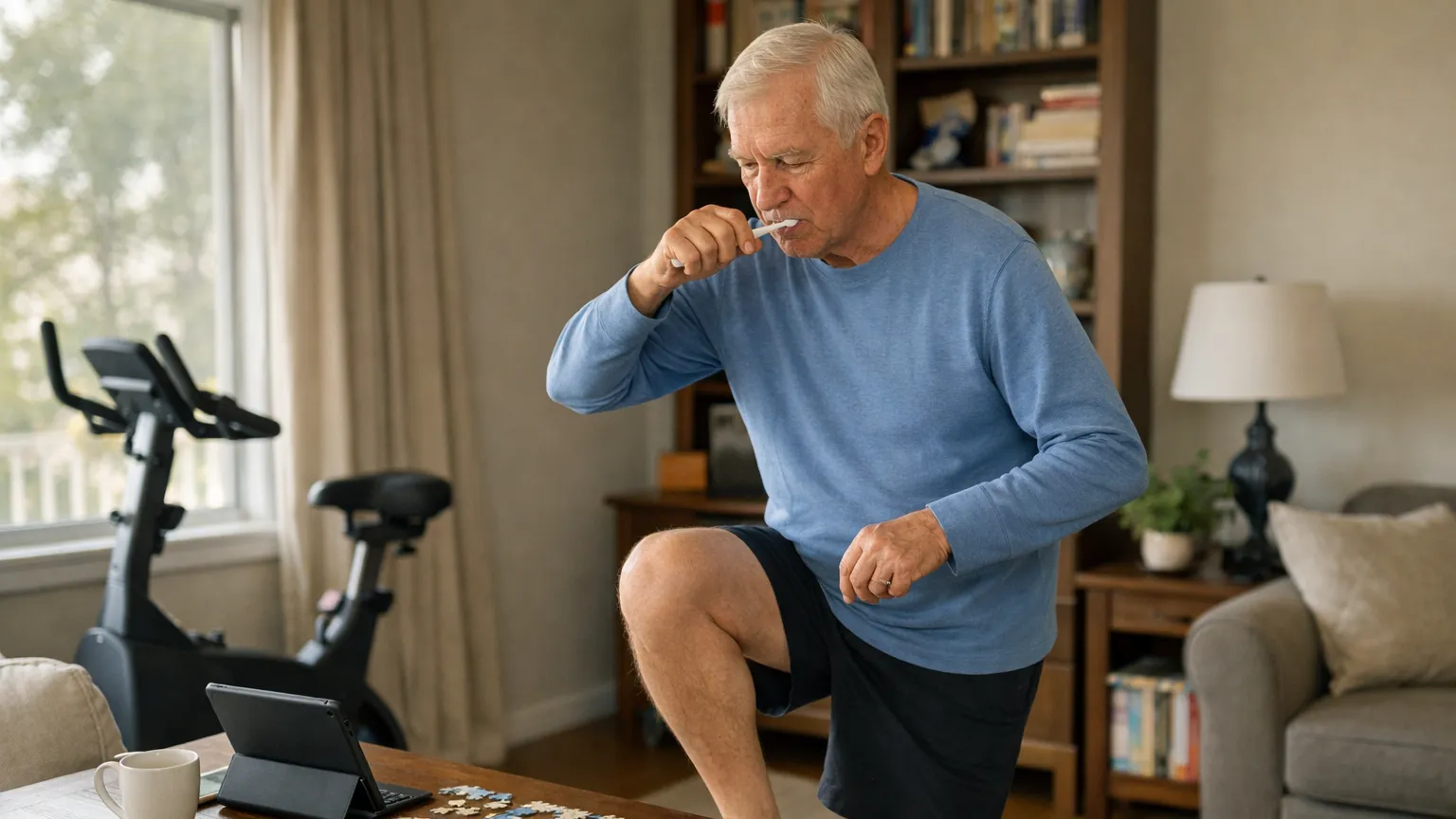
A disciplined lifestyle for seniors also involves “neurobics”—exercises for the brain. Switching your toothbrush to your non-dominant hand is a simple yet profound way to stimulate the growth of new neural pathways. This small act of defiance against habit improves brain plasticity and coordination by forcing the mind to work harder on a mundane task. It requires a high level of concentration, which serves as a daily “warm-up” for the brain’s cognitive functions.
3. Standing on One Leg During Daily Tasks
Balance is perhaps the most critical physical asset for an aging adult. A disciplined approach to maintaining it can be as simple as standing on one leg while washing dishes or talking on the phone. This habit builds essential core and ankle stability, which are the primary defenses against dangerous falls. By practicing this regularly, seniors enhance their proprioception—the body’s ability to sense its position in space—leading to greater confidence and control in all physical activities.
4. The Power of Talking Out Loud to Yourself
While some might see talking to oneself as a sign of eccentricity, it is actually a highly effective cognitive tool. Narrating your actions or speaking your thoughts aloud can significantly boost short-term memory retention. For anyone following a disciplined lifestyle for seniors, this practice helps organize complex thoughts and ensures that daily tasks are completed without oversight. Furthermore, hearing a human voice—even one’s own—can provide a subtle psychological lift and reduce feelings of social isolation during quiet hours.
5. Embracing Thermal Cycling and Cold Showers
Hormesis, or the concept of “beneficial stress,” is the driving force behind taking cold showers or practicing thermal cycling. Briefly exposing the body to cold temperatures increases blood circulation and can significantly boost the immune system’s response time. For many older adults, this habit helps reduce chronic inflammation and eases joint pain. While it requires a bit of mental fortitude to start, the resulting surge in energy and mood-regulating endorphins makes it a worthy addition to a disciplined morning routine.
6. Prioritizing a Completely Pitch-Black Sleeping Environment
Quality rest is the cornerstone of a disciplined lifestyle for seniors. To maximize the body’s natural repair processes, it is essential to sleep in a room that is entirely dark. Even small amounts of light can disrupt the production of melatonin, the hormone responsible for deep, restorative REM sleep. By ensuring a pitch-black environment, seniors can better regulate their circadian rhythms, leading to improved mood, sharper cognitive function, and better physical recovery during the night.
7. Learning a Complex New Skill for Purpose
True discipline extends to the pursuit of growth. Learning a complex new skill—such as a new language, a musical instrument, or a digital craft—can delay the onset of dementia symptoms by keeping the brain in a state of active learning. Beyond the biological benefits, this habit restores a profound sense of purpose and provides opportunities for social connection with peers. It transforms the concept of aging from a period of “fading away” into a journey of continuous discovery.
Implementing New Habits into Your Daily Routine
Embracing a disciplined lifestyle for seniors is a marathon, not a sprint. The most successful approach is to introduce one new habit at a time, perhaps focusing on a single change each week to allow the body and mind to adjust. It is always wise to monitor your physical and mental progress and, most importantly, consult with a healthcare professional before making significant changes to your physical or thermal routines.
By choosing discipline today, you are essentially gifting yourself a more vibrant and independent tomorrow. These habits are small investments that yield massive returns in the form of a sharper mind, a stronger body, and a more joyful spirit.



No Response