






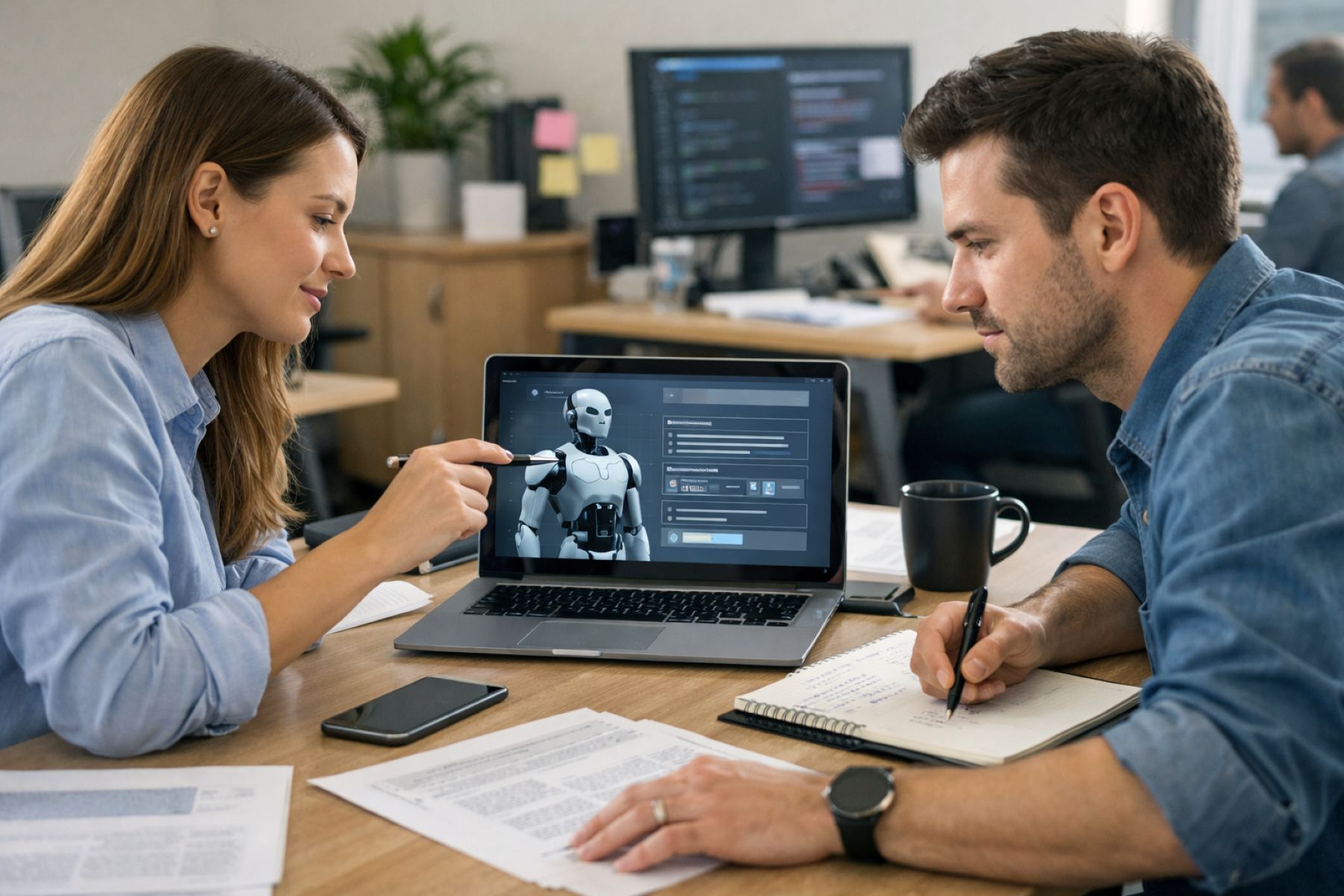
The landscape of professional development is shifting beneath our feet, moving away from traditional rote memorization toward a more dynamic partnership with technology. We are entering the era of AI-augmented work, a space where human intuition and machine efficiency merge to create something far more powerful than either could achieve alone. This shift isn’t just about working faster; it is about working smarter and learning at a pace that was previously unimaginable. For those willing to embrace this evolution, the potential to shorten professional learning curves is immense, provided we keep our critical thinking skills sharp and centered.
Understanding the Essence of AI-Augmented Work
Before we dive into the strategies, it is helpful to define what we mean by AI-augmented work. Unlike full automation, where a machine replaces a human task entirely, augmentation is a collaborative process. It involves using artificial intelligence to enhance human capabilities, such as processing vast amounts of data, generating creative starting points, or organizing complex schedules.
The goal is to offload the “heavy lifting” of data processing to the AI, leaving the human professional free to focus on high-level strategy, emotional intelligence, and ethical decision-making. In essence, it turns the AI into a powerful cognitive prosthetic that extends our mental reach.
1. Identify Optimal Cognitive Offloading Tasks
The first step in mastering AI-augmented work is recognizing which tasks deserve your mental energy and which do not. We all have “shallow work” that eats up our day—summarizing meeting transcripts, formatting spreadsheets, or drafting routine emails. These are prime candidates for cognitive offloading.
By delegating these repetitive, low-stakes tasks to an AI, you clear the mental clutter that often leads to burnout. This isn’t about being lazy; it is about energy management. When you aren’t exhausted by the minutiae, you have the bandwidth to tackle the complex, creative problems that actually move the needle in your career.
2. Use AI for Rapid Synthesis
One of the most daunting parts of entering a new field or starting a new project is the “information mountain.” There is simply too much to read and process in too little time. This is where AI shines as a synthesis tool within an AI-augmented work framework. You can feed a specialized AI model several dense white papers or industry reports and ask for a summary of the conflicting viewpoints or emerging trends.
This rapid synthesis allows you to get up to speed on a topic in minutes rather than days. However, the true professional uses this as a starting point, not a finish line. The AI provides the map, but you still need to walk the terrain to understand the nuances.
3. Practice Active Prompt Engineering Techniques
To truly excel in AI-augmented work, one must treat prompting as a foundational professional skill. “Active” prompt engineering means moving beyond simple questions and instead providing the AI with personas, constraints, and specific goals. For example, instead of asking for a marketing plan, you might ask the AI to “act as a senior brand strategist for a sustainable tech firm and critique this draft for tone consistency.”
Engaging in this level of detail forces you to think more clearly about your own objectives. As you refine your prompts, you are actually clarifying your own professional requirements and standards. It becomes a reflective exercise that sharpens your communication skills and ensures the output you receive is high-quality.
4. Verify AI Outputs for Accuracy
While AI is incredibly capable, it is not infallible. Maintaining critical thinking in AI-augmented work requires a “trust but verify” mindset. AI can sometimes “hallucinate” facts or present biased information with a very confident tone. A professional who relies blindly on these outputs risks their reputation and the quality of their work.
Make it a habit to cross-reference key data points and check the logic of the AI’s conclusions. This verification process is actually a hidden learning opportunity. By checking the AI’s work, you are forced to engage with the source material and the underlying facts more deeply than if you had simply read a finished report.
5. Analyze AI-Generated Logic Patterns Regularly
One of the most sophisticated ways to use AI for learning is to look under the hood of its suggestions. When an AI generates a solution or a piece of code, don’t just use it—analyze how it got there. Why did it suggest that specific sentence structure? Why did it prioritize those three variables in a data model?
By deconstructing the logic patterns provided by the AI, you can often discover new perspectives or methodologies you hadn’t considered. Over time, this habit of analysis helps you internalize these patterns, effectively transferring the machine’s “knowledge” into your own professional toolkit as part of your AI-augmented work routine.
6. Create Iterative Feedback Loops Daily
The most successful practitioners of AI-augmented work don’t use the technology in a single “one and done” interaction. Instead, they build iterative loops. You might ask the AI for a draft, provide a critique, ask it to rewrite a section with a different emphasis, and then manually polish the final result.
This back-and-forth process mimics the collaborative brainstorming sessions common in high-level consulting or creative agencies. It allows for a gradual refinement of ideas. Each iteration is a chance for you to apply your professional judgment, ensuring that the final output is a sophisticated blend of technological power and human insight.
7. Balance Automation with Manual Practice
Finally, it is vital to remember that skills can atrophy if they are never used. To keep your critical thinking sharp, you must intentionally choose to perform certain tasks manually, even if an AI could do them. If you are a writer, write a long-form piece from scratch once a week. If you are a coder, solve a logic puzzle without an assistant.
This “manual practice” ensures that you don’t become overly dependent on the tool. It maintains your foundational knowledge and gives you the confidence to know that while the AI makes you better, you are still the expert in the room. Balancing automation with hand-crafted work is the ultimate way to ensure that AI-augmented work remains a source of strength rather than a crutch.
Embracing AI-augmented work is not about surrendering our humanity to machines; it is about leveraging new tools to reach our full potential. By thoughtfully offloading routine tasks, synthesizing information rapidly, and maintaining a rigorous standard for verification, we can navigate the complexities of the modern workplace with greater ease and insight. The future belongs to those who can master the dance between human intuition and artificial intelligence, using each to elevate the other.






No Response