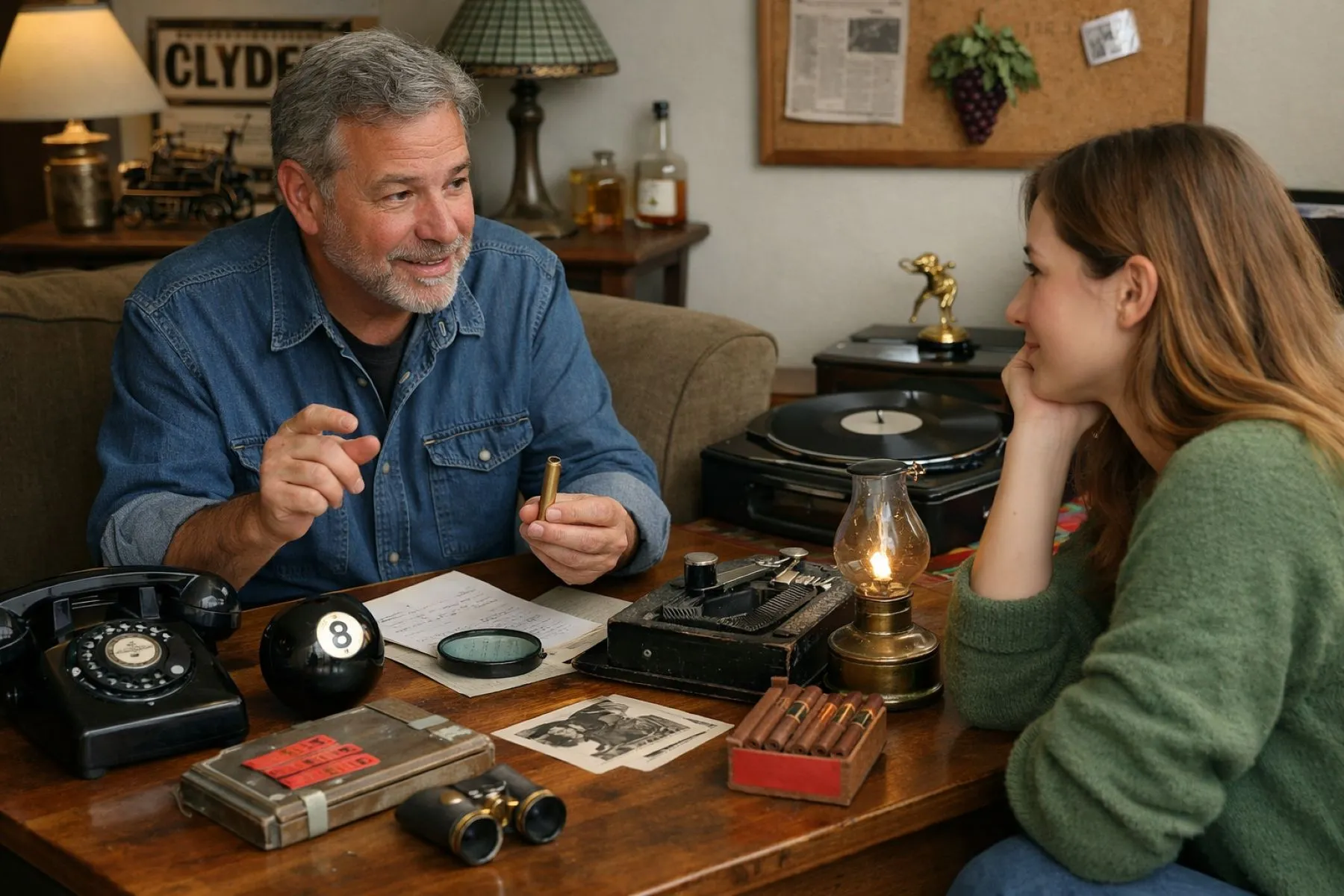
Language is a living, breathing archive of human history. Every time you tell a friend you’re “under the weather” or mention that a new gadget is “selling like hotcakes,” you aren’t just communicating a thought—you are reciting a linguistic fossil. These phrases, often categorized today as boomer slang origins or traditional American idioms, carry the echoes of Victorian theaters, 19th-century naval ships, and the grit of the Industrial Revolution.
But as the gap between generations widens, the literal roots of these common expressions are fading into obscurity. We use them out of habit, yet many of us would be hard-pressed to explain why an “eight ball” is bad luck or why “cigars” were the ultimate prize for a near-miss. Understanding these roots doesn’t just make you a better communicator; it offers a vivid window into how our ancestors worked, played, and navigated a world vastly different from our digital age.
In this deep dive, we’re going to peel back the layers of 15 iconic phrases. Whether you’re a word nerd or just looking to settle a dinner-table debate with your parents, exploring these histories will change the way you speak.
The Language of Pressure and Precision
Many of the most enduring American idioms were forged in high-stakes environments. When life was physically demanding or technologically shifting, people needed metaphors that captured the essence of stress and accuracy.
Take, for example, the phrase behind the eight ball. Most people know it means being in a difficult, perhaps inescapable position. Its roots lie in the game of “Kelly Pool.” In this version of billiards, if the eight ball (which is black) is sitting between the player’s cue ball and the target ball, the player is effectively blocked. It’s a position of extreme disadvantage, perfectly capturing that feeling of being stuck between a rock and a hard place.
Similarly, biting the bullet is often used today to describe enduring a painful but necessary task. While some debate its exact medical history, the prevailing story dates back to 19th-century battlefields. Before the luxury of modern anesthesia, soldiers were given a lead bullet to clench between their teeth to keep them from screaming or biting their tongues during surgery.
When the workday extended into the night, we began burning the midnight oil. This phrase predates the electric lightbulb, harkening back to a time when staying up late to study or work meant literally consuming expensive whale oil or kerosene in a lamp. It was a mark of dedication—and a literal expense—to keep the flame flickering long after the sun went down.
From the Stage to the Streets: The Etymology of Fame
The world of entertainment and public life has gifted us some of our most colorful imagery. If you’ve ever been told you’re close but no cigar, you’ve experienced the frustration of a near-win. This phrase originated at 19th-century fairgrounds. Back then, cigars were frequently handed out as prizes for carnival games like the “high striker.” If you didn’t hit it hard enough, you were “close,” but you weren’t getting that tobacco prize.
The film industry also played a massive role in shaping the boomer slang origins we recognize today. When a director tells someone to cut to the chase, they are referencing the era of silent films. Early movies often had long, plodding romantic setups, but the audience really wanted the exciting climactic pursuit. Editors were told to literally “cut” the film reel to get to the “chase” scene faster.
In a similar vein, being in the limelight isn’t just about being famous; it’s a chemistry lesson. Before electric stage lighting, theaters used “limelight,” which was created by directing an oxyhydrogen flame at a cylinder of quicklime. It produced an intense, white glow that ensured the lead actor was the brightest thing in the room.
Communication and Connection in the Analog Era
The way we share information has changed drastically, but the phrases we use to describe it remain anchored in the past. If you’ve ever dropped a dime on someone, you’ve engaged in a bit of “Boomer” shorthand for snitching. This refers to the mid-20th century when a local phone call at a public payphone cost exactly ten cents.
The speed of information is also captured in the phrase heard it through the grapevine. While many associate this with the Motown hit, the term dates back to the American Civil War. Telegraph wires strung loosely from tree to tree resembled grapevines. Because these lines were often unreliable, news coming from the “grapevine” was considered unofficial and potentially gossipy.
Even our television habits left a mark. The phrase don’t touch that dial is a relic of the era when changing the channel required getting off the couch and physically turning a mechanical knob on the TV set. It was a plea from broadcasters to keep the audience engaged, a concept that feels like ancient history in the age of streaming.
Cultural Impact, Character, and Boomer Slang Origins
Some idioms speak to the very nature of authenticity and enthusiasm. When we say something is the real McCoy, we are likely referencing Elijah McCoy, a brilliant African-American inventor. His automatic lubricator for steam engines was so superior that engineers would ask if a machine had “the real McCoy” system, rather than a cheap, generic knockoff.
On the other hand, if something is incredibly popular, we say it’s selling like hotcakes. Hotcakes (an early name for pancakes) were a staple at 19th-century church socials. Because they were cheap, delicious, and could be made quickly, they were often the first items to sell out.
When it’s time to celebrate, we might talk about painting the town red. This colorful phrase allegedly traces back to a legendary night in 1837 involving the Marquis of Waterford, a notorious prankster. After a night of heavy drinking, he and his friends literally painted various doors and windows in the town of Melton Mowbray with red paint.
Nautical Roots and Hidden Meanings
The sea has always been a primary source of American metaphors. Perhaps the most common is feeling under the weather. In the days of sailing ships, a sailor who felt ill would be sent “under” the deck—away from the “weather” and the swaying motion of the masts—to recover in the more stable, sheltered part of the ship.
When someone goes all out to achieve a goal, they are pulling out all the stops. This isn’t actually a driving metaphor; it’s about the pipe organ. “Stops” are the knobs on an organ that control air flow. To pull out all the stops means to open every single pipe, allowing the instrument to play at its absolute maximum volume and power.
Finally, the art of reading between the lines comes from the world of cryptography and “invisible” ink. In 19th-century intelligence, spies would sometimes write a mundane letter in standard ink, but include a secret message in citrus juice between the visible lines. To get the full story, the recipient had to look closely at the blank spaces.
Bridging the Generational Gap
Understanding these boomer slang origins does more than just boost your trivia knowledge; it bridges the gap between the past and the present. When we use these phrases, we aren’t just using “old-fashioned” talk—we are participating in a linguistic tradition that stretches back centuries.
Practical Tips for Using Idioms Effectively
While these phrases add flavor to our speech, using them effectively requires a bit of finesse:
-
Consider Your Audience: While “dropping a dime” makes perfect sense to someone who grew up with payphones, Gen Z might find the reference confusing.
-
Avoid Overuse: Too many idioms in one conversation can make your writing feel clichéd. Think of them as seasoning—a little goes a long way.
-
Check the Context: Using a phrase like “bite the bullet” in a truly tragic situation might come across as dismissive.
The Power of the Spoken Word
Language is the ultimate time machine. Through these fifteen phrases, we can see the shadows of old theaters, the decks of wooden ships, and the intense heat of early industrial workshops. They remind us that even as our technology leaps forward into AI, our ways of describing the human experience remain deeply rooted in history.
Next time you find yourself “pulling out all the stops” for a project, take a second to appreciate the story behind the words. These idioms are the threads that connect us to the generations that came before.