

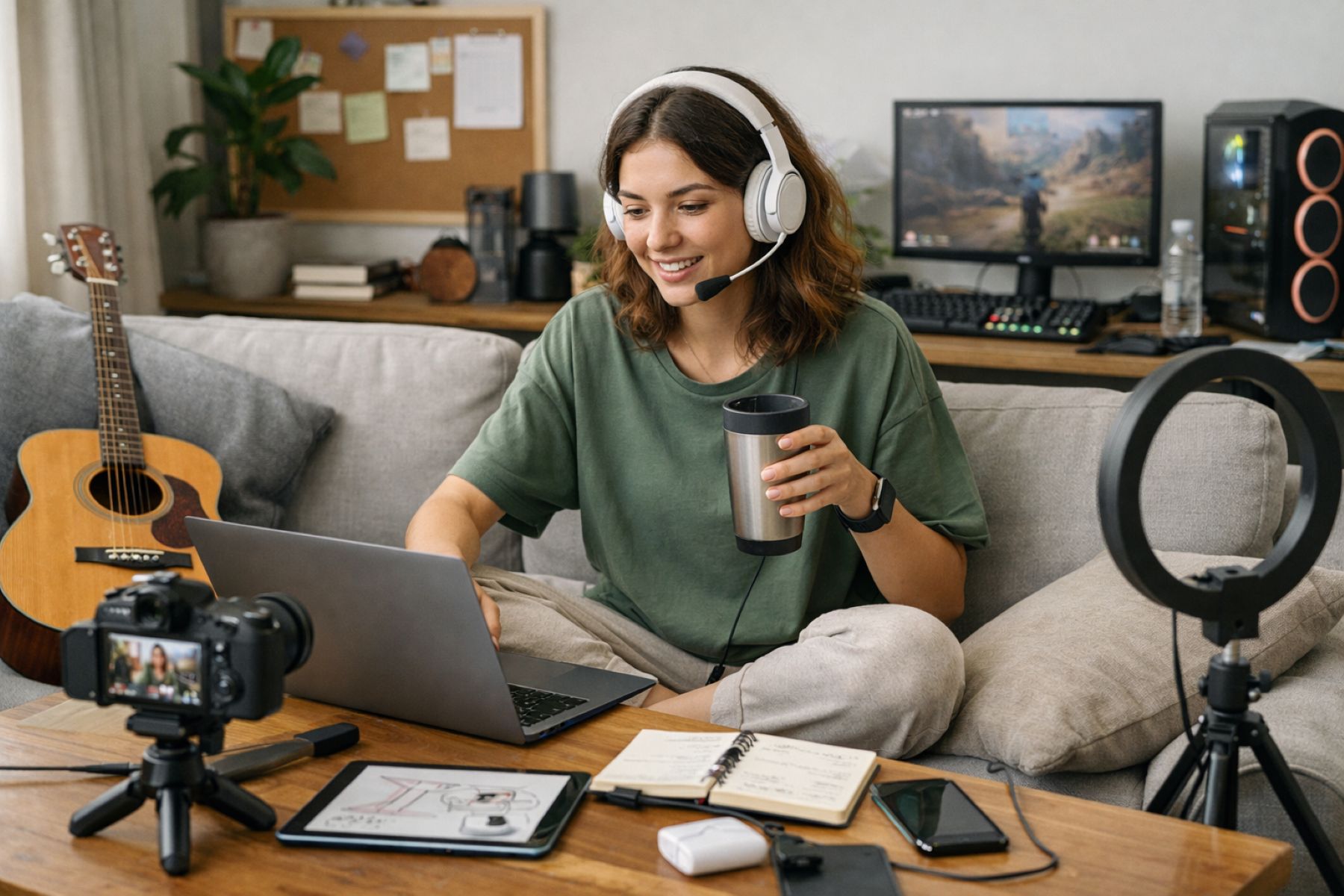
The traditional concept of the nine-to-five workday is undergoing a quiet but profound revolution. For decades, the goal was work-life balance—a metaphorical scale where professional duties and personal life sat on opposite sides, constantly vying for equal weight. However, a new generation is shifting the narrative toward Work-Life 3.0, a framework where career and identity are no longer separate silos but parts of a cohesive, holistic lifestyle.
Understanding the Work-Life 3.0 Philosophy
To understand this shift, we must first look at where we started. Work-Life 1.0 was the era of the company person, where loyalty was paramount and work dictated the rhythm of life. Work-Life 2.0 introduced the idea of “balance,” suggesting that we could somehow keep our professional and private lives in perfect, separate spheres.
Work-Life 3.0 moves beyond these rigid boundaries. It is a philosophy rooted in integration, where work is viewed as one of many activities that contribute to a person’s sense of purpose and fulfillment. In this new era, the focus is not on how many hours we spend at a desk, but on how work fits into the broader context of our existence.
Moving Beyond Traditional Corporate Boundaries
The modern workforce, led largely by Gen Z and younger Millennials, is increasingly rejecting the traditional “suit and tie” corporate norms. There is a growing fatigue with performative professionalism—the idea that one must act, dress, and speak in a specific, sanitized way to be taken seriously.
This rejection isn’t about a lack of respect; it’s about a desire for sincerity. By stripping away these stiff corporate layers, employees are finding that they can build stronger, more empathetic relationships. This authenticity is a hallmark of the Work-Life 3.0 mindset, where individuals feel empowered to bring their whole selves to their roles without wearing a professional “mask.”
The Shift Toward Intentional Flexibility
One of the cornerstones of Work-Life 3.0 is the prioritization of flexibility over rigid, pre-determined schedules. The idea that everyone must be productive at the exact same time—usually between 9:00 AM and 5:00 PM—is increasingly seen as outdated.
| Feature | Work-Life 2.0 (Balance) | Work-Life 3.0 (Integration) |
| Schedule | Fixed 9-5 | Asynchronous / Fluid |
| Location | Centralized Office | Borderless / Hybrid |
| Metric | Hours Present | Outcome & Impact |
| Boundary | Strict Separation | Natural Blending |
This flexibility isn’t just about avoiding a commute; it’s about autonomy. When employees are trusted to manage their own time, the relationship between employer and staff transforms from one of surveillance to one of mutual respect and shared goals.
Integrating Personal Passions into the Career Path
In the past, a “hobby” was something you did strictly on the weekends to escape the grind. Today, the lines are much blurrier. Many people are now seeking careers that allow them to weave their personal passions directly into their professional output.
This integration makes work feel less like a chore and more like an extension of one’s identity. When our daily tasks resonate with our internal values, the risk of burnout decreases significantly. We aren’t just working for a paycheck; we are working to express a part of who we are, a core tenet of the Work-Life 3.0 movement.
Leveraging Technology for Seamless Transitions
Technology has often been blamed for “always-on” stress, but in the Work-Life 3.0 framework, it is used as a tool for liberation. Cloud computing and collaborative software allow for seamless transitions between different modes of the day.
The key is intentionality. Instead of being a slave to notifications, the modern worker uses technology to create a “borderless” but controlled environment. This digital fluency proves that “the office” is now a state of mind rather than a physical destination.
Prioritizing Mental Health in Work-Life 3.0
For a long time, “hustle culture” glorified working until exhaustion. Work-Life 3.0 firmly rejects this, placing mental health at the very top of the priority list. There is a collective realization that a burnt-out employee is not an effective one.
Consequently, taking “mental health days” or setting firm boundaries around digital communication after hours is no longer seen as a sign of weakness, but as a sign of professional maturity. By valuing the person over the output, organizations foster long-term loyalty and a much healthier internal culture.
Seeking Alignment with Authentic Employer Brands
Today’s talent is incredibly discerning. They aren’t just looking at salary; they are looking at a company’s soul. They want to know if an employer’s brand is authentic or if their “values” are just marketing speak.
If a company claims to value integration but consistently emails staff at 10:00 PM, that disconnect is quickly noticed. Professionals are seeking employers whose actions match their words. This alignment is crucial for Work-Life 3.0, as it ensures that the individual’s personal ethics are not in constant conflict with their professional requirements.
Shifting to Outcome-Based Performance Metrics
As we move away from the clock-in mentality, the way we measure success must also change. Work-Life 3.0 demands a shift toward outcome-based metrics. It shouldn’t matter if a task took two hours or eight, or if it was completed at a desk or on a balcony. What matters is the quality and impact of the result.
This approach empowers employees to work smarter, not harder. It encourages innovation and efficiency, as there is no “reward” for dragging out a task just to fill the hours. When performance is measured by outcomes, the focus remains on excellence.
Creating Personalized Holistic Lifestyle Structures
Ultimately, Work-Life 3.0 is about the freedom to design a life that feels right for the individual. It’s about creating a personalized, holistic structure where work, rest, play, and health are all given their due.
By embracing this philosophy, we move toward a future where we no longer live to work, nor do we simply work to live. Instead, we find a middle path where our professional endeavors enrich our personal lives, and our personal well-being fuels our professional success. It is a more compassionate, sustainable, and ultimately more human way to approach our careers in the modern age.
Embracing Work-Life 3.0 is a journey toward self-awareness and intentionality. As we continue to redefine these boundaries, we find that the most successful professionals are those who prioritize their humanity alongside their ambitions.