






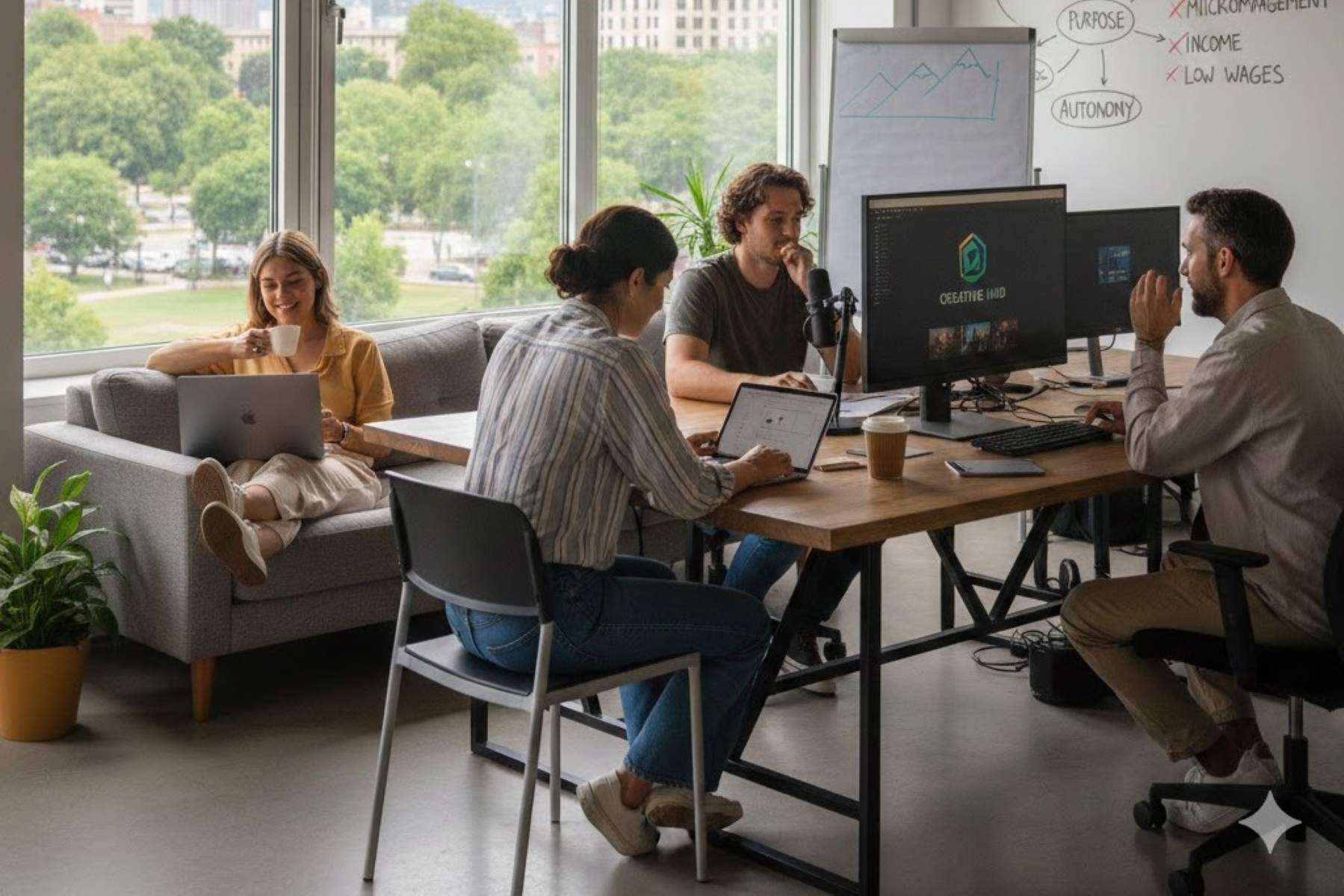
The landscape of professional life is undergoing its most significant transformation since the Industrial Revolution. For decades, the standard path to success followed a predictable trajectory: secure a position within a stable corporation, climb the ladder, and prioritize the company’s goals above almost everything else. However, in today’s evolving landscape, modern workplace culture is being redefined by a generation of workers who are no longer willing to sacrifice their mental health or personal values for a paycheck. This shift isn’t about a lack of ambition; rather, it represents a profound realignment of what it means to live a meaningful and productive life.
Understanding Modern Workplace Culture
To grasp why this shift is happening, we must first define what we mean by modern workplace culture. Historically, work culture was defined by physical presence, rigid hierarchies, and the “live to work” mentality. In the contemporary context, however, this term has evolved to encompass the psychological and social environment of our professional lives. It includes the values, beliefs, and behaviors that determine how employees and employers interact. Today, a healthy culture is increasingly defined by flexibility, psychological safety, and the integration of work into life, rather than the other way around.
Shifting Perspectives on Work-Life Balance
The primary catalyst for change is a fundamental shift in how we perceive work-life balance. For previous generations, work was the sun around which the rest of life orbited. Today’s professionals are flipping that script. There is a growing realization that time is our most finite and precious resource. People are no longer content to wait until retirement to enjoy their lives; they want to experience fulfillment, hobbies, and family time in the present. This isn’t a sign of laziness but a sophisticated understanding that a well-rested, happy person is often more creative and effective than one who is constantly on the brink of exhaustion.
The Rise of the Independent Creator Economy
As traditional roles lose their luster, the independent creator economy has emerged as a powerful alternative. Technology has lowered the barriers to entry, allowing individuals to monetize their unique skills, hobbies, and expertise directly. Whether through consulting, digital products, or freelance services, professionals are finding that they can earn a living—and often a better one—on their own terms. This movement provides a sense of ownership that a traditional cubicle rarely offers. When you are the “CEO of One,” your efforts directly correlate to your rewards, providing a level of motivation and creative freedom that corporate structures often stifle.
Navigating Stagnant Corporate Wages
One of the more practical reasons professionals are looking elsewhere is the persistent issue of stagnant corporate wages. While the cost of living, housing, and education has skyrocketed, many corporate salary scales have remained frustratingly flat. For many, the “loyalty discount”—the reality that staying at a company often results in lower pay than jumping to a new one—has become too high to ignore. By moving toward independent models or smaller, more agile firms, professionals are often able to negotiate better compensation that actually reflects the market value of their expertise and the reality of their living expenses.
Prioritizing Mental Health and Addressing Burnout
Perhaps the most urgent driver behind the rejection of traditional models is the epidemic of chronic burnout. Modern workplace culture has, for too long, celebrated the “hustle” at the expense of the human mind. The constant connectivity of the digital age means that for many, work never truly ends. This leads to a state of permanent alertness that is unsustainable for the human nervous system. Modern professionals are increasingly prioritizing their mental health as a non-negotiable asset. They are opting out of high-stress environments that treat human beings like replaceable hardware, choosing instead paths that allow for deep work, recovery, and emotional well-being.
The Quest for Geographic Flexibility
The desire for geographic flexibility has moved from a luxury to a baseline expectation for many. The realization that most office-based tasks can be performed from anywhere with a stable internet connection has fundamentally changed our relationship with the “office.” People want the freedom to live in communities that suit their lifestyle, whether that means being closer to nature, living in a more affordable city, or traveling while they work. Traditional models that insist on a physical presence for no clear functional reason are increasingly seen as outdated and unnecessarily restrictive, leading many to seek roles that offer true location independence.
The Illusion of Long-Term Job Security
For years, the trade-off for the “grind” was the promise of long-term job security. However, recent waves of mass layoffs, even at highly profitable tech giants, have shattered that illusion. Professionals have realized that loyalty is rarely a two-way street in the corporate world. If job security is a myth, the logic goes, one might as well take the risk of working for oneself or joining a mission-driven startup. By diversifying their income streams and building a personal brand, individuals are finding a new kind of security—one that is rooted in their own skills and network rather than the whims of a distant board of directors.
Outgrowing Outdated Corporate Hierarchies
Finally, there is a growing misalignment with outdated corporate hierarchies. The traditional “top-down” approach often feels slow, bureaucratic, and disconnected from the actual work being done. Modern workers thrive in environments that value meritocracy, transparency, and collaboration over title and tenure. They want to feel that their voice matters and that they can make an impact without navigating endless layers of middle management. As professionals seek more autonomy and purpose, the rigid structures of the past are being replaced by more fluid, project-based, and egalitarian ways of working.
The transition we are witnessing in modern workplace culture is not a trend, but a necessary evolution. By prioritizing personal well-being and life values, professionals are not “quiet quitting” or checking out; they are checking in to a more sustainable and intentional way of living. While the transition away from traditional models can feel uncertain, it offers the opportunity to build a career that is genuinely integrated with who we are as people. As we move forward, the most successful organizations will be those that recognize this shift and adapt to meet workers where they are—honoring their need for balance, autonomy, and genuine human connection.






No Response