






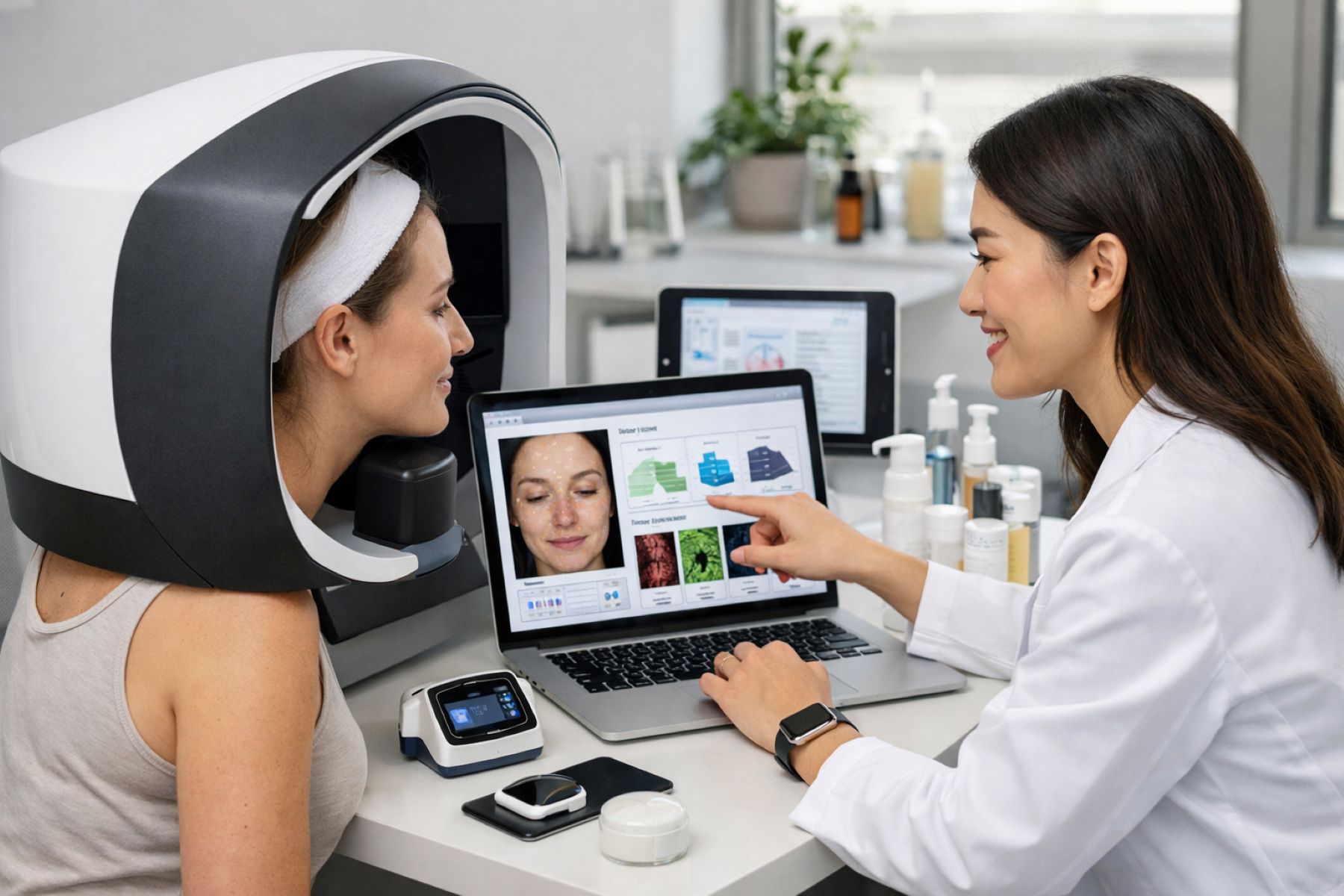
Hyper-personalized skincare leverages Artificial Intelligence (AI) and data-driven insights to move beyond “one-size-fits-all” products, creating customized regimens based on an individual’s unique biological and environmental profile. Gone are the days of standing in the beauty aisle, squinting at ingredient lists, and wondering if that “cult favorite” moisturizer will actually work for you or just trigger another breakout. In 2026, the guesswork is officially over. We have entered an era where your smartphone is essentially a pocket-sized dermatologist, and your skincare routine is as unique as your thumbprint.
The Death of the “Universal” Skincare Routine
For decades, we’ve been categorized into four basic buckets: oily, dry, combination, or sensitive. But as any skincare enthusiast knows, your skin is a living, breathing organ that changes based on your stress levels, hydration, and even local air quality.
The shift toward hyper-personalized skincare isn’t just a marketing gimmick; it’s a necessary evolution driven by the realization that “average” skin doesn’t exist. By 2026, the focus has moved toward “Metabolic Beauty”—a concept where we treat our skin as a reflection of internal health. We’re no longer just masking imperfections; we’re using data to optimize our biology.
How AI Skin Analysis Powers Hyper-Personalized Skincare
If you’ve ever used a filter on social media, you’ve already interacted with a basic version of the tech powering your beauty routine. However, advanced tools today use high-resolution imaging and deep learning algorithms trained on millions of professionally graded images to see things the human eye simply can’t.
When you take a “skin selfie,” the AI doesn’t just look at the surface. It scans for subsurface pigmentation, identifies early-stage fine lines, and measures pore congestion with clinical precision. It then synthesizes this visual data with external factors like your local UV index and sleep patterns. This deep-dive AI skin analysis results in a performance score that tells you exactly where your skin stands today and, more importantly, where it’s headed.
Why Data is the New Holy Grail of Glow
The magic of a data-driven approach lies in its ability to be proactive rather than reactive. Most of us wait for a pimple to appear before we treat it. However, hyper-personalized skincare systems can predict a flare-up by detecting rising inflammation levels or shifts in sebum production days before anything visible hits the surface. This “Predictive Care” is a game-changer for anyone dealing with chronic issues like acne or rosacea.
Furthermore, these tools provide a level of accountability we’ve never had. By using regular scans to track your “Skin Journey,” you get a visual receipt of your progress. This reduces the risk of skin sensitivity caused by the “trial and error” method that has plagued our bathroom cabinets for years.
The Heavy Hitters: Leading Tools in 2026
The landscape is currently dominated by platforms that make medical-grade diagnostics accessible to everyone.
| Tool | Primary Focus | Best For |
| L’Oréal Skin Genius | Clinical Data Matching | Instant product recommendations |
| Skinive AI | Medical-Grade Scanning | Screening for 50+ skin conditions |
| Cetaphil AI Tool | Barrier Health | Sensitive skin and routine building |
| SkinCeuticals Custom D.O.S.E | Custom Formulation | On-site bespoke serum mixing |
These professional-grade services are taking hyper-personalized skincare a step further by using AI to actually formulate and mix a custom serum on-site based on your specific biomarkers. It’s the ultimate luxury: a bottle with your name on it that was quite literally made for you.
Environmental Intelligence and Adaptive Beauty
One of the most exciting developments in the industry is Bio-Adaptive Skincare. Imagine a moisturizer that knows when you’ve stepped off a plane in a dry climate versus when you’re sitting in a humid office.
Modern routines now integrate real-time weather data to suggest adjustments. If the UV index is high, your app might nudge you to reapply a specific antioxidant-rich SPF. If pollution levels peak, your evening routine might shift to emphasize deep-cleansing. This level of agility is something a static bottle on a shelf simply cannot provide.
The “Human Touch” in a Digital World
Despite all this tech, there is a growing “Human Touch Revolution.” While we love the precision of an algorithm, we still crave the ritual of beauty. The trend for 2026 is a “recalibration”—using technology to handle the “boring” stuff like ingredient matching, so we can focus on the mindful aspects of self-care. It’s about using data to find the perfect face oil, then putting the phone away to enjoy a relaxing gua sha session.
Is It Worth the Hype (and the Data)?
For the privacy-conscious, uploading your face to a cloud might feel a bit “Black Mirror.” However, recent industry reports show that over 74% of consumers are willing to share their data in exchange for products that actually work.
The value proposition of hyper-personalized skincare is clear:
-
Save Money: No more buying products that don’t suit you.
-
Save Time: Skip the endless scrolling through “skinfluencer” reviews.
-
Better Results: Your routine is backed by science, not trends.
The Future: From Serums to Supplements
Looking toward 2030, the line between skincare and healthcare will continue to blur. We’re already seeing the rise of “Nutricosmetics,” where AI suggests specific supplements based on your skin’s needs. Your skin is the body’s most accessible biomarker; it tells a story about your hydration, stress, and aging process.
Finding Your Digital Skin Coach
If you’re ready to ditch the guesswork, the best place to start is with a simple scan. Most of these tools are free and take less than a minute. It’s an empowering shift from being a “consumer” to being a “curator” of your own health. Your skin is constantly talking to you; in 2026, we finally have the tools to translate what it’s saying.




No Response